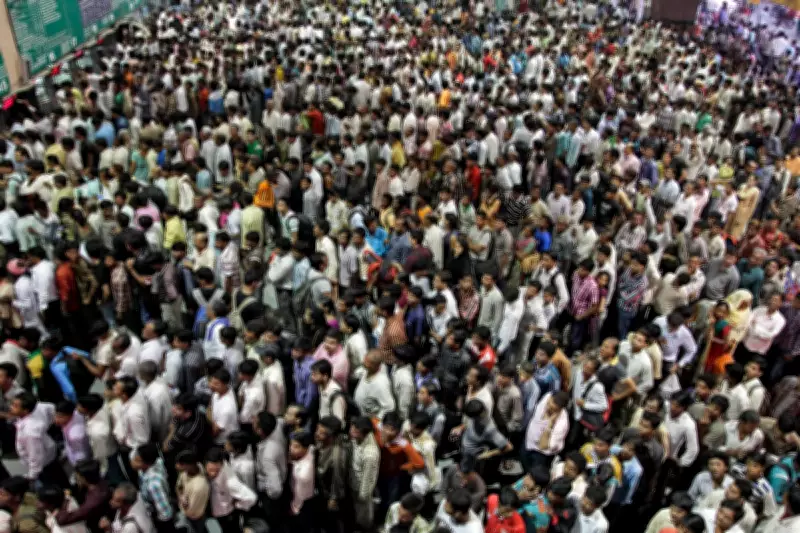
India has commenced the world's largest national population count, an unprecedented demographic exercise that promises to reshape welfare programmes and political representation across the vast nation. This monumental undertaking, which began on Wednesday, will deploy over three million government workers to document a population now estimated to exceed 1.4 billion people, solidifying India's status as the most populous country on Earth.
Historical Context and Scale
The previous census conducted in 2011 recorded India's population at 1.21 billion. The new enumeration had been originally planned for 2021 but faced significant postponement due to the Covid-19 pandemic and substantial logistical challenges. The first phase of this colossal operation will roll out across the country through September, with workers spending approximately one month in each area collecting comprehensive information about homes, available facilities, housing stock, and living conditions.
Two-Phase Implementation Strategy
The census employs a sophisticated hybrid approach that blends traditional in-person surveys with modern digital options. Residents will have the opportunity to submit information through a multilingual smartphone application that integrates advanced satellite-based mapping technology. The second phase, scheduled from September through next April, will record more detailed demographic information including people's social and economic characteristics, with particular attention to religion and caste data.

This represents a significant expansion from the 2011 census, which deployed nearly 2.7 million enumerators to survey more than 240 million households nationwide. The current exercise anticipates even greater participation and complexity given India's substantial population growth over the past decade.
The Caste Data Controversy
The second phase of the census will attempt a broader accounting of caste beyond historically marginalized groups, marking a potentially transformative development in Indian demographic data collection. Caste represents an ancient system of social hierarchy in India that continues to influence social standing and access to resources, education, and economic opportunity.
There are hundreds of caste groups based on occupation and economic status across India, particularly among Hindu communities, yet the country maintains limited or outdated data about how many people belong to these various categories. The last comprehensive attempt to gather detailed caste information through a census dates back to 1931 during British colonial rule. Since independent India's first census in 1951, the government has counted only Dalits and Adivasis—members of marginalized groups known as scheduled castes and tribes.
Political Implications and Resistance
Successive Indian governments have resisted conducting a full caste count, expressing concerns that such detailed enumeration could heighten social tensions and potentially trigger unrest. The current census has already generated political controversy, with opposition parties questioning why the notification failed to mention specific plans for a caste census.
The population data collected through this monumental exercise will fundamentally underpin the distribution of government welfare programmes and inform a wide range of public policies. Furthermore, it could prompt a significant redrawing of India's political map, as seats in the lower house of parliament and state legislatures may be increased to reflect population growth.
Broader Implications for Governance
A 2023 law reserves one-third of legislative seats for women, meaning any expansion of parliamentary representation would automatically increase the number of seats set aside for female representatives. This creates additional layers of significance for the census data, which will influence political representation for years to come.
The census represents not merely a statistical exercise but a foundational element of democratic governance in the world's largest democracy. As enumerators fan out across urban centers and remote villages alike, they are gathering information that will shape resource allocation, policy development, and political representation for India's diverse population of over 1.4 billion citizens.

The successful completion of this massive undertaking will provide unprecedented insights into India's demographic landscape, offering crucial data for planning everything from infrastructure development to educational resources, healthcare provision to employment opportunities. As the world watches this historic enumeration unfold, the results promise to redefine understanding of not just India's population, but the very mechanisms through which democratic nations document and serve their citizens.