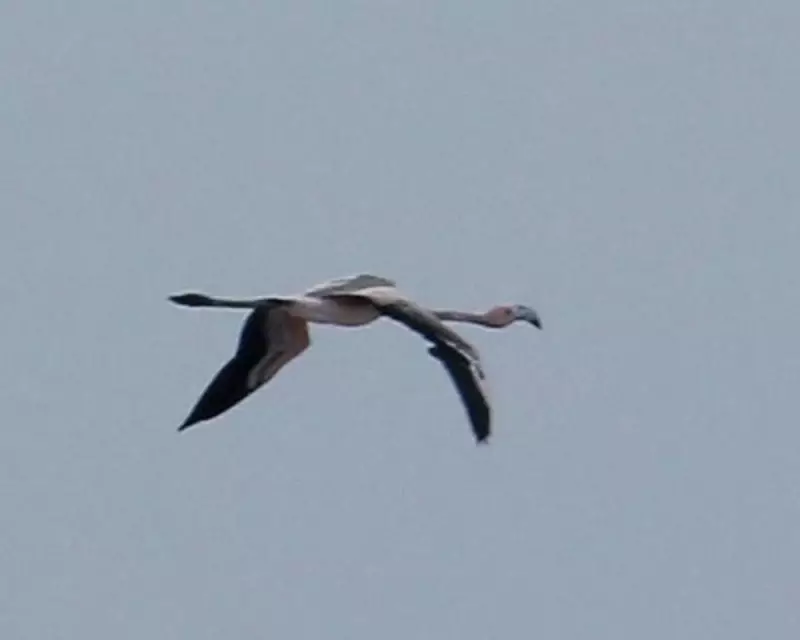
A young flamingo from Cornwall has become an unlikely international traveller, earning her freedom after a daring cross-Channel flight to France.
The Great Escape
Four-month-old Frankie made her unexpected bid for liberty on 2nd November, taking flight from the walled garden of Paradise Park in Hayle, Cornwall. What made her escape particularly remarkable was that her feathers had been clipped, a standard procedure intended to inhibit flight in captive birds.
Zookeepers were initially concerned for her welfare, but their worry turned to astonishment when reports began to surface of a flamingo sighted over 120 miles away in Brittany, France. The park has since confirmed that the adventurous bird successfully completed the journey across the English Channel, arriving at Plage de Keremma.

A Decision for Freedom
In a heartening turn of events, the team at Paradise Park has made the compassionate decision not to attempt to recapture Frankie. David Woolcock, the park's curator, explained the reasoning behind this significant choice.
"It was never our intention for Frankie to end up in the wild," Woolcock stated. "There are a number of reports of similar situations where flamingos have lived for many years and thrived, including over European winters, so while we will continue to worry about her it is a position we have to accept."
The decision was influenced by several practical factors. Catching Frankie would be exceptionally difficult, and if successful, she would require health screening. Furthermore, she now potentially poses a biosecurity risk, having possibly been in contact with wild birds that could carry avian influenza.
Thriving Against the Odds
How did a flamingo with clipped wings manage such a feat? The zoo believes that as Frankie is still a developing juvenile, her feathers were continually growing, reducing the effectiveness of the clipping. They clarified that wing clipping primarily inhibits the ability to take off, but not necessarily the ability to fly once airborne.
Addressing concerns about her survival, Woolcock expressed confidence. "She was feeding independently and was a supremely fit young bird before she left the park," he said. "All the evidence that we have seen of her in France shows a well-adjusted, well-fed bird doing extremely well."
The park finds solace in knowing that Frankie's movements will likely be tracked and logged by citizen scientists in France. They take pride in the resilience and natural skills she has demonstrated, which will serve her well in her new life as a wild flamingo. Back in Cornwall, Frankie's parents and the rest of the flock at Paradise Park are reported to be doing well.