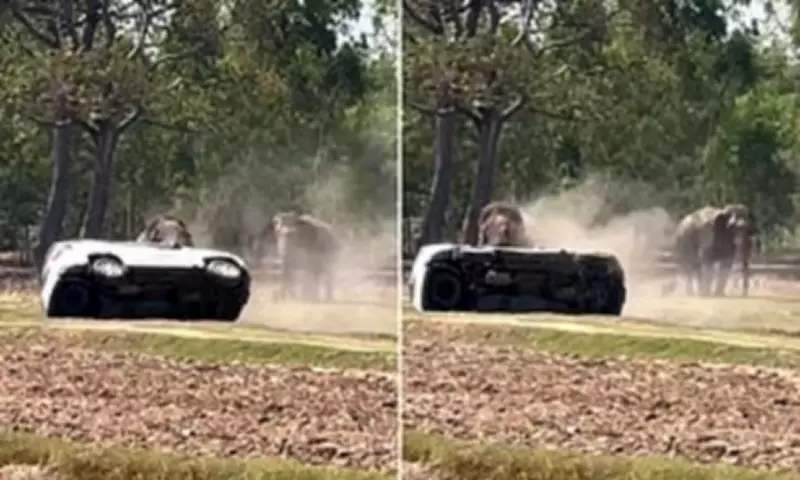
Thai Elephant's Mating Rage Injures Handler and Flips Cars in Buriram
A 19-year-old bull elephant named Phlai Petch Uthai unleashed a violent rampage in Buriram, Thailand, after his owner attempted to separate him from a female during a breeding session. The incident, which occurred on Monday, February 16, left the caretaker with severe injuries and caused significant property damage, including overturned cars.
Chaotic Scene Captured on Video
Footage from the scene shows the furious elephant trampling everything in its path, chasing a motorcycle rider, and flipping over a white car. Terrified onlookers watched from a distance as the chaos unfolded. According to village chief Uthai Yeerum, the elephant was hired for breeding, but the owner, Somporn, 35, urged him to finish quickly, potentially triggering the aggressive outburst.
"This may have triggered irritation, causing the bull to become possessive and aggressive toward the female," Yeerum explained.

Aftermath and Rescue Efforts
After injuring Somporn, who was rushed to the hospital with serious lung injuries, Phlai Petch Uthai fled the scene. The bull damaged two cars, charged at villagers, and trampled five road signs before volunteers from Elephant Kingdom Hospital arrived. The rescue team administered a tranquiliser, which took two hours to take effect, eventually allowing them to capture the enraged elephant.
Natthaphon Malihuan, 30, whose car was damaged, expressed uncertainty about insurance coverage: "I am waiting for my insurance company to tell me if they will pay for the damage. They said they don't know if elephant attacks are included, so I'm just waiting."
Current Status and Broader Context
Phlai Petch Uthai is now under the care of veterinarians at Elephant Kingdom in Surin province, while his mahout continues treatment at the hospital. This incident highlights the complex role of elephants in Thailand, where they have been central to culture, history, and the economy for centuries.
Traditionally used in war, logging, transport, and ceremonies, elephants now often serve in tourism, trekking, festivals, and breeding programs. However, growing concerns about welfare and treatment have led to the rise of ethical sanctuaries that prioritise care without forced labour, reflecting ongoing debates about animal rights in the region.