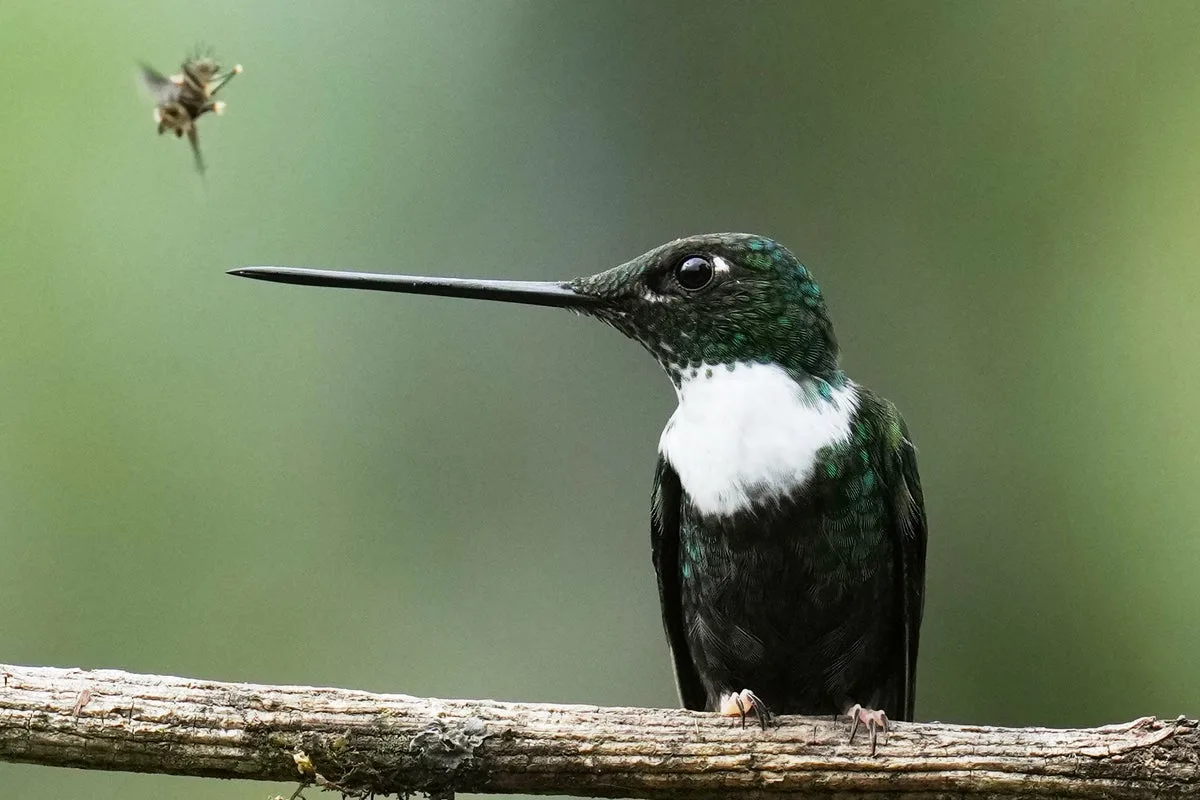
Ecuador's Ancient Forest: Final Refuge for Critically Endangered Hummingbird
Deep within the majestic Ecuadorian Andes, an ancient forest stands as a vital bulwark against the relentless advance of human development. This pristine environment, known as the Yanacocha Reserve, represents the last remaining sanctuary for the Black-breasted puffleg (Eriocnemis nigrivestis), a diminutive hummingbird species hovering perilously close to extinction.
A Species on the Brink
Measuring a mere 9 centimetres (3.5 inches) in length, this emblematic bird of Quito is classified among the planet's most critically threatened species. According to authoritative data from the International Union for Conservation of Nature, the global population of this remarkable hummingbird has catastrophically declined to an estimated 150 to 200 individual birds.
The Black-breasted puffleg is easily recognisable by its distinctive plumage, featuring striking white "trouser" feathers encircling its legs that create a vivid contrast against its deep, metallic black chest and shimmering bronze-green wings. Despite its extraordinary beauty, the species faces an existential crisis as its high-altitude forest habitats are systematically cleared for agricultural expansion and livestock grazing.
The Yanacocha Reserve: A Conservation Cornerstone
Established twenty-five years ago by the dedicated Jocotoco Foundation, the Yanacocha Reserve has evolved into a cornerstone for preserving Andean biodiversity. Conservation expert Paola Villalba explained to The Associated Press that their work revealed a crucial insight: "We realised we were conserving an entire ecosystem, not just one species." This holistic approach underscores the reserve's significance beyond single-species protection.
Shirley Farinango of the Birds and Conservation Foundation highlights the particular vulnerability of the puffleg, noting it occupies an exceptionally narrow ecological niche between 3,000 and 3,500 metres (9,800 to 11,400 feet) above sea level. This specific elevation range, she emphasises, represents "prime territory" for conversion to agricultural land, creating intense pressure on the species' limited habitat.
A Race Against Time
On the dramatic slopes of the Pichincha volcano, approximately 45 kilometres (27 miles) northwest of Ecuador's capital Quito, conservation teams are engaged in a critical race against time. Their mission: to restore and protect this vital cloud-shrouded forest ecosystem before irreversible damage occurs.
For these remarkable hummingbirds, often poetically described as the "smallest fairies" of the Andes, these dense, ancient trees represent far more than mere habitat. They constitute the species' ultimate stronghold—a final bastion against extinction where every restored hectare could mean the difference between survival and disappearance.
The conservation efforts at Yanacocha demonstrate how targeted habitat protection can serve broader ecological purposes, preserving not just individual species but entire interconnected ecosystems. As development pressures continue to mount across the Andes, such reserves become increasingly vital for maintaining regional biodiversity and ecological balance.