
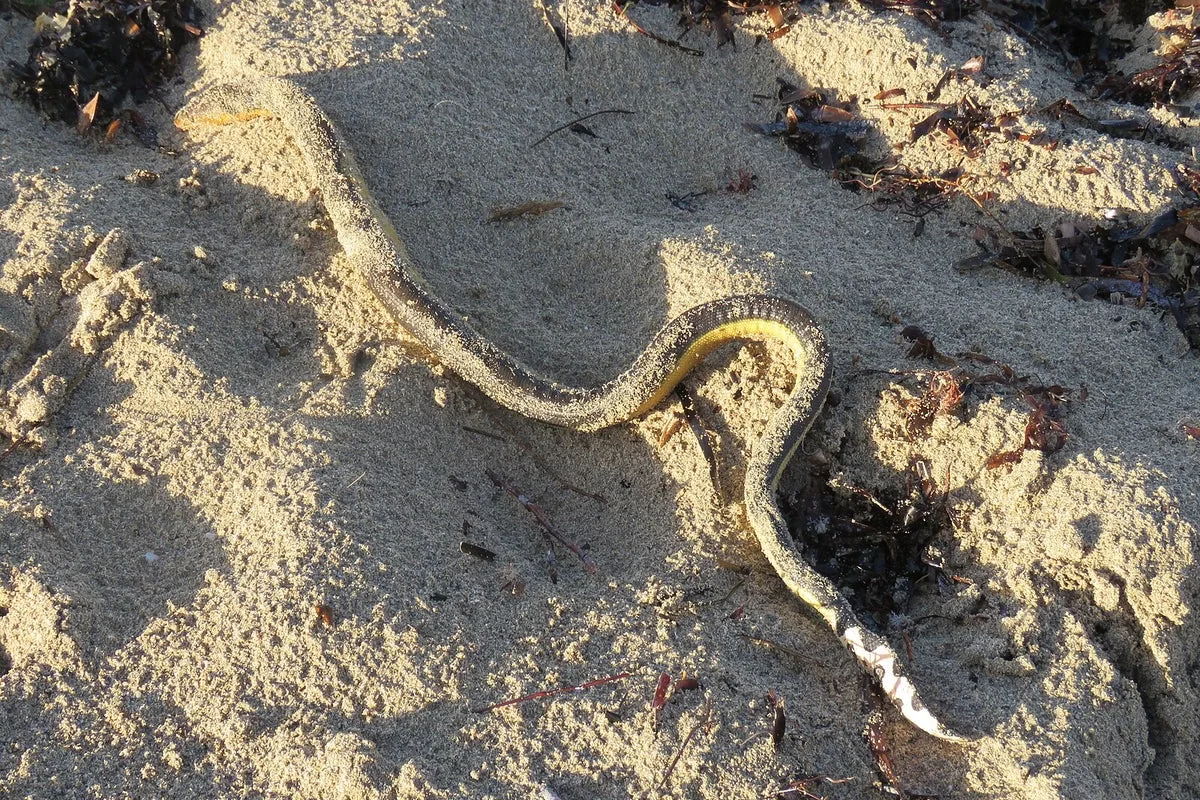
Scientists are baffled by an unusually high number of sea snakes washing up dead or stranded on Nanga Bay in Western Australia. Over a dozen highly venomous specimens have been found since October, prompting concerns for the marine ecosystem.
Northern Australia is home to over 20 species of sea snakes, all protected marine species, with two critically endangered. The cause of the strandings remains unknown, though researchers suspect extreme weather events may be involved.
“Sea snake numbers are declining, but we are unsure why. What we do know is that they are often caught as ‘bycatch’,” said the Australian Department of Climate Change, Energy, the Environment and Water (DCCEEW).
Sea snake researcher Blanche d'Anastasi urged the public to report sightings on the Australian Sea Snakes Facebook page, but warned against handling the animals. “Sea snakes are aquatic and have very fragile tissue, bones and joints, fit for life underwater,” she said.
Experts believe strandings may follow cyclones or heatwaves. A deadly heatwave in Shark Bay in 2010 caused a 76% decline in the local sea snake population. “True sea snakes have no need to come ashore, so when one becomes stranded, there is most likely an underlying illness or injury,” d'Anastasi added.
The public is advised to keep a safe distance and not push stranded snakes back into the water, as they tend to wash ashore again. Sightings should be reported with time, date, location, and details about the snake's behaviour or outcome.




