Steve Coogan's Lavish Home Upgrade Faces Amphibian Obstacle
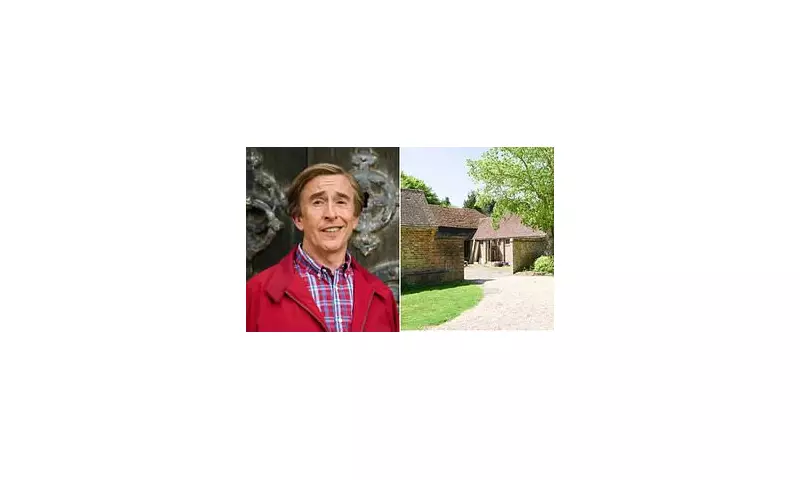
Renowned comedian Steve Coogan's ambitious plans to enhance his luxurious £4 million country estate in East Sussex have encountered an unexpected hurdle that seems straight out of one of his own satirical creations. The award-winning comic, famous for his portrayal of Alan Partridge, is seeking to construct a guest annexe but has been warned that the presence of a single great crested newt could bring all building work to an immediate standstill.
Planning Application for Guest Accommodation
The 60-year-old entertainer, who resides in a substantial Georgian manor house set within extensive grounds, has submitted a planning application to convert a disused stable block on his property. This development aims to create a one-bedroom annexe complete with a kitchen and dining area, living room, and bathroom, alongside a lower-level storage space for machinery and bicycles. The purpose is to accommodate visiting friends, family members, and guests at his rural retreat, where he has lived for nearly two decades.
Protected Species and Legal Requirements
Council officials have issued stringent guidelines to Coogan regarding the great crested newt, a species protected under UK law. He has been explicitly instructed that under no circumstances should he deliberately capture, disturb, injure, or kill any of these rare amphibians during the construction process. Additionally, he must implement protective measures such as special ramps and covers over work trenches to prevent newts from falling in and becoming trapped.

The property is situated near wetland areas believed to host several of these amphibians, which typically inhabit ponds. According to local council records, there are eleven ponds within a 500-metre radius of Coogan's home, including one located directly on his land. This proximity raises significant concerns about potential habitat disturbance.
Potential Legal Consequences
Failure to comply with these wildlife protection regulations could result in serious legal repercussions for Coogan. Under the Wildlife and Countryside Act 1981, he could face prosecution, potentially leading to fines of up to £5,000 or even a prison sentence of up to six months. It is important to note that obtaining planning permission for the development does not provide a defence against such prosecution if the protected species or their habitat are harmed.
Official Guidance from Council Licensing Officer
In response to the planning application, Katie Ewers, a licensing officer acting on behalf of the council, provided clear instructions to Coogan. She stated, 'Should great crested newts be found at any stage of the development works, then all works should cease. Stop all work immediately and leave the area.' She further advised that an ecologist must be informed promptly for guidance, emphasising that no attempt should be made to handle or rescue the newts independently. Construction should only resume once an ecologist confirms it is safe to do so.
Ewers also highlighted that if a great crested newt is discovered during the works, a licence may be required to proceed with any activities that could potentially cause disturbance. This underscores the rigorous protections in place for this species, which make it an offence to damage or destroy their breeding or resting places, or to obstruct access to these areas.
Broader Context and Decision Timeline
This planning issue arises as Coogan continues his diverse career, recently starring as football manager Mick McCarthy in a film about Manchester United legend Roy Keane. His latest spoof documentary, 'How Are You? It's Alan (Partridge)', aired on BBC1 earlier this autumn, maintaining his profile in the entertainment industry.
Local councillors are set to review Coogan's planning application and make a determination at a future date. The outcome will depend not only on the architectural merits of the proposed annexe but also on comprehensive assessments of ecological impact and adherence to wildlife protection protocols. This situation highlights the delicate balance between property development and environmental conservation in rural areas.