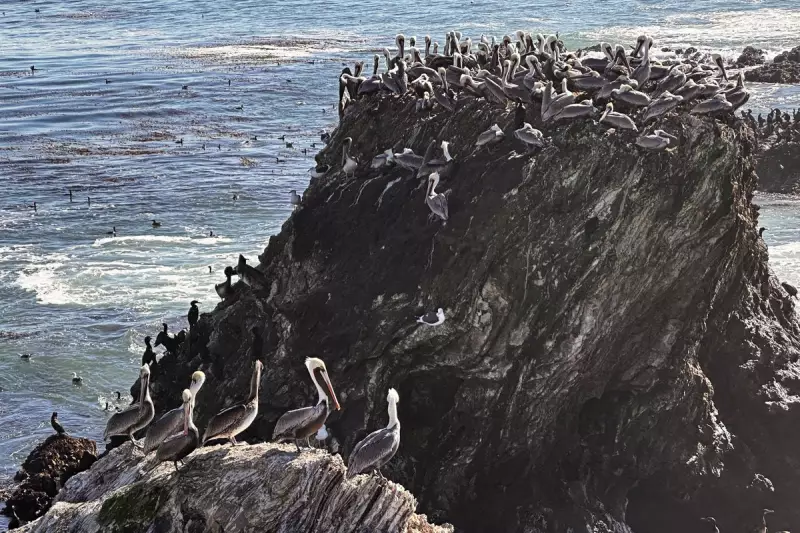
On the rugged Central California coastline, a remarkable spectacle is unfolding as hundreds of brown pelicans engage in a dramatic 'feeding frenzy'. The large seabirds, often seen as clumsy on land, transform into graceful aerial hunters, plunging into the churning ocean to feast on vast schools of fish.
A Welcome Sight for a Vulnerable Species
This mass gathering to feed on northern anchovies, Pacific sardines, and mackerel is a heartening development for a bird population that has faced significant struggles in recent years. Marine ornithologist Dr Tammy Russell, a postdoctoral researcher at the University of California, San Diego's Scripps Institution of Oceanography, describes the scene as a "good sign for the marine environment."
Thousands of birds, including cormorants and gulls, have crowded beaches and cliffs, drawn by the abundant food supply. The event is particularly encouraging given the species' troubled history. The California brown pelican was once listed on the federal endangered species list after its numbers plummeted due to the pesticide DDT, which caused catastrophic eggshell thinning. It was delisted in 2009 following a recovery, but new threats have emerged.

Ongoing Challenges in a Warming World
Despite the current abundance, scientists remain concerned. The birds, which can weigh around 8 pounds with a wingspan of nearly 7 feet, require large daily volumes of fish. "When they don't get that, they can crash pretty quickly," Dr Russell noted. A warming ocean can drive fish into deeper, colder waters, making feeding difficult.
Recent years have seen alarming events. In 2022, wildlife authorities were baffled by large numbers of sick and dying pelicans. The problem recurred last year, with scores of starving birds found in coastal communities. Earlier this year, a toxic algae bloom further poisoned pelicans and other marine life along the coast.
Monitoring the Future
Researchers are actively working to understand how the birds adapt to environmental shifts. Scientists are now using electronic leg bands to track the pelicans' movements as they travel. As the birds begin their gradual migration south to breeding grounds on islands off California or Mexico, the sight of a healthy, feeding group is a positive indicator.
"I would say the populations are somewhat stable, but some events are concerning," Dr Russell stated. While challenges from climate change and pollution persist, this vibrant display of natural behaviour off the Californian coast offers a crucial moment of hope for the future of these iconic seabirds.