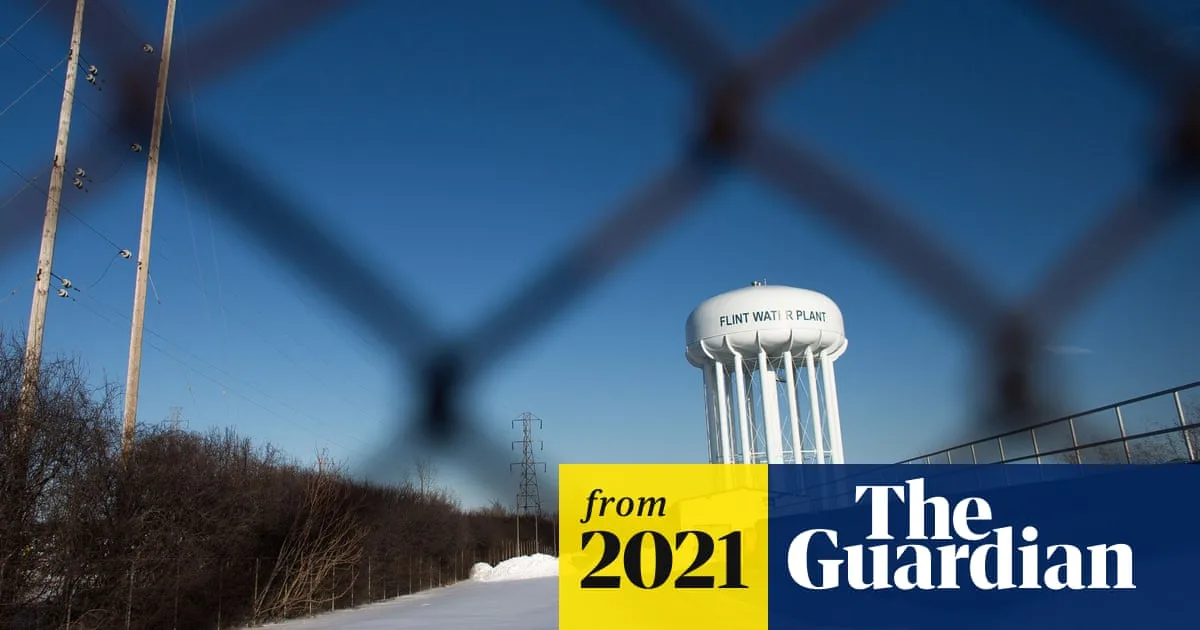
For residents of Flint, Michigan, the legacy of one of America's worst environmental health disasters is a double agony: the enduring physical effects of lead poisoning and an 11-year battle for compensation that remains unresolved.
A Decade of Denial and Delayed Justice
Deadra Whitely began suffering agonising symptoms around the time the city switched its water source in 2014. Officials had not acknowledged the toxic lead flowing from residents' taps. Flint's water had been supplied by Lake Huron since the 1960s. However, with the city government bankrupt, then-governor Rick Snyder appointed emergency managers to balance the budget.
To save an estimated $7 million, officials transitioned to water from the Flint River in 2014. Crucially, the city's lead-laden pipes were not replaced, causing the toxic metal to leach into the tap water. Residents soon noticed a strange colour and smell. It was not until early 2015 that the Environmental Protection Agency (EPA) learned of concerns about lead levels.
Even after switching back to Detroit's water supply later that year, Flint's water remained unsafe. The Centers for Disease Control and Prevention (CDC) stated approximately 99,000 residents were exposed to lead during the crisis.
'How Dare You Shut People Out?' – The Fight for Compensation
This week, new federal court documents revealed residents are still waiting for payouts from a $626.25 million civil settlement finalised in March 2023. Many, like Deadra Whitely, have been denied claims and forced into appeals.
"At first I wasn't even thinking, 'I want money.' I just wanted to be OK," Whitely told the Daily Mail. She described sharp, tingling pain, full-body rashes, and times she "could barely stand." Despite a confirmed diagnosis of lead in her system, she was recently told she was "not eligible" for the settlement.
"All I heard was 'You didn't qualify,'" she said. "How dare you shut people out like that?" She also criticised law firms that once aggressively sought clients in Flint but are now unreachable. "Now that they don't see me as a dollar sign, they don't want to talk to me."
Other residents echo her frustration. Shirley Mayes, who suffered intense foot pain and memory loss, found the requirement to provide medical proof insulting. "We all lived here. We all used that water. We shouldn't have to prove harm just to be counted," she said.
Desemee Hodge, 61, who recently tested positive for cancer, believes her diagnosis is tied to the contaminated water. Her mother was denied compensation because her lead levels were deemed insufficiently high. "It doesn't make sense," Hodge said. "We were drinking the same water."
A Modest and Delayed Payout
According to the November 21 court filings reviewed by the Daily Mail, nearly 26,000 approved claims are close to resolution, but no payment timeline has been set. Special Master Deborah Greenspan confirmed the highest possible award, excluding wrongful death claims, will be about $100,000 for the youngest children with severe exposure.
Her report states "all other awards... will be considerably lower." The settlement allocates 64% of funds to children under six. Adults and property owners will receive far smaller sums, with homes capped at $1,000 and businesses at $5,000.
So far, only $4.6 million has been paid for five wrongful death claims. Notably, attorneys have received $82.8 million in fees, a figure expected to exceed $200 million. The settlement fund is a taxable trust, meaning the IRS will also claim a portion.
Researchers have documented the long-term impact, including an 8% rise in special education needs and significant learning losses for Flint's children. Activist Melissa Mays warned the settlement must not end accountability. "This shouldn't be a sign off for our elected officials to be like, 'Oh, well, they've got their $1,000 checks - good enough.'"
While the EPA officially declared Flint's water safe this year and lifted its emergency order in May, many residents continue to rely on bottled water, their trust shattered. For thousands, the wait for justice and compensation continues, a painful postscript to a profound public health failure.




