In the face of a rapidly warming planet, the quest for reliable freshwater is pushing engineering frontiers to new depths—literally beneath the ocean's surface. With climate change intensifying droughts and disrupting rainfall, a global boom in seawater desalination is underway, prompting innovators to seek solutions to the technology's significant environmental and energy costs.
The Deep-Sea Solution: Harnessing Natural Pressure
Roughly four miles off the coast of Southern California, a company named OceanWell is pioneering a radical approach. Its planned Water Farm 1 aims to operate at a depth of 1,300 feet (400 metres), using the immense natural pressure of the deep sea to power the reverse osmosis process. This method forces seawater through membranes to filter out salt, potentially producing up to 60 million gallons (nearly 225 million litres) of freshwater daily.
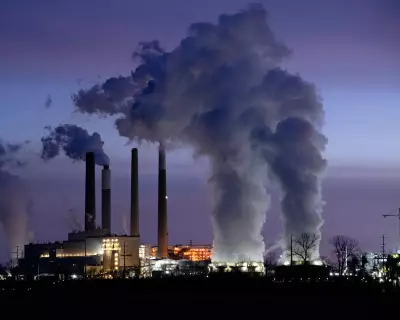
The potential energy savings are substantial. OceanWell claims its subsea system could slash energy consumption by approximately 40% compared to conventional coastal plants. This is critical, as desalination worldwide currently produces between 500 and 850 million tons of carbon emissions annually, a figure approaching the emissions of the entire global aviation industry.

"The freshwater future of the world is going to come from the ocean," stated OceanWell CEO Robert Bergstrom. "And we’re not going to ask the ocean to pay for it."
Tackling Desalination's Environmental Trade-Offs
Beyond energy, deep-sea desalination aims to address two other major ecological concerns associated with traditional plants. The first is the discharge of highly concentrated brine, which can devastate seafloor habitats like coral reefs. The second is the intake systems that inadvertently trap and kill fish larvae, plankton, and other vital organisms at the base of the marine food web.
OceanWell's proposed pods, which would float above the seabed in Santa Monica Bay, are designed with screens fine enough to exclude microscopic plankton. The system would also produce a less concentrated brine discharge, mitigating harm to delicate ecosystems.
This innovation arrives as demand soars. More than 20,000 desalination plants now operate globally, with the industry expanding at about 7% annually since 2010. "With aridity and climate change issues increasing, desalination will become more and more prevalent as a key technology globally," explained Professor Peiying Hong of Saudi Arabia's King Abdullah University of Science and Technology.
The California Crucible: Innovation and Debate
The push for better desalination is acutely felt in drought-prone regions like California. About 100 miles south of OceanWell's proposed site, the Carlsbad Desalination Plant has been a focal point of the state's environmental debate since opening in 2015. As North America's largest such facility, it supplies 10% of San Diego County's water—enough for roughly 400,000 households.
However, environmental groups have long contested its impact. Patrick McDonough, a senior attorney with San Diego Coastkeeper, highlighted the toll of intake systems: "It sucks in a tremendous amount of water, and with that, sea life... entire ecosystems." A 2019 study found the plant's brine discharge raised offshore salinity above permitted levels, though significant biological changes were not detected, likely due to prior industrial activity at the site.
Michelle Peters, CEO of plant owner Channelside Water Resources, defended its operations, citing large organism exclusion devices, one-millimeter screens, and a brine dilution process. She noted years of monitoring have shown no measurable impacts and that the plant has significantly cut energy use.
The Road Ahead: Cost and Viability
While the environmental and technical promise of deep-sea desalination is clear, experts caution that cost will be the ultimate decider. Gregory Pierce, director of UCLA’s Water Resources Group, noted that with new technologies, "It’s almost always much higher than you project... So that, I think, will be the make or break."

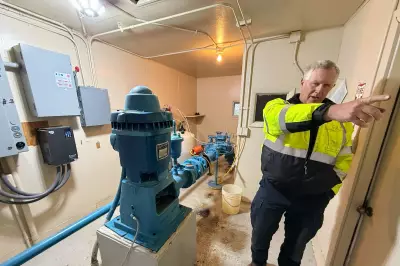
OceanWell's technology is still in development, with a single prototype operating in the Las Virgenes Reservoir. The company has also signed an agreement to test its system in Nice, France, beginning in 2026. They are not alone; Norway-based Flocean and Netherlands-based Waterise are also advancing subsea systems.
Many water experts argue that conservation and wastewater recycling—which uses far less energy—should be prioritised. Las Virgenes, serving 70,000 residents, is pursuing a wastewater reuse project alongside its desalination partnership. General Manager Michael Pedersen summed up the driving need: "What we are looking for is a water supply that we can count on when Mother Nature does not deliver."
As the climate crisis deepens, the race to secure sustainable freshwater is sending engineers into the deep blue, hoping to find a solution that neither bankrupts communities nor costs the Earth.