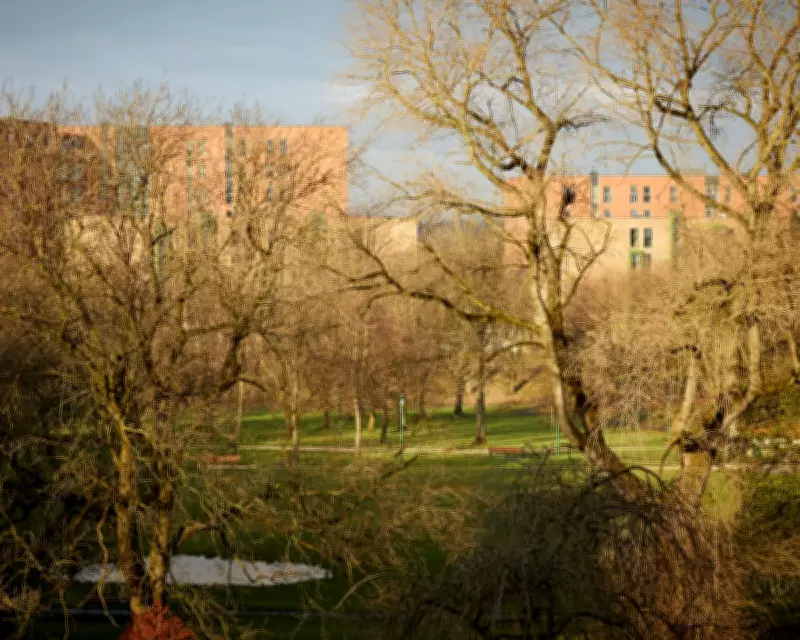
Government Data Exposes Stark Urban Nature Access Divide
Newly released government data has revealed a troubling disparity in access to nature across England, with some urban areas showing that no residents live within a 15-minute walk of green or blue spaces. The findings underscore a significant divide between rural regions and poorer urban communities, raising concerns about environmental inequality and public health implications.
Postcode Lottery of Nature Access
According to data from the Department for Environment, Food and Rural Affairs, while approximately 80% of people in England live within walking distance of nature such as parks, rivers, or woodlands, this access is far from uniform. The analysis identifies specific urban areas where access to green spaces is severely limited or entirely absent.
In some local authority areas, fewer than 20% of residents have convenient access to nature. Particularly striking examples include parts of Middlesbrough, England's most deprived local authority, where just 1% of people in one area and 16% in another live within 15 minutes of green or blue space. Even more concerning, two areas of Doncaster show no homes recorded as being within the 15-minute threshold.

Major cities including Bristol and Southampton also contain multiple neighborhoods where residents have no access to green space within a reasonable walking distance. This pattern extends across various regions, with London boroughs like Harrow, the City of London, Croydon, and Waltham Forest all showing that fewer than half of their populations meet the 15-minute standard.
Regional Disparities and Government Response
The data reveals significant regional variations in nature access. In north-east Lincolnshire, Leicester, Gedling, Nottingham, and Knowsley, fewer than half of residents can reach green spaces within a 15-minute walk. This urban-rural divide is quantified by the finding that 91% of rural households have access to nature compared to just 78% of urban households.
Access Minister Helene Hayman acknowledged the issue, stating: "Spending time in nature is so important for our mental and physical wellbeing, and this government is committed to delivering better access to nature for people across the country, no matter where they live." She emphasized that the government is working to transform access to nature from a "postcode lottery" into a guaranteed right for all citizens.
The government has initiated several measures to address this inequality, including announcing the first of nine national river walks—the Mersey Valley Way—and establishing two new national forests. These efforts align with the environmental improvement plan published at the end of last year, which mandates that everyone should have access to green or blue space.
Health Implications and Environmental Concerns
The lack of accessible nature has profound implications for public health. Recent studies indicate that living near parks or natural green spaces can reduce anxiety and depression by approximately 20%. Conversely, residents living more than 800 meters from green spaces report significantly higher levels of wellbeing issues, particularly during periods like the Covid-19 lockdowns.
Paul de Zylva of Friends of the Earth commented on the findings: "Everyone deserves access to natural spaces that are teeming with life and the many benefits they bring for the health and wellbeing of our communities and the planet." He noted that the data doesn't account for the quality of accessible spaces or other factors determining who gets to enjoy nature.
De Zylva added: "The UK is one of the most nature-depleted countries in the world. It's one thing having wild spaces on your doorstep, but they need to be places where nature can thrive—not degraded and polluted as so many are."
Broader Context and Future Challenges
The data release comes amid concerns that government policies deregulating planning for homes and infrastructure could further erode green space availability, particularly in less affluent urban areas. New legislation allows housing developers to build on previously protected green spaces without replacing lost nature in surrounding areas.

This development raises concerns about deepening health inequalities, as younger homeowners increasingly struggle to afford homes in nature-rich areas. Previous government data showed that in the 200 most disadvantaged urban areas with the lowest green space levels, 97% of residents lack access to nature within a 15-minute walk from home.
The government's environmental improvement plan represents a commitment to addressing these disparities, but the data reveals significant challenges ahead in ensuring equitable access to nature across all communities in England.