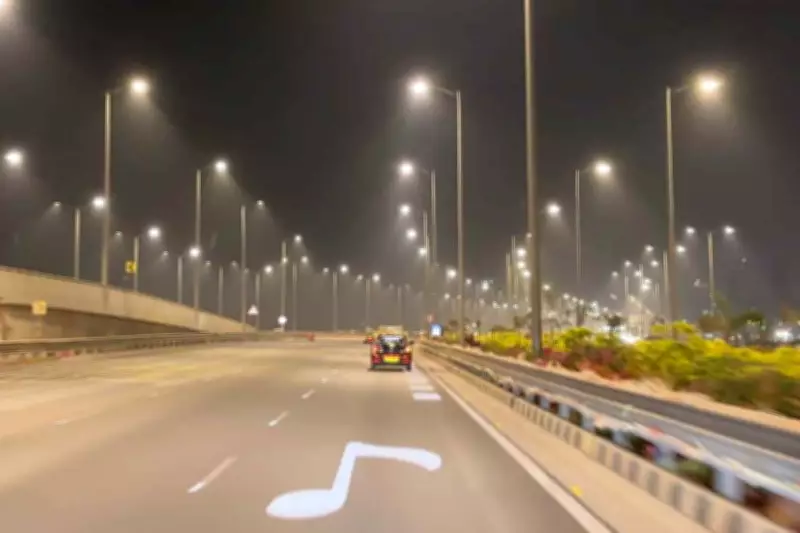
India's First Musical Road Sparks Outrage Among Mumbai Residents Over Constant Noise
India's inaugural musical road, engineered to play the popular tune "Jai Ho" from the Oscar-winning film Slumdog Millionaire, has become a source of intense frustration for residents in Mumbai's upscale Breach Candy neighbourhood. The 500-metre stretch, inaugurated on 11 February 2026 by Maharashtra Chief Minister Devendra Fadnavis, was intended to blend innovation, entertainment, and road safety, but within weeks, locals have labelled it a "menace" disrupting daily life.
Engineering and Intent Behind the Musical Road
The road features grooves carved into the asphalt, creating vibrations as vehicles pass to reproduce the melody, effectively turning it into a giant musical instrument. Officials designed it to encourage safer driving, with the tune playing clearly at speeds of 70-80 km/h and distorting if drivers exceed this limit. Signage along the route guides motorists on how to experience the musical stretch, aiming to keep them alert and reduce speeding incidents.
This concept, originating in Japan in 2007 and later adopted in countries like Hungary and the United States, is globally rare. However, Mumbai's version stands out as it passes through a densely populated, affluent area, unlike typical musical roads situated in sparsely populated regions to minimise disruption.

Residents Voice Their Discontent
Residents have expressed severe discomfort, citing the constant repetition of "Jai Ho" as an intrusive background noise. Kavita Chawla, a resident of Vaibhav Apartments near Tata Gardens, highlights the disturbance, stating, "The sound is really disturbing. We don't need it at all. There are other things we can do. Why did they waste money on this?" She adds concerns for children during exam periods, who are forced to study with windows shut due to the noise.
Namrata Sanghai, another resident on the 22nd floor, echoes these sentiments, calling the road a "24/7 thing" that is "very, very disturbing." She notes the impact on her senior father-in-law and son's health during exams, emphatically demanding, "Stop it. Immediately. Absolutely. Stop it."
Complaints and Official Responses
More than 650 families have formally complained to municipal authorities, describing the noise as a constant, muffled intrusion that prevents them from keeping windows open and causes serious discomfort, particularly for senior citizens. In a letter to local civic body chief Bhushan Gagrani, residents argue that the soundscape has worsened since the grooves were added, affecting sleep, focus, and daily rhythms due to amplification from sea breezes and building reflections.
Gagrani responded that he sees no significant disturbance or traffic safety hazard, noting the road is only 500 metres long, but promised to examine grievances. Additional Municipal Commissioner Avinash Dhakne claimed he had not received the complaint, only learning about it through local newspapers.
Safety and Broader Concerns
Beyond noise, residents raise safety issues, suggesting auditory distractions on a high-speed road could pose risks, especially as authorities prioritise novelty over addressing urgent problems like speeding high-performance cars. They also criticise the broader context of the Coastal Road project, a $1.6 billion initiative built on reclaimed land from the Arabian Sea, which has been controversial since 2011 for primarily benefiting wealthier car owners while excluding the majority reliant on public transport.
Residents express fatigue over civic concerns being overlooked in favour of non-essential interventions. Sanghai argues taxpayer money would be better spent on greening the area or improving public amenities. However, not all share this view; Gaurav Kesarkar, a nearby cafe owner, says the sound doesn't reach his location and fails to see why others find it a nuisance.
As the debate continues, the musical road remains a flashpoint in Mumbai, highlighting tensions between urban innovation and community well-being in one of India's busiest cities.