
Urban Oasis: Brixton's Ebony Horse Club Transforms Young Lives Through Equine Therapy
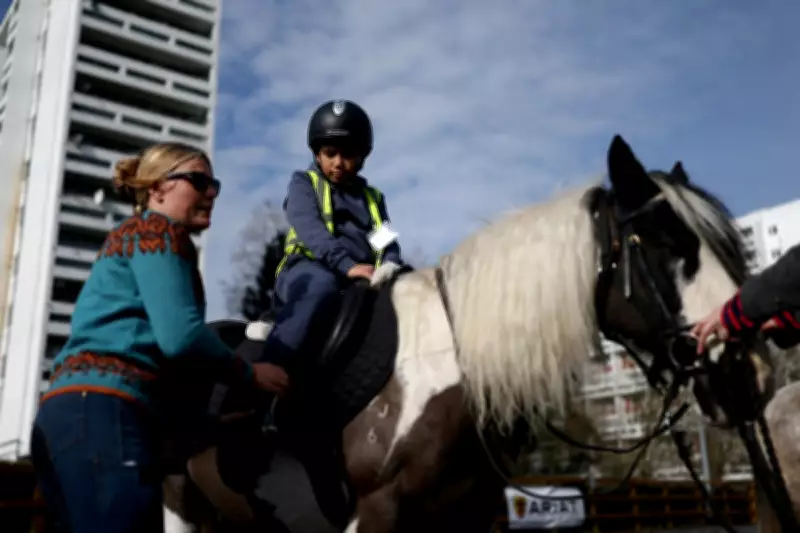
Nestled in the heart of south London, sandwiched between social housing estates and the constant rumble of train tracks, lies Britain's most urban riding school. The Ebony Horse Club, a unique sanctuary in Brixton, has been operating for three decades, offering a transformative experience for children from some of the capital's most disadvantaged backgrounds.
A Sanctuary Amidst Deprivation
This remarkable charity serves approximately 160 children each week in an area officially recognised as one of England's most deprived neighbourhoods and a known hotspot for knife crime. For many participants, like nine-year-old Matthew Sanchez who was recently seen shovelling horse manure before his lesson, it represents their very first encounter with equines.
Lead education co-ordinator Rachel Scott-Hayward, 37, observes profound changes in the children who attend. "The children grow in confidence over weeks, learning to ride, grooming the animals and mucking out the stables," she explains. "This hands-on experience builds responsibility and self-esteem in ways that classroom learning often cannot."
Breaking Down Traditional Barriers
The club's location, just three miles from central London, creates an extraordinary contrast between urban landscape and rural charm. Most significantly, the Ebony Horse Club offers free riding lessons—a stark departure from the £50 cost for a 30-minute class typically charged in wealthier parts of the city.
Ms Scott-Hayward emphasises the charity's crucial role in democratising what has historically been an exclusive pursuit. "Horse riding was traditionally viewed as a white, upper-class hobby," she notes. "Our mission is to break down those barriers and make equestrian activities accessible to everyone, regardless of background or financial means."
This commitment to inclusivity is reflected in the charity's demographics, with around 45 percent of participants identifying as being from ethnic minority backgrounds.
Personal Transformations and Community Impact
Nine-year-old Nylah Murray Charles initially approached the experience with understandable nervousness. "I got scared a bit, but I was like 'maybe I should just give it a try'," she recalls. "When I tried, it was actually great and I had fun." Her journey from apprehension to enjoyment mirrors that of many children who discover unexpected confidence through their interactions with horses.
Shanice Reid, 29, represents the charity's full-circle impact. She first learned to ride at the Ebony Horse Club as a schoolgirl and now serves as yard co-ordinator, teaching the next generation. She describes the space as "somewhere to escape" for children facing difficult circumstances at home or school—a refuge increasingly valuable as youth services shrink across the capital.
Addressing Contemporary Youth Challenges
The timing of the charity's work is particularly significant given broader social trends. Between 2010 and 2019, approximately one third of London's youth clubs closed their doors, creating a substantial gap in support services for young people. Meanwhile, children face growing pressures from constant screen time and social media engagement.
Ms Scott-Hayward views horse riding as a vital "antidote to the anxiety" prevalent among today's youth. "When you're on a horse, you can't really think about too much else," she observes. "The experience demands complete presence and focus, providing a genuine break from digital distractions and everyday stresses."
Through this unique combination of accessibility, community focus, and therapeutic benefits, the Ebony Horse Club continues to demonstrate how equine activities can transform urban lives, offering hope and opportunity in one of London's most challenging environments.




