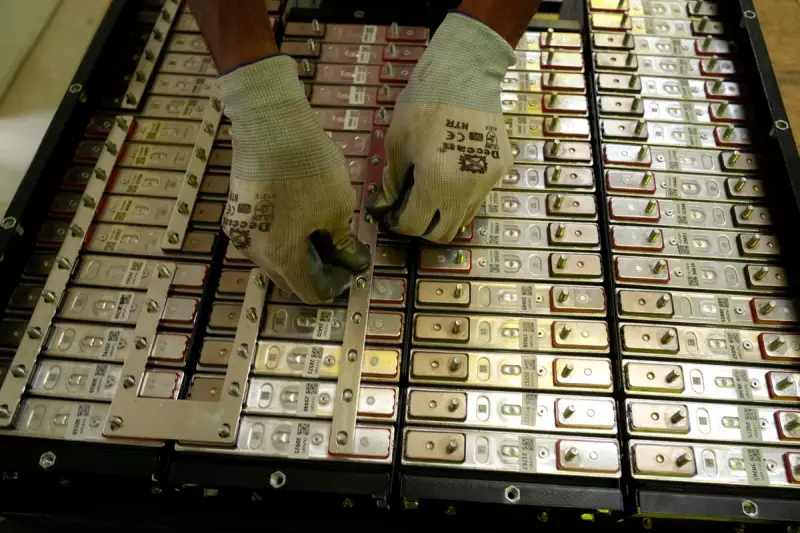
India's ambitious drive to establish a formal battery recycling ecosystem is poised to generate significant economic and environmental benefits, according to a recent analysis. The push aims to secure the supply of critical minerals, create a vast number of green jobs, and support the nation's transition to clean energy.
A Multi-Billion Dollar Opportunity Amidst Rapid Growth
As demand for batteries, primarily for electric vehicles (EVs), skyrockets, a new study highlights the immense potential of recycling. A November report from the renewable energy think tank RMI estimates that an industry built around reusing and recycling batteries could be worth a staggering $9 billion.
Rajat Verma, founder and CEO of battery firm Lohum Cleantech, draws a parallel with existing metal recycling success. "More than 40% of the country's copper and aluminum needs are met by recycling scrap," he said, expressing a desire to achieve similar self-sufficiency for lithium, cobalt, and nickel.

The RMI study suggests a formalised system could meet nearly 40% of India's demand for key minerals and create up to 100,000 green jobs. Marie McNamara, an RMI manager and report co-author, emphasised the perpetual value of these materials: "You can recycle them for perpetuity and they can still have material strength and the quality you need once you refine them."
Navigating Implementation Hurdles and Informal Networks
Despite the clear opportunity, the path forward is fraught with challenges. India currently possesses around 60,000 tons of battery recycling capacity, but not all is utilised due to underdeveloped supply chains for delivering recovered materials to manufacturers.
A significant hurdle is the country's vast informal recycling sector, which employs an estimated four million workers handling various scrap materials, often without formal contracts or safe practices. This informal structure complicates the implementation of India's 2022 Battery Waste Management Rules, which mandate safe disposal and set recycling targets with heavy fines for non-compliance.
Jaideep Saraswat of the Vasudha Foundation noted that while India moved "surprisingly fast from a policy perspective," a coherent battery recycling supply chain is still missing. Experts point to a lack of specific collection outlets, forcing each company to establish its own system.
Environmental Imperatives and Global Supply Chain Pressures
Recycling processes, which involve shredding or smelting batteries to extract metals, carry environmental risks if not managed correctly. Nishchay Chadha, CEO of ACE Green Recycling, warned that improper handling can lead to toxic contamination, carbon monoxide emissions, and wastewater pollution. "We've not expanded much in India because we don't see much appreciation for clean operations," he remarked.
The drive for recycling is also a strategic move to reduce import dependence. Globally, China controls much of the critical mineral supply chain. India, which currently has no operational lithium mines, sees recycling as crucial for mineral security. Chadha observed that China treats recycling as a critical, if sometimes unprofitable, part of its broader supply chain strategy.
To overcome its challenges, experts urge India to establish training programmes to formalise the scrap workforce and provide government support to businesses that can hire them. "Formalisation will really help drive safety and accountability," McNamara stated.
With momentum building, industry leaders like Lohum's Verma are optimistic about the scale of what can be achieved. "If the momentum that is there in India today continues, in my opinion, we can probably create five multibillion dollar giants in this industry," he said.