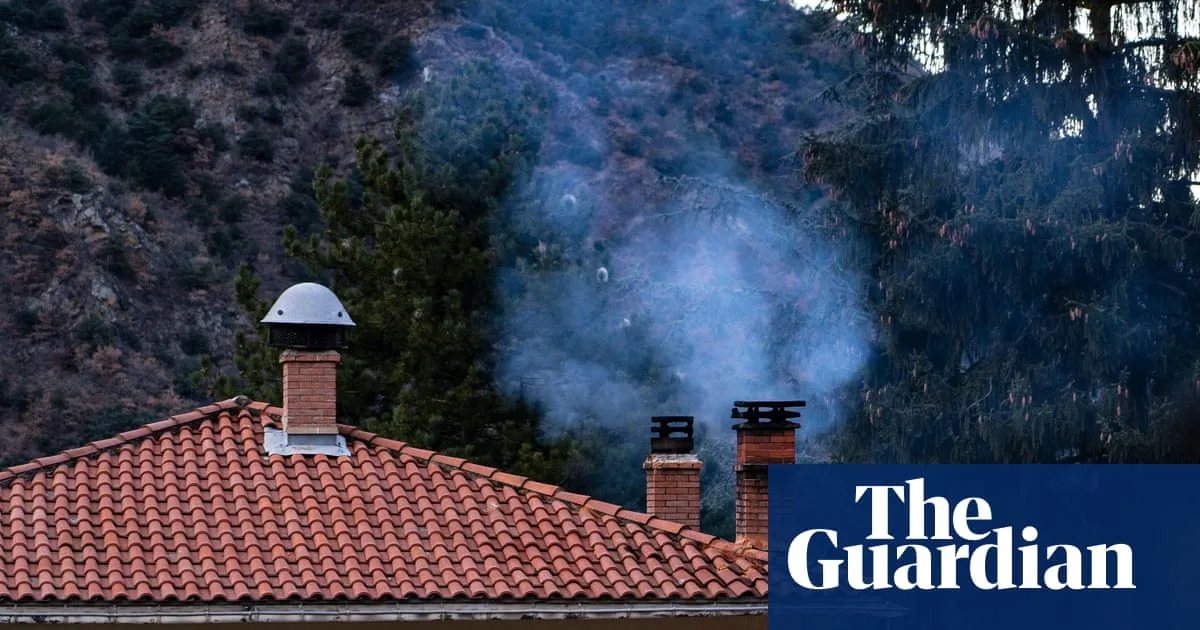
An international study published in the journal Nature has identified cutting pollution from road traffic and wood burning as the most effective way to reduce the health harm from air pollution across Europe. Rather than simply measuring the amount of particle pollution, researchers assessed its toxicity by analysing how air samples depleted the natural defences in our lungs.
The team collected more than 11,000 pollution samples on filters and placed them into artificial lung fluid to measure oxidative potential (OP), an indicator of how damaging particles are to health. Dr Steven Campbell from Imperial College London, who was not involved in the study, said measuring OP helps identify the most harmful pollution sources, guiding more efficient policies to reduce the health burden.
Samples were taken from 43 locations across six countries. The results showed that air near roads was about three times more toxic than rural air, and toxicity was worst in winter when wood burning adds to pollution. Valleys, where pollution struggles to disperse, had the most toxic air. Sarajevo, Bosnia and Herzegovina, was highlighted as a hotspot due to unrestricted wood burning for heating and an old vehicle fleet, with pollution trapped in the valley during winter.

The researchers warned that reducing the amount of particle pollution alone may not lower its toxicity if the most harmful sources are not targeted. For example, Grenoble in France and Berne in Switzerland successfully reduced particle levels, but toxicity did not improve; in Berne, some OP measurements worsened. The study also noted that non-exhaust sources like tyre, brake and road wear may become more significant as exhaust emissions decline.
Dr Gaëlle Uzu from Université Grenoble Alpes said mitigation strategies must be tailored to each environment to reduce both OP and particle pollution. The findings aim to guide governments and city authorities in designing more effective air quality policies.