
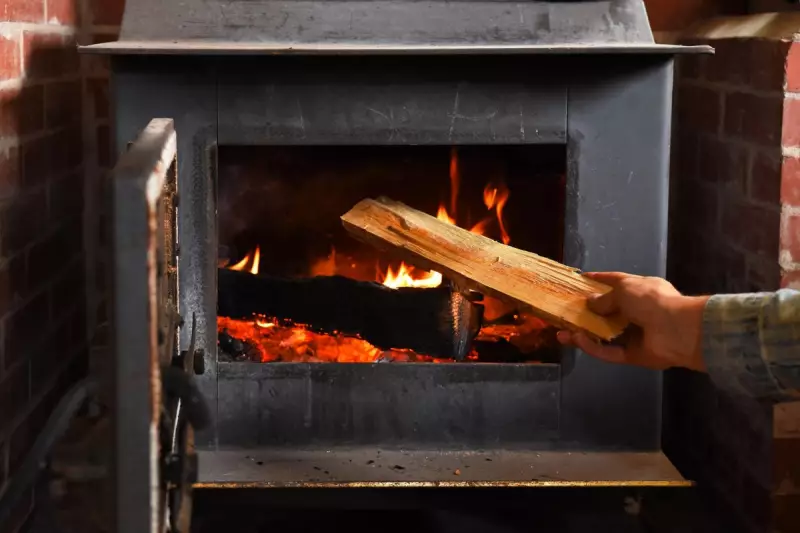
In a significant move to improve air quality, the Labour government is proposing stricter regulations for wood-burning stoves across the UK. The initiative forms a key part of the newly updated Environmental Improvement Plan (EIP), which sets out ambitious targets for reducing harmful pollutants.
Targeting a Major Pollution Source
The focus on domestic wood burners comes as they are identified as a key source of PM2.5 particulate emissions. These tiny particles are linked to serious health conditions, including asthma, lung disease, and heart problems. To combat this, the government has announced a new, more stringent target: to reduce PM2.5 levels by 30 per cent from 2018 levels by December 2030. This supersedes the previous goal of a 22 per cent reduction by 2028.
Officials from the Department for Environment, Food and Rural Affairs (Defra) have confirmed that a consultation will now begin on measures to lessen the impact of wood burning. The potential changes include tightening standards for new stoves to lower emissions and introducing clearer labelling for consumers.
What the New Rules Will and Won't Do
Defra has moved to clarify the scope of the proposed changes, assuring the public that a full ban is not on the table. Officials told The Independent they are not planning to consult on banning domestic burning by geographical area, nor will they seek to prohibit the use of older stoves that have already been sold.
Furthermore, rules for existing Smoke Control Areas (SCAs) will remain unchanged. In these zones, found in many parts of the country, people can only burn authorised fuel. "Those using stoves that comply with current SCA rules will not have to stop using them," a Defra statement confirmed.
The Stove Industry Association welcomed the government's "measured approach." Executive director Erica Malkin noted that the EIP recognises many households, particularly in rural and off-grid areas, rely on solid fuel for affordable warmth and energy security. She emphasised that modern ecodesign stoves already offer substantial reductions in emissions compared to older appliances and open fires.
Campaigners' Response and Broader Environmental Goals
The strengthened PM2.5 target was hailed as a "win" by Rosamund Kissi-Debrah, a prominent clean air campaigner. Her nine-year-old daughter, Ella, died in 2013 from an asthma attack linked to air pollution. Ms Kissi-Debrah, who campaigns for "Ella's Law" to mandate clean air in England by 2030, said: "It's not quite Ella's Law yet, but it's a step in the right direction... Anything that's going to improve the air... I am always going to be for it."
Beyond air pollution, the updated EIP, published on Monday, includes £500 million in funding to create or restore a quarter of a million hectares of wildlife-rich habitats by 2030. Environment Secretary Emma Reynolds stated the plan marks a "step change in restoring nature," with ambitious targets backed by real action.
However, environmental groups criticised the plan's overall ambition. The RSPB's chief executive, Beccy Speight, warned that the scale of nature loss is "big, real and accelerating," while Rewilding Britain's Kevin Cumming described the EIP as "woefully unambitious" in tackling the biodiversity and climate crises through large-scale restoration.




