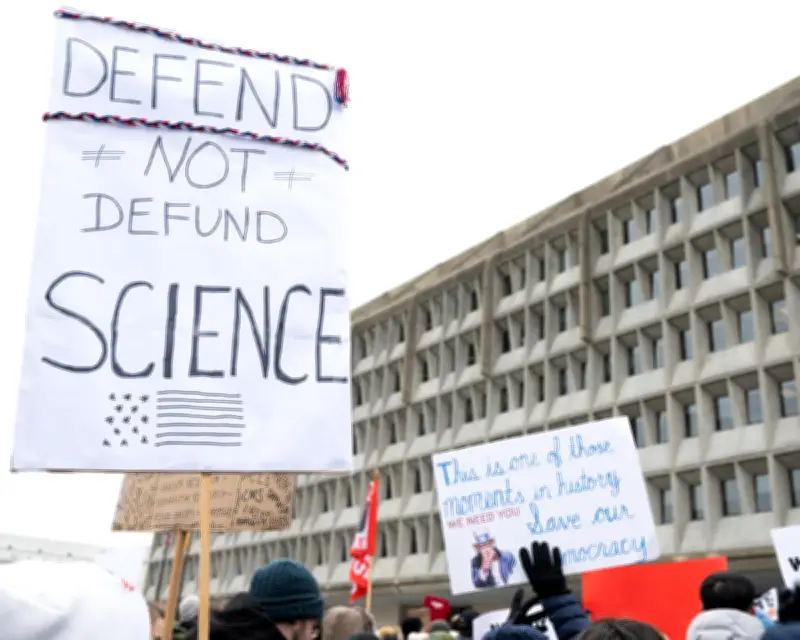
The Trump administration's approach to federal science funding appears designed to systematically dismantle the publicly funded research enterprise, according to a new analysis. Daniel Malinsky, an assistant professor of biostatistics at Columbia University, argues that recent policy changes amount to 'death by a thousand cuts,' making it increasingly difficult for scientists to conduct federally funded research.
New Rules Undermine Decades-Old Peer Review Process
In May, the Office of Management and Budget (OMB) released proposed rules that would drastically alter how federal grants are managed. The changes include requiring political appointees to review grant decisions and evaluate whether projects align with the president's policy priorities. The rules also prohibit funding for collaborations with 'covered foreign countries' or entities, potentially blocking US scientists from working with Chinese researchers on topics like cancer and environmental health.
The American Astronomical Society stated that 'the proposed rule, if passed in its current form, would enact policies that would cause significant harm to the scientific community, research institutions, and professional societies.' The public comment period closes on July 14.

Uncertainty and Budget Cuts Threaten Junior Researchers
Beyond explicit restrictions, the administration is creating uncertainty around funding availability and timelines. This unpredictability disproportionately affects junior researchers, who may be forced to leave science or the US altogether. Malinsky notes that without long-term planning capabilities, early-career scientists are being 'nudged towards leaving.'
Simultaneously, the National Science Foundation (NSF) is cutting budgets for basic research programs and redirecting $1.5 billion to a new initiative called 'X-Labs,' which aims to develop products and technologies outside traditional academic institutions. This shift, Malinsky argues, favors private tech companies over universities and basic science organizations.
Privatization Risks Undermining Public Good
Malinsky warns that redirecting research funds to private companies prioritizes profit over public health and knowledge advancement. He draws a parallel to public transportation systems that are deliberately underfunded to justify privatization, leaving citizens with worse, more expensive options. 'This is dangerous because private tech companies are by their nature motivated by profit, not by the goal of advancing knowledge, improving the public's health, or ensuring the wellbeing of future generations,' he writes.
The cumulative effect of these changes, Malinsky concludes, is a deliberate effort to shrink the publicly funded science sector. He urges scientists and the public to submit comments opposing the OMB rules and to contact elected officials to fight the administration's anti-science agenda.