UN Tax Talks: Fossil Fuel Giants Face Climate Damage Payments
Fossil fuel corporations could be compelled to pay for the climate damage they cause, while the world's ultra-wealthy may face a global wealth tax under proposed United Nations tax rules. Negotiations for a planned global tax treaty are set to resume at UN headquarters in New York this week, with dozens of nations supporting stronger regulations that would make polluters financially accountable for their environmental impact.
Developing Nations Demand Stronger Action
However, developing countries have expressed concerns that the current draft proposals lack sufficient strength, calling for more robust support from wealthier nations. The language regarding taxing fossil fuel company profits has been significantly diluted, and proposals for a global asset registry to facilitate taxation of wealthy individuals have been completely removed from the text.
Marlene Nembhard Parker, Jamaica's main delegate at the negotiations for the UN Framework Convention on International Tax Cooperation, highlighted the urgent need for action. "In the context of Hurricane Melissa, which wiped the equivalent of 40% off our GDP overnight, it is time that the draft template text on sustainable development gets fleshed out," she stated.
"A much clearer link now needs to be made to environmental taxation and climate change, with clearer agreements on the actions that must be taken, nationally and internationally, particularly for the countries and industries who are most responsible."
Hurricane Melissa's Devastating Impact
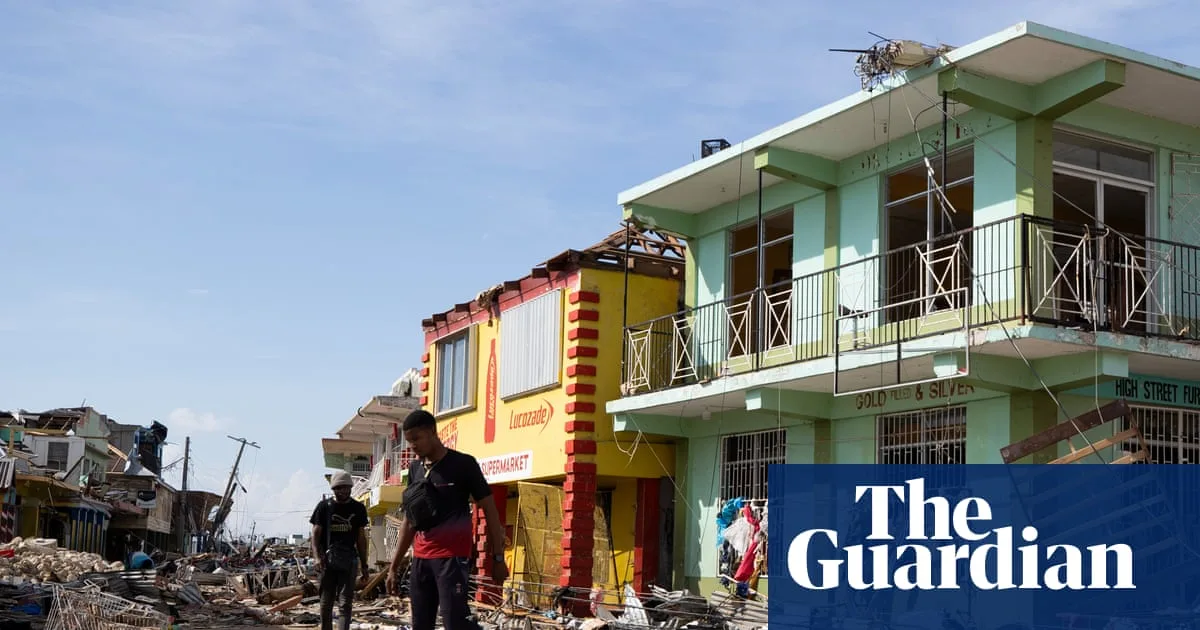
The catastrophic effects of climate change were starkly illustrated when Hurricane Melissa struck Black River, Jamaica, in October 2025. Entire streets were destroyed, with the storm causing economic damage equivalent to 40% of Jamaica's Gross Domestic Product in a single night. This devastating event underscores why developing nations are pushing for climate justice through international tax reform.
Nembhard Parker emphasised the convention's urgency as more countries experience climate-related disasters. "This [tax] is critical for domestic resource mobilisation so that countries can sustainably rebuild and become resilient to increasingly devastating climate impacts, rather than become more dependent on borrowing and debt," she explained to the Guardian.
"There can be no sustainability without dealing with climate change in the way we design our global tax rules."
Slow Progress and International Resistance
Progress on the tax treaty, originally proposed by African nations in 2022, has been sluggish. The United States has withdrawn from negotiations entirely, though this hasn't prevented other countries from continuing discussions. Some wealthy nations have argued that tax matters should be discussed within the Organisation for Economic Co-operation and Development (OECD), which includes only advanced economies, rather than within the UN where all countries have representation.
If successfully implemented, the treaty could represent a significant advancement in making fossil fuel producers financially responsible for the damage they cause while ensuring the wealthiest contribute their fair share. Inequality has skyrocketed in recent years, with the wealthiest 0.001% of the global population – approximately 56,000 individuals – holding three times more wealth than the poorest 50%, a disparity that continues to grow.
Civil Society Advocacy and Financial Implications
Sergio Chapparo Hernandes of the Tax Justice Network commented: "The next round of talks in New York will be a real test: can member states craft international tax rules that are fit for the age of climate catastrophe?"
He added: "Civil society is pushing for the convention to include a clear mandate to advance progressive environmental taxation: making sure polluters pay, and that richer countries lead in ways that reduce global inequalities and support climate-resilient development in countries most affected – consistent with their historical responsibilities."
According to Tax Justice Network research, countries lose approximately $492 billion (£359 billion) annually through tax avoidance by multinational corporations and wealthy individuals using tax havens. Meanwhile, oil and gas companies have recorded hundreds of billions in extraordinary profits in recent years, particularly following price spikes after Russia's invasion of Ukraine.
Research from Eurodad and the Global Alliance for Tax Justice indicates that a 20% surtax on the profits of the 100 largest fossil fuel producers would have generated over $1 trillion in the decade since the Paris Climate Agreement was signed in 2015.
Climate Justice and International Cooperation
For nations most vulnerable to climate impacts, taxing the corporations driving the crisis has become essential for achieving climate justice. Tapugao Falefou, Tuvalu's permanent representative to the UN, stated: "The responsibility lies with the world's biggest polluters. The fossil fuel industry and the super-rich continue to increase their wealth while we try to keep our heads above water."
While individual countries can impose taxes on fossil fuel consumption within their borders – and many already do – only nations where extractive industries operate can directly tax exploitation activities. This reality underscores the necessity for a coordinated global tax regime.
Similarly, many governments remain hesitant about implementing wealth taxes despite evidence of their success in certain countries, fearing capital flight among the ultra-wealthy. However, if a substantial group of nations agreed on minimum wealth taxes, such concerns could be alleviated. An annual wealth tax of up to 5% on the ultra-rich could raise approximately $1.7 trillion annually.
UK's Evolving Position
The United Kingdom, previously viewed by campaigners as sceptical about the UN's suitability for tax negotiations, has recently adopted a more positive approach, including endorsement of the "polluter pays" principle.
A Treasury spokesperson confirmed: "The UK has been an active participant in tax negotiations at the UN and remains committed to working constructively to ensure inclusive and effective international tax cooperation."
The convention could potentially be adopted by the end of next year if participating nations can resolve outstanding details, providing a crucial framework for addressing climate finance and global inequality through international taxation.