Sierra Leone Officials Enabled Illegal Mansions in Protected National Park
Sierra Leone Officials Enabled Illegal Mansions in Park

Sierra Leone Officials Enabled Illegal Mansions in Protected National Park

An exclusive investigation has uncovered that senior government officials in Sierra Leone facilitated the illegal construction of luxury mansions within a protected national park that serves as a vital environmental buffer for the capital city, Freetown. The findings, obtained by The Associated Press and The Gecko Project, reveal a pattern of corruption and environmental degradation that authorities have largely ignored.

Illegal Construction in a Protected Zone

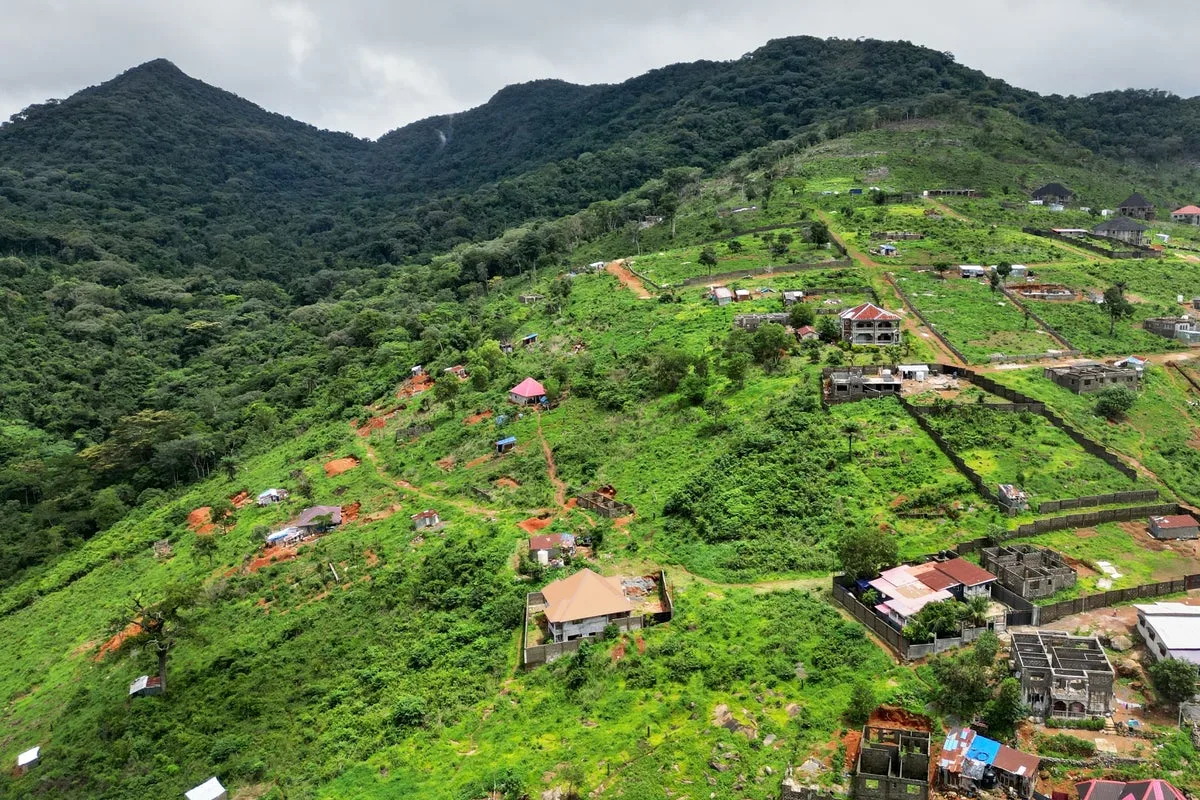
At least fifty houses have been built or are under construction within the boundaries of the Western Area Peninsula National Park, an area the government has proposed as a UNESCO World Heritage Site. The mansions are concentrated in the Bio Barray neighborhood, where rainforest stood as recently as 2019. Construction continues unabated, visible from one of the country's main highways.

The national park is not just a scenic area; it is crucial for Freetown's survival. Above the illegal mansions lies a reservoir that provides ninety percent of the water for the capital's residents. The government investigation, commissioned by President Julius Maada Bio in 2022, warns that deforestation and human activities in the park could trigger a "water shortage crisis." It describes the situation as "an environmental time bomb that has to be nipped in the bud."

Official Complicity and Inaction

The investigation committee, comprising police officers, lawyers, nonprofit workers, and a member of the Anti-Corruption Commission, found that officials at the Ministry of Lands, Housing and Country Planning were "fully aware" of the unlawful occupation of state land but were "reluctant to act robustly for reasons unknown." More damningly, the report states that some officials actively encouraged and facilitated the encroachment for personal gain.

A key figure identified is former Lands Minister Denis Sandy, who signed at least 175 documents granting land leases to private individuals—a move the investigation calls a "flagrant violation." The committee recommended punitive measures against Sandy and sixteen other named officials. Despite these recommendations, Sandy now serves as Minister of Works and Public Assets and has not responded to requests for comment.

Political Reactions and Empty Promises

President Bio initially vowed to take action, stating in 2023 that "people in high places" were involved and promising, "We will act on it very soon and do whatever is needed to be done." He even declared that no one is above the law and that illegal homes, including any belonging to his family, should be demolished. However, satellite imagery analysis by the AP shows that illegal mansions remain standing, and construction has continued even after the report was delivered to the government.

Yvonne Aki-Sawyerr, the mayor of Freetown and a presidential challenger, criticized the government's inaction, noting that the Bio Barray settlement is home to powerful individuals who were allowed to ignore the law. "They are being given permission, simple," she said.

Systemic Failures and Denials

Current Chief Minister David Sengeh claimed that various government bodies had acted on the investigation's findings but refused to disclose whether any punishments had been approved, citing the confidentiality of Cabinet discussions. When asked about the allegations against Sandy, Sengeh replied, "I don't think government makes decisions based on accusations only."

The Anti-Corruption Commission head, Ben Kaifala, denied having seen the original investigation's findings and said no investigation had been launched, though he pledged to review the report. He shifted responsibility, stating, "Other institutions must do their job. I can't do it for them." Similarly, Thomas Kamara, former executive director of the National Protected Area Authority, claimed all encroachment had been stopped and had no evidence of staff involvement in land deals. He was later removed from his post for failing to address the encroachment.

Broader Environmental and Social Threats

The illegal construction exacerbates existing environmental risks. Deforestation in the park increases the threat of landslides, which have proven deadly in the past—a 2017 landslide on the park's edge killed over 1,000 people. The park's degradation also threatens Freetown's water supply, with Maada Kpenge, former managing director of Freetown's water company, warning that deforestation compromises the reservoir's integrity.

The AP's door-to-door survey identified forty-six villas inside the park boundary, with fourteen owners reportedly holding government jobs, including positions in the president's office, the land ministry, and the Environment Protection Agency. Despite the investigation identifying 876 landowners within the park, only 301 came forward with documentation to support their claims.

This story was reported in collaboration with The Gecko Project, a nonprofit newsroom focusing on environmental issues, with support from the Pulitzer Center. The Associated Press is solely responsible for all content.




