Labour's plans to adopt EU laws will result in a nationwide ban on conventional tumble dryers, as part of the government's push towards Net Zero targets. Brussels-based officials have already enforced similar measures in Northern Ireland, prohibiting dryers that are not linked to heat pump technology.
Political Backlash
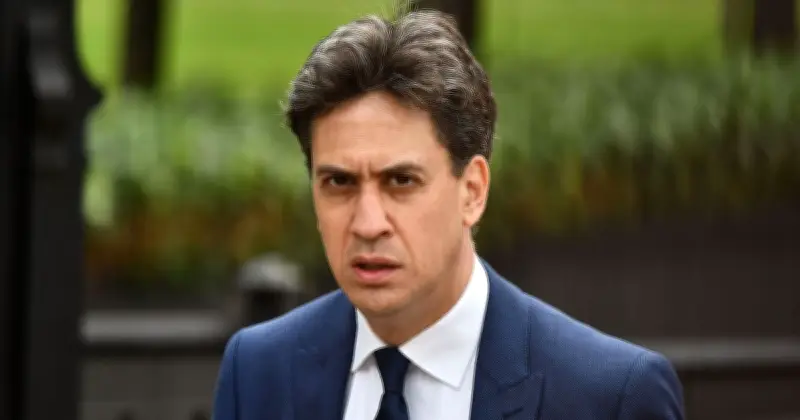
MPs have reacted with fury over the proposals by Energy Secretary Ed Miliband, who is seeking to forbid the popular household appliance across the UK. Shadow Northern Ireland Secretary Alex Burghart MP warned that "Labour's attempts to interfere in people's lives know no bounds." He described the move as "more damning evidence" that Mr Miliband's "obsession with net zero" would leave British families out of pocket.
Mr Burghart told the Daily Express that there was "even more red tape yet to come" as Labour pursued its agenda to align with Brussels. The Daily Express has long campaigned for the UK to remain a sovereign nation outside the EU, and its 'Give Us A Proper Brexit' Crusade, launched earlier this year, targets clashing EU red tape as a main objective.

Impact on Northern Ireland
The de facto ban on conventional tumble dryers is already in place in Northern Ireland. Jim Allister MP claimed it was imposed by Brussels "in order to help achieve their Net Zero targets." Since July last year, only heat pump dryers—which are "significantly more expensive"—have been available in Northern Ireland, he told the Daily Express.
Traditional tumble dryers are cheaper to purchase. Analysis from Which? shows a basic model can be bought for just £220, while heat pump dryers range from £350 to £1,000. However, Which? stresses that the more efficient models pay for themselves quickly.
How Heat Pump Dryers Work
Heat pump dryers do not require installation of a heat pump in the home; they use the same technology internally. They absorb water from laundry with hot air, which is then passed over an evaporator that extracts the water and stores it in a tank. The air is reheated before returning to the drum, making them more efficient than conventional dryers that use a constant supply of cool air heated to dry clothes.
Government Plans
Following complaints from Mr Allister and others, the government retaliated by announcing plans—without a parliamentary vote—to roll the ban out nationwide. The TUV MP claimed the move was to "allow Northern Ireland to be used to justify undermining Brexit in Great Britain." He added: "The only way forward for a secure and sustainable Brexit is for the whole UK to take back control so every part of the UK makes its own laws."
Industry Reaction
One major manufacturer, Bosch Group, welcomed the decision. A spokesman said: "We support measures that improve energy efficiency and contribute to sustainability objectives, provided they are implemented in a clear and predictable regulatory framework. We remain committed to working closely with policymakers to support the transition towards more energy-efficient household appliances while ensuring consumer choice and technological innovation."
Government Confirmation
The government confirmed the move and admitted that the measures mirror those imposed by the EU. A spokesman for the Department for Energy Security and Net Zero said: "Energy efficient tumble dryers will save households up to £910 over their machine's 20-year lifetime—putting money back into the pockets of hard-working people."
Which? reports that the average heat pump model costs around £52 a year to run, compared to £130 for a more traditional model. Justin Macmullan, Which? principal policy adviser, said that "raising efficiency standards drives innovation and cuts household energy bills." He urged the government to "continue to set clear timetables for raising standards to remove the least efficient models from sale, backed by clear energy labelling so consumers can easily choose the best option."