Mexico's El Chichón Volcano Awakens with Unsettling Signs After Four Decades
After more than forty years of relative silence, the long-dormant El Chichón volcano in Mexico is displaying disturbing new indicators of activity that have captured the attention of the scientific community. Researchers from the National Autonomous University of Mexico (UNAM) have documented rising temperatures, bubbling gases, and peculiar sulfur formations within the volcano, also known as Chichonal, during monitoring conducted between June and December 2025.
Detailed Observations of Hydrothermal Changes
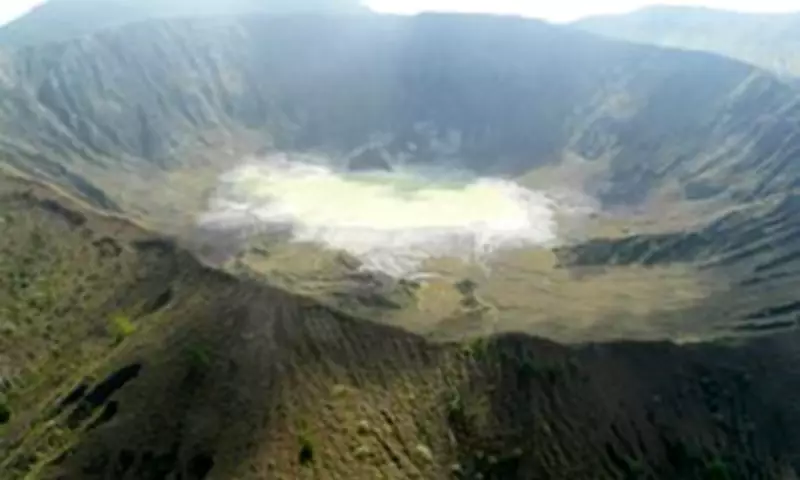
The comprehensive findings stem from meticulous fieldwork and remote monitoring executed by UNAM's Institute of Geophysics, which has dedicated years to studying Chichonal's internal dynamics. During recent inspections, scientists noted that the crater lake, typically green due to algae dominance, had transformed into a grayish hue, indicating elevated levels of sulfates and silica in the water.
Thermal measurements revealed that temperatures in the lakebed and surrounding crater floor had increased beyond normal background levels. The research team also recorded fluctuating chloride concentrations and evolving gas-water interactions, which are telltale signs of hot fluids circulating beneath the surface.

Gas Emissions and Sulfur Formations
Gas sampling efforts uncovered accumulations of hydrogen sulfide (H₂S) and carbon dioxide (CO₂) near the crater. These gases can present hazards to humans and animals if they concentrate in enclosed or low-lying areas. Additionally, unusual hollow sulfur spheres forming in liquid sulfur pools were documented inside the crater, adding to the volcanic intrigue.
Despite these dramatic signs, experts emphasize there is currently no evidence of magma movement beneath the volcano. Volcanologist Dr. Patricia Jácome Paz of UNAM clarified that the observed activity is most likely driven by superheated groundwater interacting with hot rock, rather than molten magma ascending toward the surface.
'The observed behavior is consistent with hydrothermal processes or minor steam-driven explosions,' Dr. Jácome Paz stated in a recent lecture discussing the findings.
Historical Context and Current Monitoring
El Chichón last erupted in 1982, resulting in one of Mexico's deadliest volcanic disasters, claiming at least 2,000 lives. Beginning on March 28 of that year, the volcano unleashed a series of powerful eruptions that persisted into April, propelling ash clouds high into the atmosphere and triggering lethal pyroclastic flows. Entire villages were obliterated, agricultural lands were buried under ash and debris, and thousands of residents were compelled to flee, causing extensive long-term economic and environmental damage across the region.
Today, scientists assert that the current activity bears minimal resemblance to the conditions that preceded the 1982 eruption. Seismic data collected in the region show low levels of earthquake activity, further supporting the notion that magma is not presently moving beneath the volcano.
Ongoing Research and Public Safety
To enhance tracking of Chichonal's behavior, researchers are employing drones, satellite remote sensing, and on-site instruments to monitor thermal anomalies, gas plumes, and ground deformation. Continuous monitoring is deemed critical, as volcanic systems can alter rapidly, and early detection is paramount for public safety.
For now, experts advise there is no cause for public alarm. However, the renewed activity at Chichonal serves as a stark reminder that dormant volcanoes are seldom truly inactive, and even decades of quiet can conceal ongoing processes deep beneath the surface.