
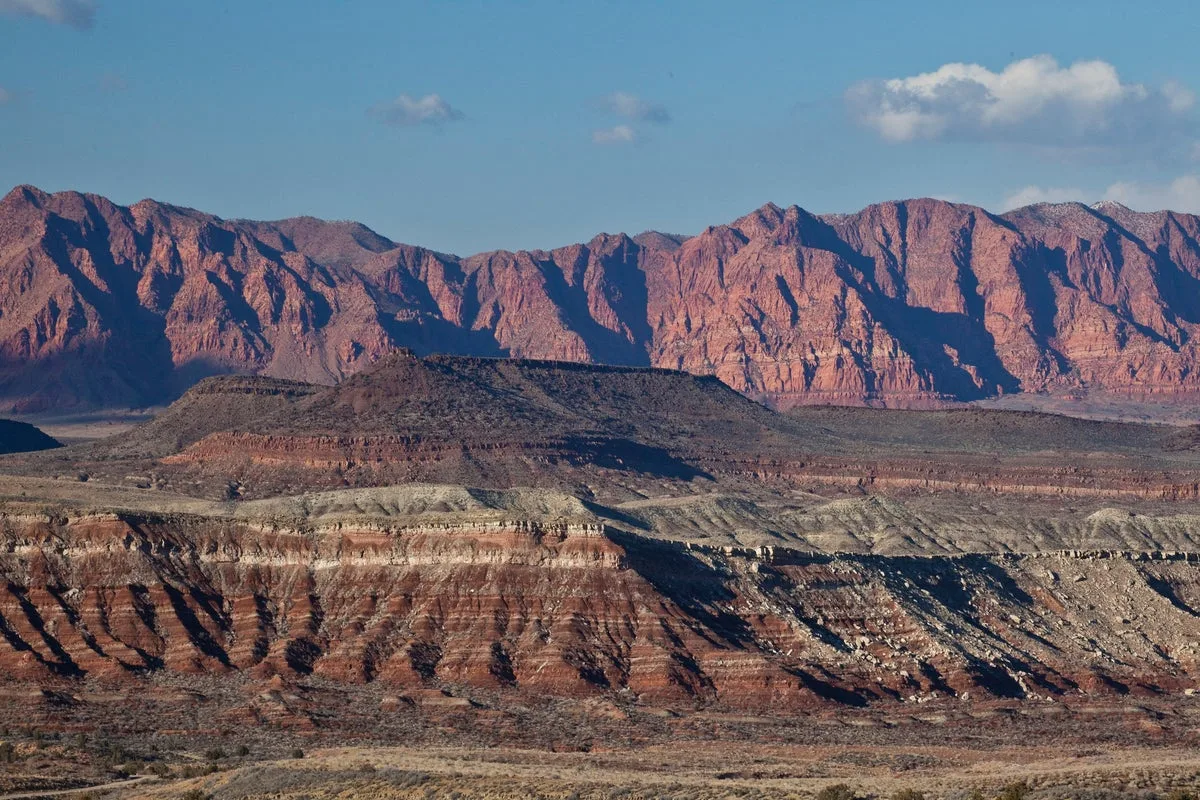
Conservation advocates have filed a lawsuit against the Trump administration after the Bureau of Land Management (BLM) reapproved a plan to build a four-lane highway through the Red Cliffs National Conservation Area in southwestern Utah. The proposed 4.3-mile road would bisect the 44,724-acre protected zone, raising concerns about damage to the Mojave Desert ecosystem and the threatened desert tortoise.
The lawsuit, supported by groups including the Center for Biological Diversity, Conserve Southwest Utah, and the Southern Utah Wilderness Alliance, argues that the reapproved project violates environmental laws and a 2023 settlement that previously halted construction. The groups are asking a federal judge to rule the project illegal.
Steve Wittek, executive director of Conserve Southwest Utah, said in a statement that the Utah Department of Transportation is already conducting construction work in the area. “Preservation of Red Cliffs National Conservation Area is inextricably linked to the quality of life and economic prosperity in Washington County,” he said. “Our community has repeatedly made clear that better traffic solutions exist and that they oppose a highway through what should be protected lands.”
The BLM’s stance on the highway has shifted with changes in federal administration. In 2024, before President Donald Trump took office, the BLM issued an environmental impact analysis finding that construction would harm the desert tortoise, increase wildfire risk, and encourage invasive species. After Trump took office, the bureau issued a new report in October citing “new information” that an alternative route was feasible.
Local resident Tom Butine of St. George said the lawsuit was necessary because local governments have not engaged in open dialogue. “This lawsuit, like the last one, is necessary because our local governments have declined to engage their constituents in an open community dialogue — one that could more clearly define the problem, address its related impacts and explore alternative solutions that have been consistently ignored,” he said.
The Independent has contacted the BLM and the White House for comment.




