Revealed: The Toxic Legacy of Southern Carpet Manufacturing
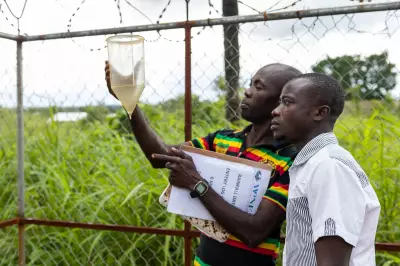
A comprehensive investigative collaboration between five major news organisations has uncovered how chemicals used to create stain-resistant carpets have contaminated extensive areas across the American South. The investigation reveals a decades-long pattern of pollution affecting water supplies and public health in multiple states.
Decades of Contamination from Carpet Mills
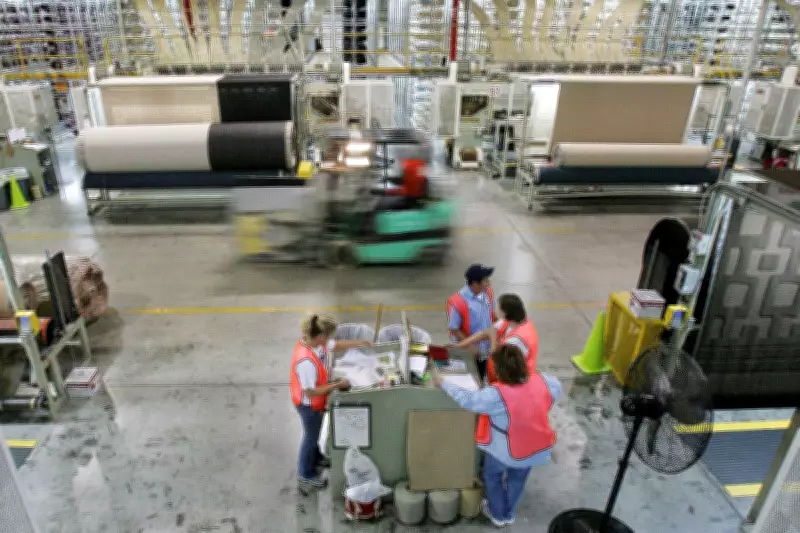
In the manufacturing mills of northwest Georgia, workers began treating carpets with per- and polyfluoroalkyl substances (PFAS) during the 1970s. These industrial compounds, designed to repel stains and water, entered manufacturing wastewater systems and subsequently spread into regional rivers and drinking water supplies.
The odourless and colourless chemicals, commonly called "forever chemicals" due to their persistent nature that takes decades or longer to break down, have become ubiquitous throughout the region. Scientific analysis confirms PFAS now circulate in human bloodstreams and accumulate in vital organs across affected communities.

Industry Coordination and Regulatory Gaps
As evidence mounted about potential health and environmental risks, carpet industry executives engaged in private coordination with local public water utilities that effectively shielded their companies from regulatory oversight. Manufacturers continued using PFAS formulations for years, even as scientific consensus solidified during the 2000s and 2010s about associated health threats including certain cancers and compromised immune systems.
Major carpet corporations maintain they complied with all existing regulations and have since discontinued PFAS usage. They attribute responsibility to chemical suppliers who provided false assurances about the safety of earlier formulations.
The Human Impact in Carpet Country
Northwest Georgia has served as the epicentre of American carpet manufacturing for generations, with fleets of semi-trucks bearing logos of global industry leaders traversing communities where textile work has sustained families for decades. Local residents now face health conditions scientifically linked to forever chemical exposure.
"Around here, you have to understand the people. That's all we know, right?" said Marie Jackson, a former carpet worker with PFAS detected in her blood and thyroid nodules. "You go in, you know your job, you do your job, you go home."
Reporting demonstrates how regulatory gaps at state and federal levels permitted carpet companies and chemical suppliers to legally alternate between different PFAS formulations. For decades, manufacturing facilities operated by industry giants Shaw Industries and Mohawk Industries discharged PFAS-contaminated wastewater through sewer systems to treatment plants incapable of removing the persistent chemicals, with much eventually reaching the Conasauga River.
Cross-State Contamination and Legal Responses
The environmental impact extends well beyond Georgia's borders, with contamination affecting Alabama and South Carolina communities located downstream from manufacturing sites. In South Carolina, investigative work traced PFAS contamination to a river adjacent to a Shaw Industries facility, leading to legal action and eventual implementation of specialised filtration technology.
Approximately 100 miles from Georgia's carpet mills, Alabama communities struggle with PFAS in drinking water supplies while receiving minimal state assistance. Several municipalities have pursued legal settlements with upstream carpet companies and chemical manufacturers to fund expensive new water treatment infrastructure.
Private Well Vulnerability
The investigation highlights particular risks for approximately 40 million Americans relying on private wells for drinking water. While public utilities face forthcoming federal PFAS limits, private well owners remain unprotected by such regulations and frequently remain unaware of contamination for extended periods.
At least twenty states conduct no proactive testing of private wells beyond areas with suspected PFAS problems. When contamination is identified, homeowners often face years-long struggles to secure alternative clean water sources.

Industry Transition and Ongoing Concerns
While the carpet industry utilised PFAS more extensively than most sectors due to industrial-scale stain resistance requirements, the chemicals appear in numerous consumer products including nonstick cookware, waterproof clothing, and firefighting foam. Even minuscule concentrations—equivalent to less than a drop in an Olympic swimming pool—can create health risks in drinking water.
Major manufacturers report discontinuing PFAS usage in 2019 and operating within permits issued by local utilities, who maintain they follow guidance from state and federal regulators that have not prohibited PFAS in industrial wastewater.
The full narrative of institutional prioritisation of economic interests over public health continues emerging through legal proceedings and investigative journalism, revealing how an industry that sustained regional economies simultaneously polluted environments across multiple Southern states.