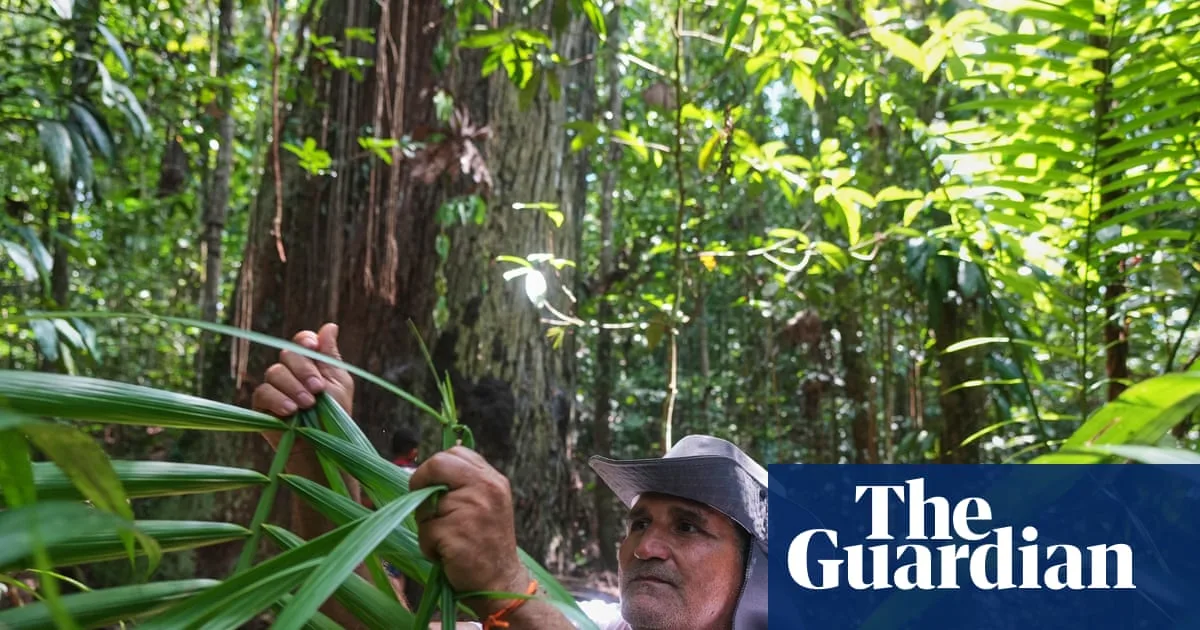
A short boat ride from Belém, the host city of the COP30 climate summit, lies the quilombola community of Menino Jesus, whose residents say their voices are being ignored in global climate discussions. Quilombolas are descendants of enslaved people who fled into the Amazon rainforest centuries ago, establishing a unique way of life in harmony with nature.
Now, the community faces a new threat: a private company plans to build a landfill just half a kilometre from their settlement, on land that is home to dozens of quilombola communities. The proposed site would cover 200 hectares and, according to residents, devastate their agricultural livelihoods and the environment. ‘This is the most terrible crime that we can have here,’ said elder Edson Coelho. ‘We work with agriculture, we preserve the environment. If this landfill is there, we will no longer be able to live here or sell any type of product.’
Research shows that Menino Jesus and neighbouring quilombola territories have exceptional biodiversity, with deforestation rates 29% to 55% lower than in protected and unprotected areas. However, only 4.3% of Brazil’s 1.3 million quilombola people have legal rights over their land. The Pará state government initially denied a licence for the landfill, but a local court ordered the licensing process to continue, and a final decision is pending.

Despite the uncertainty, rubbish has already been dumped at the site. Fabio Nogueira, a community member, called the nearby climate summit ‘contradictory’. ‘What the world is talking about and deciding is not considering our voices,’ he said. ‘We are the true guardians, the true defenders of the forest, and we have no opportunity to expose what is afflicting us.’
During COP30, Brazil announced the creation of ten new Indigenous territories, including quilombola land, and the summit’s final documents referenced Afro-descendant communities for the first time. While some welcomed this as progress, the Menino Jesus community remains concerned that their struggle for recognition and land rights is far from over.