Argentina's Nuclear Ambitions Face Fierce Opposition in Patagonia
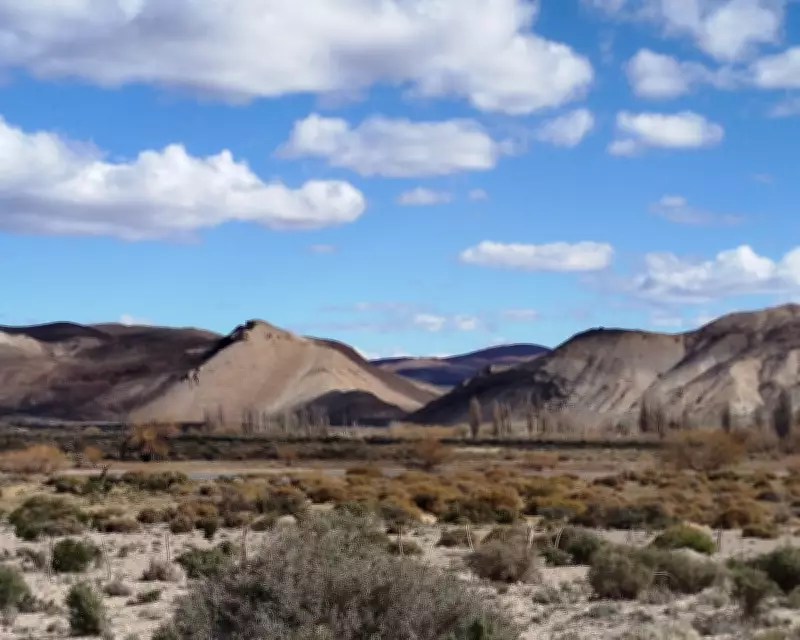
The remote Patagonian steppe around Cerro Cóndor, a hamlet with a sparse Indigenous Mapuche population, is at the centre of a contentious national debate. This area, where uranium was mined in the 1970s, is now in the spotlight as President Javier Milei's administration eyes its proven uranium deposits, sparking fears about environmental damage and loss of sovereignty over key resources.
Local Concerns and Historical Scars
On an outcrop above the Chubut River, Sergio Pichiñán points to distant hillsides where uranium mining once left a legacy of destruction. "That's where they dug for uranium before, and when the miners left, they left the mountain destroyed, the houses abandoned, and nobody ever studied the water," he says, citing community suspicions linking past mining to cases of cancer and skin diseases. "If they want to open this back up, we're all pretty worried around here."
Cerro Cóndor, with its harsh climate and little rain, saw uranium extraction by the National Atomic Energy Commission (CNEA) in the 1970s. Now, with Milei aiming to shift Argentina's nuclear strategy, the adjacent Cerro Solo deposit—one of CNEA's largest proven uranium reserves—is targeted for restarting mining. This move is the first step in a broader plan that includes developing small modular reactors, using them to power AI datacentres, exporting reactors and uranium, and partially privatising the state-owned nuclear energy utility, Nucleoeléctrica.

Strategic Shifts and Sovereignty Fears
Argentina's non-military nuclear programme, 75 years old, currently provides about 5% of the country's electricity through three plants. Uranium production declined in the 1980s, with mines closing in the 1990s, leading to imports since 1997. While many see restarting extraction as strategic, critics argue it prioritises US interests over domestic needs.
Adriana Serquis, a nuclear physicist and former CNEA president, warns, "The plan doesn't seem oriented toward supplying our own plants, but rather exporting uranium directly to the US. It would appear the objective is to satisfy others' needs while destroying our own capabilities." This concern is bolstered by agreements like the one between Dioxitek, a CNEA subsidiary, and US-based Nano Nuclear Energy to supply uranium hexafluoride, a form not used in Argentina's reactors, suggesting exports over local energy production.
Diego Hurtado, ex-president of the national nuclear regulatory authority, adds, "Argentina doesn't have extra uranium. Exporting uranium isn't an Argentine nuclear plan; it's banana republic-style mining: 'I'll sell you raw materials so you can use them to generate employment and industrial capacity in your country instead of here.'"
Political Realignment and Criticism
Milei's alignment with Washington, declaring Argentina an "unconditional ally of the US," includes joining the US Foundational Infrastructure for the Responsible Use of Small Modular Reactor Technology (First) programme. Hurtado notes, "Since the late 60s, the US has systematically tried to undermine Argentina's nuclear development. They treat Latin America as their back yard and don't want competitors for their technology here."
The administration has also mothballed the Carem small modular reactor project, in which Argentina invested over £560m and was among the world's most advanced, in favour of a new, less-developed project. Serquis criticises this, saying, "Not only have they stopped investing in the project, but all the engineering and research teams are being dismantled. They say they're going to have four SMRs built in five years, and that's just fiction."
Environmental and Social Backlash
Milei's broader dismemberment of public research and environmental agencies has exacerbated fears. Hurtado describes it as "catastrophic," citing budget cuts and brain drain. The plan to privatise 44% of Nucleoeléctrica, despite its budget surplus, raises alarms about losing strategic control. Isidro Baschar, a former company director, argues, "Nuclear energy combines critical infrastructure, extremely long-term investments, highly specialised licensing and international commitments regarding security and non-proliferation. None of that can be sustained through market logic alone."

In Patagonia, grassroots opposition is strong. Chubut has a history of anti-mining movements, with an 81% "no" vote in a 2003 referendum on open-pit gold-mining leading to a provincial ban. Anti-nuclear ordinances are common, and protests have blocked legislation. Orlando Carriqueo of the Mapuche-Tehuelche parliament states, "We're being turned into an energy colony," highlighting concerns about uranium mining and waste management.
Near old mine sites, tens of thousands of tonnes of uranium tailings remain with minimal protection, and CNEA reports show no radiation monitoring. Pichiñán reflects on broken promises: "What happened back then, when they told us we were going to be rich? Where's all that wealth? Where are the people who were going to have work and money?" He vows, "Whatever happens, we can't let them do this."