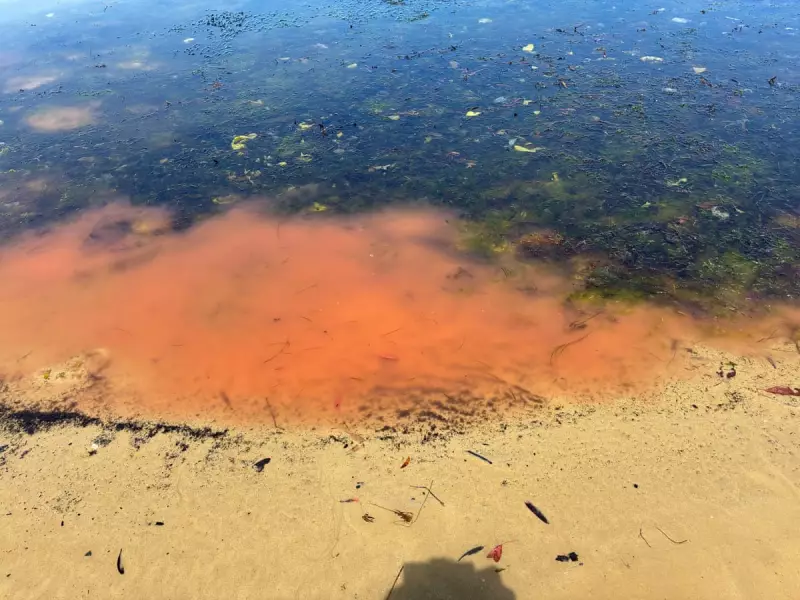
A mysterious and rapidly spreading pink slime has appeared on several secluded beaches in southern Tasmania, prompting an urgent environmental investigation and fears of a significant algal bloom. The substance, described as a pink-tinged sludge, was first reported along a stretch of Randalls Bay, approximately 60 kilometres south of Hobart, on Friday morning.
Authorities Scramble to Identify the Substance
Tasmania's Environment Protection Authority (EPA) has collected samples for testing to determine the exact nature of the substance. Similar reports have emerged from Little Roaring Beach and Little Taylors Bay in the D’Entrecasteaux Channel, indicating the phenomenon may be spreading. While officials acknowledge that algal blooms are a natural occurrence, the sudden appearance and growth of this pink slime have raised significant concerns among scientists and local campaigners.
A spokesperson for the Department of Natural Resources and Environment Tasmania stated that blooms can be triggered by changes in nutrients, temperature, rainfall, or light. "They are sometimes called red or pink tides because the blooms can turn the water red," the spokesperson said, adding that not all such events are harmful. The most common cause in Tasmanian waters is the marine phytoplankton Noctiluca scintillans, known for creating bioluminescent displays.

Scientific Concerns and Potential Causes
Estuarine ecologist Faith Coleman, who investigated a recent devastating algal bloom in South Australia, suggested that based on photographs, the likely culprit is Noctiluca scintillans, or "sea sparkle." She noted that while this species does not produce the same toxins as the bloom that killed hundreds of thousands of marine animals in South Australia, it poses a different threat. "It does eat small invertebrates and lots of fish eggs," Coleman explained, putting fish and crustacean populations most at risk.
However, marine scientist Lilly Henley, who collected samples for the group Neighbours of Fish Farming, reported that the suspected bloom had "grown significantly" within a 12-hour period. Henley expressed immediate public safety concerns, having experienced a tingling sensation on her skin after contact with the contaminated water. She pointed to potential links with the local salmon farming industry, citing similar incidents in Chile.
Calls for Urgent Government Action
The situation has escalated into what environmental campaigners are calling an "environmental emergency." The Bob Brown Foundation has reported dead octopus and sea cucumbers washing ashore. Veteran campaigner Bob Brown has directly called on Tasmanian Premier Jeremy Rockliff to visit the site and take control of the government's response, warning of a potential "disaster in the making, economically as well as environmentally."
In response, Premier Rockliff, speaking on Saturday, stated he was unaware of any connection to the salmon industry and emphasised the need for scientific testing before drawing conclusions. "We need to ensure our waterways are environmentally safe and sustainable," he said, referencing Tasmania's 1,200 beaches as vital assets.
The event underscores a broader global trend. While algal blooms occur naturally, their frequency and severity are increasing, driven in part by climate change and nutrient pollution from various sources, which create ideal conditions for rapid phytoplankton growth. The coming days, as test results are awaited, will be critical for understanding the full scope of this pink slime incident and its impact on Tasmania's precious marine ecosystems.