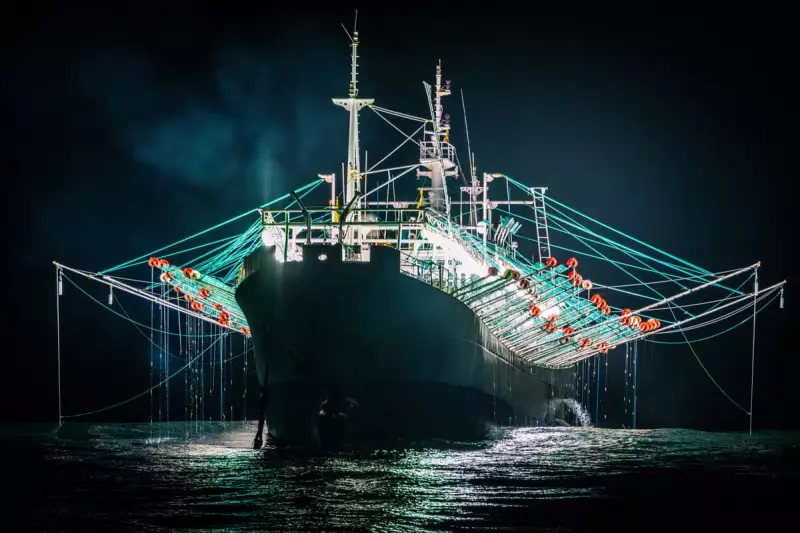
A colossal armada of industrial fishing vessels, large enough to be visible from space, is operating with near impunity in a critical region of the South Atlantic, triggering alarms over environmental devastation and human rights abuses.
The Floating City at Mile 201
Just beyond Argentina's 200-nautical-mile Exclusive Economic Zone (EEZ) lies an area known as Mile 201. This strip of international waters has become a magnet for a massive distant-water fishing fleet, predominantly from China. The Environmental Justice Foundation (EJF) describes it as one of the world's largest unregulated squid fisheries.
From a monitoring room in Buenos Aires, Argentinian coast guard officers like Commander Mauricio López watch the fleet's movements in real time. "Every year, for five or six months, the foreign fleet comes... It's creating a serious environmental problem," López states. The fleet's scale is such that it regularly forms a "city floating on the sea", visible in satellite imagery.

Ecological Domino Effect and 'Dark' Operations
The target is the short-lived squid, a cornerstone species with a one-year life cycle. There are no internationally agreed catch limits for squid in this area, creating a dangerous regulatory vacuum. Lieutenant Magalí Bobinac, a coast guard marine biologist, warns that the relentless fishing pressure does not respect the squid's biology.
The consequences are potentially catastrophic. Squid are a vital food source for whales, dolphins, seals, seabirds, and commercially vital fish like hake and tuna. A collapse in squid populations could trigger a cascade of ecological disruption, impacting biodiversity and the economies of coastal communities and major markets like Spain.
Compounding the problem is widespread evasion. López reports that a significant percentage of ships deliberately disable their identification systems—a practice known as "going dark"—to avoid detection while fishing in the ungoverned waters. "Outside our exclusive economic zone, we cannot do anything – we cannot board them, we cannot survey, nor inspect," explains Lieutenant Luciana De Santis, a coast guard lawyer.
Abuses Beyond Overfishing
The EJF's investigation uncovered a litany of disturbing practices extending beyond environmental harm. Their research suggests widespread cruelty to marine wildlife, with crew testimonies indicating the deliberate killing of seals on over 40% of Chinese squid vessels surveyed.
Furthermore, the investigation revealed serious human rights and labour abuses on these vessels. Workers reported physical violence, wage deductions, intimidation, and conditions akin to debt bondage, trapping them at sea with excessive hours and little rest.
Steve Trent, EJF's founder, condemns the fishery as a "free for all" and a "mad fishing effort." He emphasises that much of the squid caught under these conditions enters supply chains destined for the EU, UK, and North America, meaning consumers may unknowingly purchase tainted seafood.
The charity is calling for a ban on imports linked to illegal or abusive fishing and for a global transparency charter to govern fishing on the high seas. "The Chinese distant-water fleet is the big beast in this," says Trent. "Beijing must know this is happening, so why are they not acting? Without urgent action, we are heading for disaster." Requests for comment from Chinese embassies went unanswered.