Amazon Tribe's Unexpected Birth Brings Hope Against Extinction
Amazon Tribe's Birth Brings Hope Against Extinction

Amazon Tribe's Unexpected Birth Brings Hope Against Extinction

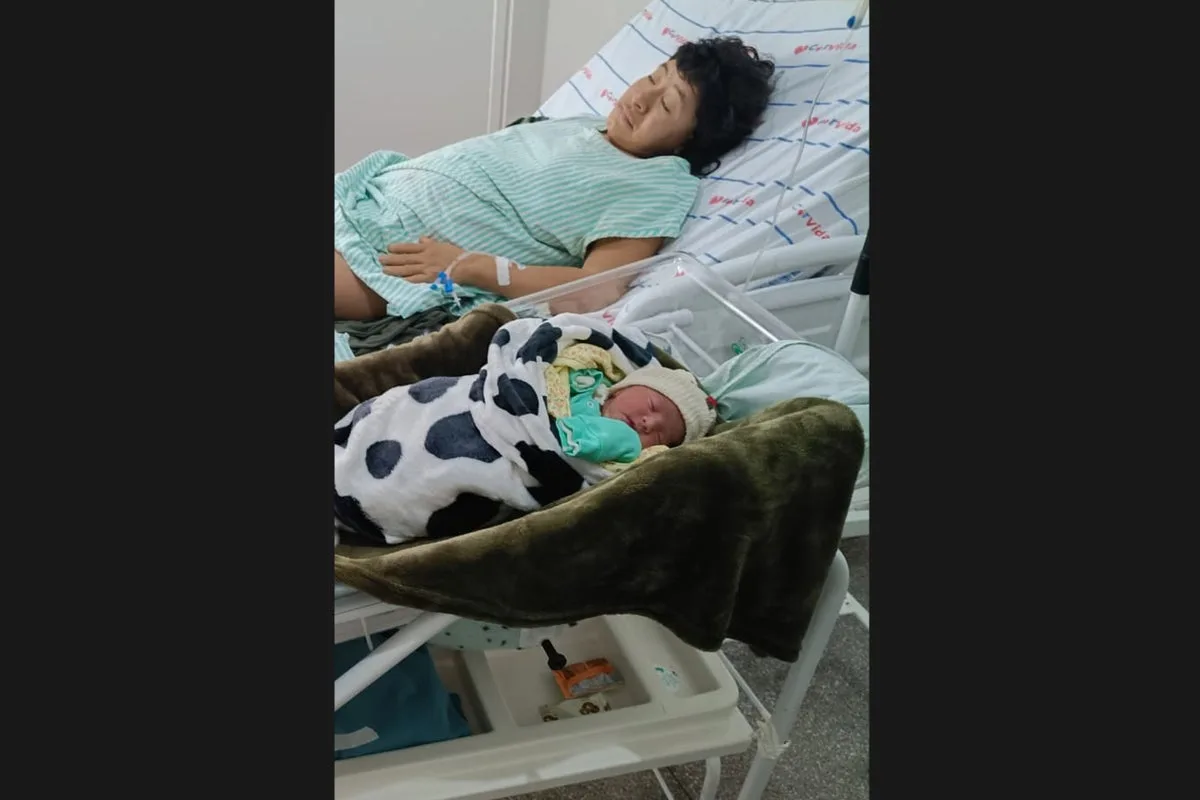
For years, the Akuntsu people of the Brazilian Amazon faced the grim prospect of vanishing forever. With only three women remaining as the last members of this Indigenous tribe, many expected their culture and lineage to disappear completely upon their deaths. However, a remarkable event in December has dramatically altered that trajectory, bringing renewed hope for both the tribe and the fragile rainforest they inhabit.

The Last Survivors of a Decimated People

The Akuntsu were decimated during the 1970s and 1980s by a government-backed push to develop parts of the Amazon rainforest. Pugapia and her daughters Aiga and Babawru lived for years as the only surviving members of their people, having witnessed violent attacks by ranchers seeking to occupy their ancestral lands. The Brazilian Indigenous protection agency, known as Funai, first made contact with the Akuntsu in 1995, finding just seven survivors where experts believe there had been approximately twenty members a decade earlier.

The last Akuntsu man died in 2017, leaving the three women as the sole carriers of their culture and traditions. These women, whose exact ages remain uncertain, have chosen to remain largely isolated from the non-Indigenous world, showing minimal interest in external influences. Their survival represented both a testament to resilience and a looming endpoint for their unique cultural heritage.

A Miraculous Birth Changes Everything

That changed dramatically in December when Babawru, the youngest of the three women in her forties, gave birth to a baby boy named Akyp. This unexpected arrival has transformed the outlook for the Akuntsu people, offering the first real possibility of cultural continuation in decades.

"This child is not only a symbol of the resistance of the Akuntsu people, but also a source of hope for Indigenous peoples," said Joenia Wapichana, president of Funai. "He represents how recognition, protection and the management of this land are extremely necessary."

The pregnancy came as a particular surprise because the Akuntsu women had previously decided against becoming mothers. This decision stemmed from their belief that their world had become disorganized following the genocide of their people, creating conditions they felt were unsuitable for raising children. The absence of Akuntsu men who could perform and teach traditional male responsibilities like hunting and shamanism further reinforced this choice.

Complex Relationships and Cultural Adaptation

The birth resulted from Babawru's relationship with a man from the neighboring Kanoe people, with whom the Akuntsu have developed a complex relationship since being granted territorial protection in 2006. The two groups, once enemies, now share the Rio Omere Indigenous Land and have established a relationship marked by both cooperation and cultural differences.

Amanda Villa, an anthropologist with the Observatory of Isolated Peoples, explained that the Akuntsu women depend on Kanoe men for tasks considered masculine within their culture, such as hunting and clearing fields. The groups have also exchanged spiritual knowledge, with the current Kanoe spiritual leader having learned from the late Akuntsu patriarch.

Linguist Carolina Aragon, the only outsider able to communicate with the three Akuntsu women after years of studying their language, supported Babawru remotely during her labor and was present for the ultrasound that confirmed the pregnancy. Aragon recalled Babawru's stunned reaction to the news, with the woman asking, "How can I be pregnant?" despite having taken precautions to avoid conception.

Broader Implications for Rainforest Protection

The birth carries significance far beyond the Akuntsu community alone. Protecting Indigenous territories is widely recognized as one of the most effective ways to curb deforestation in the Amazon, the world's largest rainforest and a crucial regulator of global climate patterns. Researchers warn that continued forest loss could accelerate global warming significantly.

A 2022 analysis by MapBiomas, a network of nongovernmental groups tracking land use, revealed that Indigenous territories in Brazil had lost just 1% of native vegetation over three decades, compared with 20% on private land nationwide. In Rondonia state, where the Akuntsu dwell, approximately 40% of native forest has been cleared, with the remaining untouched areas largely confined to conservation zones and Indigenous lands.

The Akuntsu territory stands out starkly in satellite images as an island of forest surrounded by cattle pastures and agricultural fields of soy and corn. This visual contrast underscores the critical role Indigenous stewardship plays in preserving these vital ecosystems.

Historical Context of Deforestation and Violence

The deforestation in Rondonia traces back to a government-backed initiative during Brazil's military regime in the 1970s to occupy the rainforest. Around the same period, an infrastructure program partially financed by the World Bank promoted domestic migration to the Amazon, including the paving of a highway across the state.

During the 1980s, Rondonia's population more than doubled according to census data. Settlers were promised land titles if they cleared forest for agriculture and risked losing claims if Indigenous people were present, which fueled violent attacks by hired gunmen on Indigenous groups including the Akuntsu.

When Funai agents first contacted the Akuntsu in 1995, they found evidence of these assaults, with survivors recounting what happened and some still bearing gunshot wounds from the attacks.

A New Chapter for the Akuntsu

Researchers and officials who have long worked with the three women understood that protecting their territory depended on the Akuntsu's survival as a distinct people. They sought to avoid a repeat of what happened with Tanaru, an Indigenous man discovered living alone without contact for decades. After Tanaru died in 2022, non-Indigenous groups began disputing his land, requiring federal intervention to secure the area as a protected conservation unit.

Through years of careful work, Funai secured territorial protection for the Akuntsu and helped foster ties with the Kanoe people. The agency also arranged spiritual support from an allied shaman, allowing the women to feel safe bringing new life into the world after decades of fear and loss.

"A breakdown of social relations that followed the genocide shaped their lives and deepened over the years," Aragon explained. "That does lead people to think — and rethink — the future. But the future can surprise everyone. A baby boy was born."

The women are now embarking on what Aragon describes as a "new chapter," choosing to welcome the child and adapt their traditions with support from both the Kanoe community and Funai. Villa noted that the fact the newborn is a boy creates the possibility of restoring traditional male roles like hunting within the community.

Wapichana emphasized that Babawru's child "is a hope that this next generation will indeed include an Indigenous person, an Akuntsu, ensuring the continuity of this people."

The Akuntsu have always maintained deep emotional bonds with their forest environment and the birds that inhabit it. Now, they are strengthening those bonds with a new human life in their world. As Aragon reflected, "What kind of relationship will this boy have with his own territory? I hope it will be the best possible, because he has everything he needs there."




