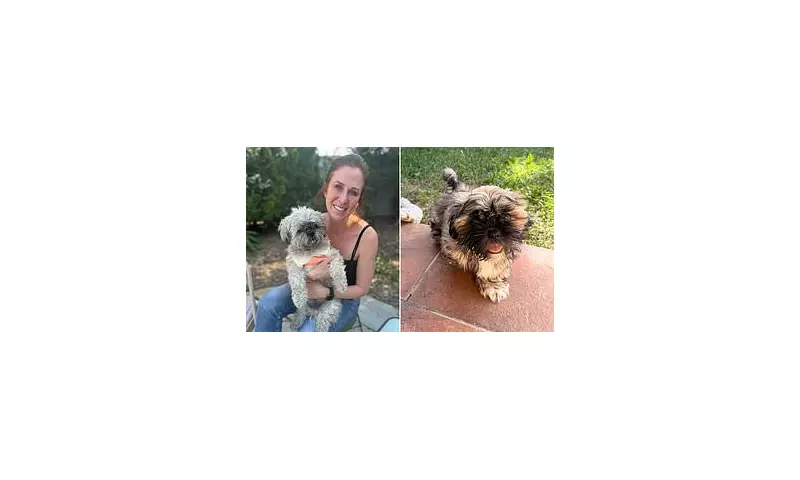
A woman from California who invested $50,000 to clone her deceased dog while navigating profound grief has opened up about the demanding and costly realities of the procedure. Venessa Johnson, 48, from Claremont, California, initially fostered a six-year-old Shih Tzu named Oliver in 2013 to assist a friend, not actively seeking a pet herself.
The Bond That Sparked a Controversial Decision
Johnson immediately formed a deep connection with Oliver, describing him as "the sweetest, most gentle boy" who became her constant companion. She explained, "He climbed into the car, nuzzled into my chest, and I remember thinking, 'This is my dog.'" For over a decade, Oliver was her devoted partner, accompanying her everywhere until his tragic death from kidney failure in 2024.
Struggling to cope with the loss, Johnson encountered an advertisement for pet cloning during an online search for grief support. The concept captivated her, offering a potential way to preserve a part of her beloved dog. "While I had known cloning existed, I had never truly considered it as an option until that moment," she recalled. "Once I made that decision, the grief didn't disappear, but it softened. It gave me something to hold onto."

The Gruelling Process of Canine Cloning
Johnson proceeded with the cloning, committing tens of thousands of dollars to the endeavour. The journey proved emotionally taxing, requiring three attempts before success was achieved. Each failure brought significant disappointment, creating what she described as "a cycle of hope and disappointment." After eleven months, a puppy was born, whom she named Ollie.
Unexpected Challenges and Emotional Reflection
Johnson soon discovered that caring for a puppy differed substantially from looking after an older dog like Oliver. This realisation prompted her to question her decision, noting that she initiated the cloning process while "deep in her grief" but welcomed Ollie from a different emotional perspective. "Looking back, I can say that if I had waited until I was further along in my grief before starting the process, I probably wouldn't have cloned him," she confessed. "I likely would have gone to a shelter and adopted an older dog."
Despite these reflections, Johnson expressed deep affection for Ollie, acknowledging that he has helped heal her heart in unanticipated ways. She observed that while she never knew Oliver as a puppy, making direct comparisons difficult, the two dogs share remarkable physical similarities and core personality traits. "Ollie shares many of the same mannerisms, quirks, and overall temperament as Oliver, which has been a really special and unexpected experience," she noted.
Addressing Ethical Considerations and Personal Choices
In response to potential criticism about choosing cloning over adoption, Johnson highlighted her longstanding involvement with animal rescue organisations, including volunteering, donations, and previously owning rescue dogs. She emphasised that her commitment to animal welfare continues despite having a cloned dog, with plans to foster again once Ollie matures.
Johnson addressed concerns about the substantial financial investment, stating, "I think what often makes people uncomfortable isn't the idea of helping animals, but the amount of money involved. Any disposable income could theoretically be donated to a cause someone cares about. We all make choices about what matters most to us."
A Message About Grief and Healing
Reflecting on her experience, Johnson offered advice to others grieving pet loss, cautioning against rash decisions during emotional turmoil. "When you're grieving, it can compel you to do all sorts of things - it certainly did for me," she stated. She hopes people grant themselves "permission to grieve fully, to honour that bond without minimizing it and to understand that love doesn't disappear when a pet is gone - it changes form."
Johnson concluded, "Sometimes grief leads us to unexpected choices, healing paths or even new beginnings, and that doesn't make it strange or wrong. It makes it human." Her story illuminates the complex intersection of advanced biotechnology, profound emotional attachment, and personal ethics in contemporary pet ownership.