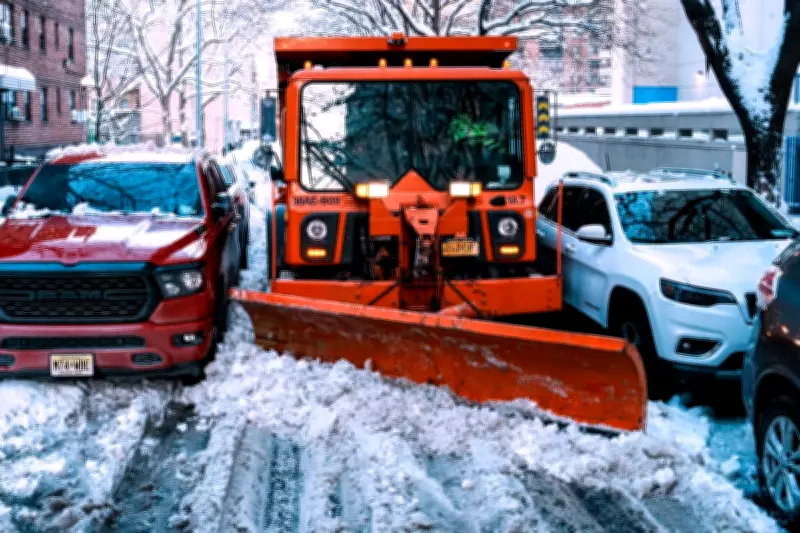
High-Tech Snowplows and AI Transform Winter Cleanup in US Cities
Municipalities across the United States are fundamentally overhauling their approach to snow removal, integrating cutting-edge technologies like video monitoring, GPS mapping, and artificial intelligence into operations that historically depended on manual planning and paper maps. This technological shift is enhancing efficiency, reducing public complaints, and delivering significant cost savings.
Syracuse Leads with Transparency and Tracking
Syracuse, New York, renowned as America's snowiest major city, has been at the forefront of this revolution. The city, which averages 126 inches of snow annually, partnered with San Francisco-based tech firm Samsara in 2021 to equip its fleet with live GPS tracking and dashcams. This system integrates with GIS mapping software, allowing officials to monitor plow locations and live video feeds in real-time.
Conor Muldoon, Syracuse's chief innovation officer, reported a 30% drop in complaint calls since implementing the new system. "People will look out their window and say, 'Hey, you guys are doing a terrible job,'" Muldoon explained. "And we can point to a public map and say, 'Here's all the breadcrumbs for when that plow was there.'" Residents can access a public map updated every five minutes to see which roads have been cleared, fostering greater transparency and trust.
Artificial Intelligence Enhances Decision-Making
Samsara has incorporated AI into its products since 2019, and this winter marks a milestone: the company now provides customers with footage from other cameras within its extensive network. This allows officials to assess street conditions even when no workers are present. Kiren Sekar, Samsara's chief product officer, illustrated this with an example from Plainwell, Michigan, where AI can instantly identify the nearest available plow driver during a snow emergency, streamlining dispatch processes.
New York City's Customised Approach
While many cities partner with firms like Samsara, New York City developed its own tracking program, BladeRunner. This system monitors snow removal equipment, including garbage trucks fitted with plows, with human analysts in a command centre processing GPS data. The city is exploring future AI integration to handle the thousands of daily 311 calls and online service requests.
Joshua Goodman, deputy commissioner at the New York City Department of Sanitation, emphasised an equitable approach: every block receives the same treatment, with plows assigned specific routes. Under ideal conditions, 99% of the city's roads are plowed within four hours after a moderate snowfall, though this target was challenged during last week's historic storm.
Cost Reductions and Insurance Benefits
With US cities and states spending over $4 billion annually on snow operations, new technologies are proving financially prudent. They help prevent overplowing or oversalting, which can cause environmental damage. Fayetteville, Arkansas, launched a public snow removal map this winter, reporting improvements in plowing time, labour costs, and fuel savings despite increased snowfall.
Ross Jackson Jr., Fayetteville's fleet operations manager, noted, "This is the first year some roads have ever been treated or plowed, and that goes right back to being able to see where we need to go and if we've been there."
In Edison, New Jersey, video evidence from plows led to a 35% reduction in salt and brine spending and a 60% decrease in insurance payouts by proving drivers were rarely at fault in collisions. Similarly, in Iowa, video footage demonstrated that 11 out of 12 snowplow accidents in a single day were caused by other drivers, as highlighted by Craig Bargfrede, the state's winter operations administrator.
Efficiency Gains with Modern Navigation
Kalamazoo County, Michigan, became the first county in the state to use turn-by-turn navigation for dispatching snowplows during storms. Rusty McClain, assistant general superintendent of its Road Commission, described this as a vast improvement over the "old-school way" of relying on paper maps and phone calls, which required drivers to pull over and consult bulky guides.
This nationwide adoption of technology is not only making streets safer and cleaner but also reshaping how municipalities manage winter challenges, setting a new standard for public infrastructure management.