Newport Declared Wales' Fly-Tipping Capital as Residents Fight 'Losing War' Against Illegal Dumping
Residents in Newport, Gwent, fear they are fighting a losing battle against fly-tippers in what has become one of Britain's worst rubbish hotspots. The Welsh town has been officially dubbed the fly-tipping capital of Wales, with locals describing themselves as being 'at war' against the constant tide of illegally dumped waste that blights their countryside surroundings.
Shocking Statistics Reveal Epidemic Proportions
Official Welsh Government statistics paint a stark picture of the crisis gripping Newport. The city recorded the highest number of fly-tipping incidents across Wales in both 2023 and 2024, with 8,139 cases reported - representing a staggering 37 per cent more incidents than Cardiff. Even more alarming is the revelation that illegal rubbish dumping in the Welsh town has soared by an astonishing 6,000 per cent over the last two decades.
The data shows there has been a 63 per cent surge in fly-tipping incidents in Newport since 2019 alone, indicating the problem is accelerating rather than improving. Despite investigating 7,300 reports of illegal dumping last year, Newport City Council issued just 124 fines, with only 10 cases successfully prosecuted through the courts.

Residents' Daily Battle Against Mountains of Waste
Local residents have taken matters into their own hands, organising regular litter picks to combat the growing problem. Zoey Newton-Karbautski Scott, part of the Friends of Rabbit Hill group that carries out weekly clear-ups in the Duffryn area, describes the situation as 'an ongoing problem' that has worsened significantly since the COVID-19 pandemic.
'I don't think we will ever win the war on fly-tipping,' Zoey admits. 'They come along and either dump their rubbish or try to burn it. People cannot be bothered. Not many people walk towards the back of the properties in Duffryn so it's an easy place for them to fly tip.'
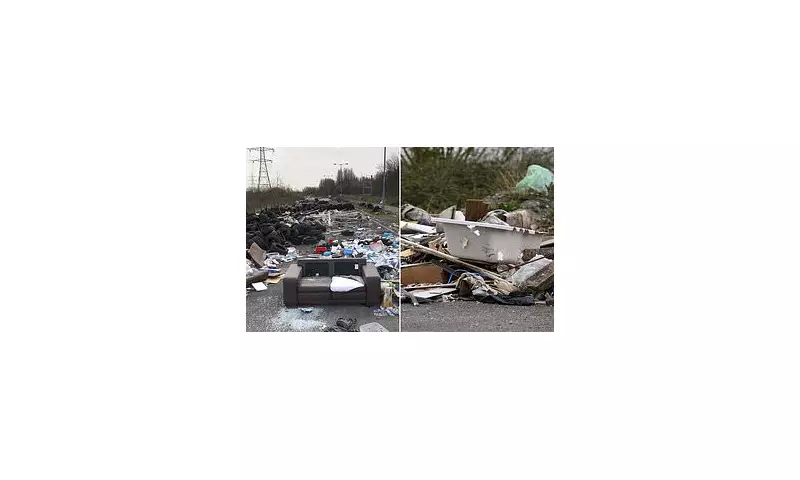
The variety of discarded items discovered by residents and clean-up groups is both shocking and diverse:
- Fridges abandoned on laybys and roadsides
- Ovens dumped in trees and woodland areas
- Dead animals amongst the piles of waste
- Car tyres forming huge mounds on abandoned carriageways
- Bathtubs and other household items scattered across green spaces
Community Impact and Property Devaluation
The environmental blight has had serious consequences for local homeowners. Residents previously described the situation as a 'pandemic' of fly-tipping, with some claiming they have been unable to sell their properties due to the area's notorious reputation for illegal dumping.
Seventy-year-old resident Ellen Law, who has witnessed the problem developing since the 1990s, claims fly-tipping has become 'set up as a business' in the area. 'It has been impossible to sell the house because this area is really known now for fly-tipping,' she reveals. 'To see it happening in real time is shocking. This is the area that has become a huge black spot and to watch it grow bigger is heartbreaking.'
Council Response and Systemic Challenges
Newport City Council has implemented several waste management changes that some residents believe may be contributing to the problem. The council now empties black bins just once every three weeks, while household waste recycling centres operate solely through advance booking systems - a requirement that began during the pandemic.
Zoey Newton-Karbautski Scott suggests this booking system may be a factor: 'Things have got worse since COVID, perhaps because you must log in online and book your rubbish disposal rather than go to a depot.'
However, the council disputes this connection. A spokesperson stated: 'There is no evidence to suggest that the implementation of a booking system at the household waste recycling centre has resulted in an increase in fly-tipping. The booking system has allowed us to extend site opening hours. Queuing times have also reduced, making the site easier and faster to attend.'

Long-Term Solutions and Education Focus
Community activists believe addressing the fly-tipping epidemic requires fundamental changes in public attitudes and behaviour. Zoey emphasises the importance of early education: 'We need to educate children in schools. The problem is when they become teenagers, they will see other people fly tipping and then that behaviour carries on into adulthood. People need to understand what they are doing is wrong.'
The Welsh Government has reinforced its stance against the practice, stating: 'Fly-tipping is a crime and is never justified under any circumstances. We continue to target those who chose to break the law and pollute our environment.' The government funds the Fly-tipping Action Wales programme, which supports local authorities with enforcement activities and awareness campaigns.
Despite the grim statistics and daily challenges, community spirit persists. Newport City Council acknowledges the efforts of local groups, stating: 'Newport City Council works closely with our community cleaning groups, like the Friends of Rabbit Hill, and really appreciate the work they do in their neighbourhoods. Our councillors often join their litter picks.'
As residents continue their weekly battles against the tide of illegally dumped waste, the question remains whether systemic changes, increased enforcement, and community education can reverse what has become a deeply entrenched environmental crisis in one of Wales' most affected communities.