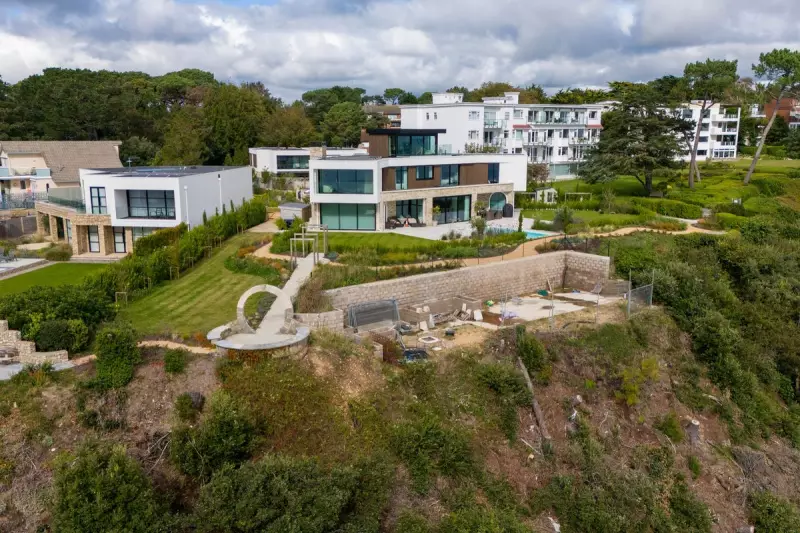
Millionaire Property Developer Hit with £20,000 Fine for Illegal Clifftop Tree Felling
Bill Buckler, a wealthy property developer, has been ordered to pay a substantial £20,000 penalty after unlawfully removing 28 protected trees from a clifftop location in Poole, Dorset. The controversial clearance was carried out to make way for an unauthorised infinity pool and luxury garden pod, sparking outrage from local residents and conservation authorities.
Misleading Conservation Claims Uncovered
In February 2021, Buckler obtained permission from Natural England to fell the trees on the sloping cliff at the end of his garden in the exclusive Canford Cliffs area. He claimed the work was necessary for conservation purposes, specifically to protect the cliff from erosion and improve habitat conditions for sand lizards – a rare and protected species native to the region.
However, sceptical neighbours quickly speculated that the developer's true motivation was to enhance his coastal views rather than support conservation efforts. Their suspicions appeared confirmed when construction began on a luxury garden pod and infinity pool positioned precariously on the newly-cleared cliff edge.

Unauthorised Works on Protected Land
The Poole Bay Cliffs location is designated as a Site of Special Scientific Interest (SSSI) due to its important coastal habitat and significant geological features. The area's layers of rock, sand and fossilised flora date back thousands of years to when the Isle of Purbeck and Isle of Wight formed a single connected land mass.
Despite this protected status, Buckler proceeded with excavation work that involved digging into the cliff to install underground concrete pillars for a 60-foot wide garden room featuring a viewing platform with balcony. Natural England first became aware of unauthorised excavation works at the site in early 2022, with subsequent inspections in May and September confirming the building work was illegal and would have been strongly opposed through proper channels.
Legal Challenges and Judicial Rebuke
In March 2023, Buckler received initial fines totalling £20,000 – comprising £8,812 for infringements under the Wildlife and Countryside Act (1981) and £11,187 under an Enforcement Costs Recovery Notice. The developer subsequently challenged the penalty in the High Court, arguing it was disproportionate and manifestly excessive while claiming he had been open and co-operative throughout the process.
Judges have now unanimously dismissed his appeal in a damning judgement that labelled the case notably free of merit. Judge Anthony Snelson's ruling outlined how work had continued despite warnings, with excavation resuming in fairly short order after initial objections and continuing until the local planning authority issued an immediate stop instruction in March 2023.
Irreversible Environmental Damage
Nick Squirrel from Natural England confirmed that geological features on the protected land have been permanently damaged and cannot be restored. He explained that attempting to remove the illegal works would create cliff instability, potentially endangering beach users below.
"The effect of the unauthorised construction works carried out in the SSSI have destroyed a part of the geological features for which the SSSI is notified," Squirrel stated. "It is apparent that these features are now lost and that the unauthorised piling works and construction activity is of a nature which may not be undone without raising greater risks."
Squirrel further noted the development contradicts established coastal protection policies: "The policy is to keep development set back to prevent erosion and to protect the beach huts and people at the bottom. It can't be restored, it's permanently damaged so now we need to look at what, if any, recompense can be made to cover the loss."

Background to the Controversial Development
Buckler purchased a 1960s bungalow in the Canford Cliffs area of Poole in October 2019 for over £3.1 million. Since 2020, he has been undertaking a £10 million development project to replace the original property with four luxury homes. The current controversy represents a significant setback to these ambitious plans, highlighting the tensions between property development aspirations and environmental conservation priorities in sensitive coastal locations.
The case serves as a stark reminder of the legal protections afforded to designated conservation areas and the substantial penalties that can be imposed for breaching environmental regulations, even for wealthy developers with considerable resources.