Postcard-Pretty Yet Polluted: The Remarkable Revival of Rio's Guanabara Bay
With its deep blue waters dramatically framed by mountainous peaks, Guanabara Bay presents the iconic postcard view of Rio de Janeiro. Yet beneath this picturesque surface lies one of Brazil's most severely polluted coastal environments, where raw sewage and solid waste flow relentlessly from surrounding cities housing over eight million residents.
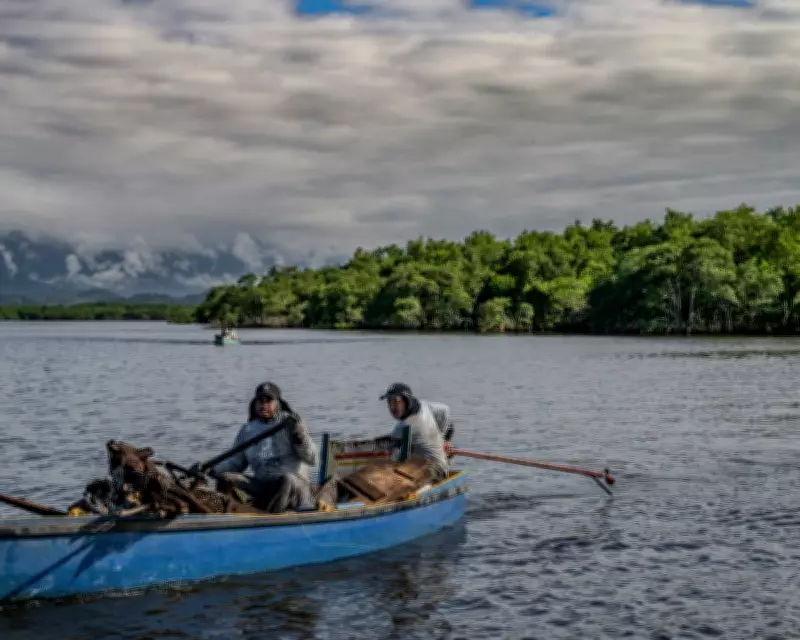
Cargo ships and oil platforms navigate through commercial ports while dozens of abandoned vessels decay in the waters. However, at the bay's head between Itaboraí and Magé, a different atmosphere prevails where purer air fills the lungs, small fishing canoes dot empty waters, and flocks of birds soar overhead.
The Mangrove Sanctuary Making a Difference
This environmental transformation stems from a thriving mangrove forest protected within the Guapi-Mirim environmental protection area (APA Guapi-Mirim), successfully restored through the dedicated efforts of local fishing communities. "If the APA Guapi-Mirim hadn't been established on 25 September 1984, Guanabara Bay would have perished completely," explains Alaildo Malafaia, a 63-year-old fisher turned environmentalist.

"This entire area would have become airport infrastructure, trucking logistics, and housing estates," Malafaia continues as he navigates a motorboat down the Macacu River within the protected zone. Covering 14,000 hectares with 6,000 hectares of mangrove swamps, this sanctuary hosts rich biodiversity including crustaceans, fish, mammals, and numerous bird species.
The Vital Role of Mangrove Ecosystems
Although mangroves constitute less than one percent of tropical forests globally, they perform crucial socio-environmental functions. These unique ecosystems serve as nurseries for marine species that sustain fishing livelihoods, filter pollution from waterways, protect coastal areas from storms and hurricanes, and act as significant carbon sinks absorbing two to four times more carbon than other Brazilian forests.
Brazil possesses the world's second-largest mangrove area spanning approximately one to 1.4 million hectares along its coastline from the Amazon to Santa Catarina state. The nation recently joined the Mangrove Breakthrough initiative aiming to conserve 15 million hectares globally by 2030.
From Destruction to Restoration
Brazil has lost an estimated 25 percent of its fragile mangrove ecosystems since the twentieth century began, primarily through urbanisation pressures. Today, 87 percent of remaining mangroves enjoy protected status, with the APA Guapi-Mirim pioneering this conservation movement as the first area specifically designated for mangrove protection.
During the late 1970s, Guanabara Bay's remaining mangroves faced large-scale clearance to fuel brick factory kilns. Researchers recognising the bay's impending ecological collapse campaigned successfully for conservation, overcoming urban developers planning land reclamation for construction projects.
For over two decades, mangroves recovered naturally until invasive species hindered regeneration in certain areas. "From 2008 onwards, once we identified substantial areas requiring restoration, we implemented a community-based mangrove restoration project," explains Mauricio Barbosa Muniz, an environmental analyst at ICMBio conservation agency.
Community-Led Innovation and Efforts
To date, 320 hectares have been restored through NGO-supported initiatives that compensate residents for their environmental work. "Those mangroves over there were completely overtaken by reeds," says Eugênia Maria Santos, president of the Cooperativa Manguezal Fluminense, indicating an area she helped restore along the Macacu River.
"They were replanted around 2013 or 2014. Just look at the size those trees have reached now." The 60-year-old leads a cooperative of fishers and crab pickers who protect the mangroves sustaining their livelihoods.
Community involvement has proven essential, even leading to innovative planting techniques. Initially, fishers cultivated mangrove seedlings at home using freshwater, but these plants failed to survive transplantation to saline mangrove environments.

Fisher communities developed a "transplant" method collecting propagules—seedling structures that germinate on parent trees—from beneath trees where sunlight deprivation prevented survival, then replanting these in restoration areas.
Combating Pollution Through Collective Action
Residents additionally collect rubbish carried into mangrove swamps by tides and rivers from surrounding urban areas. Fishing boats regularly transport sacks filled with driftwood, plastic bottles, and unusual items like mud-encrusted toilet seats retrieved from the ecosystem.
"Solid waste critically affects mangroves by occupying spaces where crabs cannot dig burrows and trees cannot establish roots," explains Janaína Oliveira, marine biologist and coordinator of Projeto Uçá conservation project. Named after the ecologically and economically important Ucides cordatus crab species, the initiative runs cleanup activities during crab reproduction periods when harvesting is prohibited.
Rita de Conceição Duarte, 68, earns approximately £170 monthly collecting rubbish two days weekly with Projeto Uçá, enabling her to purchase land for growing squash, fruit trees, and medicinal plants. "It's in my blood," says Duarte, who comes from generations of fishers and finds deep satisfaction witnessing ecological recovery through her efforts.
Tangible Results and Ongoing Challenges
"There was a definite change for the worse previously," Duarte observes. "Even crabs we once saw regularly on riverbanks had disappeared. But after all this restoration work, they've started reappearing." According to Oliveira, sixty animal species have returned thanks to mangrove restoration, while Santos notes the trees now protect her neighbourhood from storm damage by cushioning wind impact.
Despite progress, Guapi-Mirim's mangroves face ongoing threats from climate breakdown and activities of a nearby Petrobras-owned oil refinery. The state-controlled company funds Projeto Uçá through environmental, social, and governance commitments.
Muniz reports pollution in Guanabara Bay has decreased through improved sewage treatment and stricter industrial regulations. Projeto Uçá has restored 18.2 hectares since 2013 with plans to more than double this achievement by 2029.
"Even confronting significant adversity, we've demonstrated that conserving and recovering this ecosystem remains possible," Muniz affirms. "The mangroves of APA Guapi-Mirim represent a powerful symbol of environmental resistance and renewal."