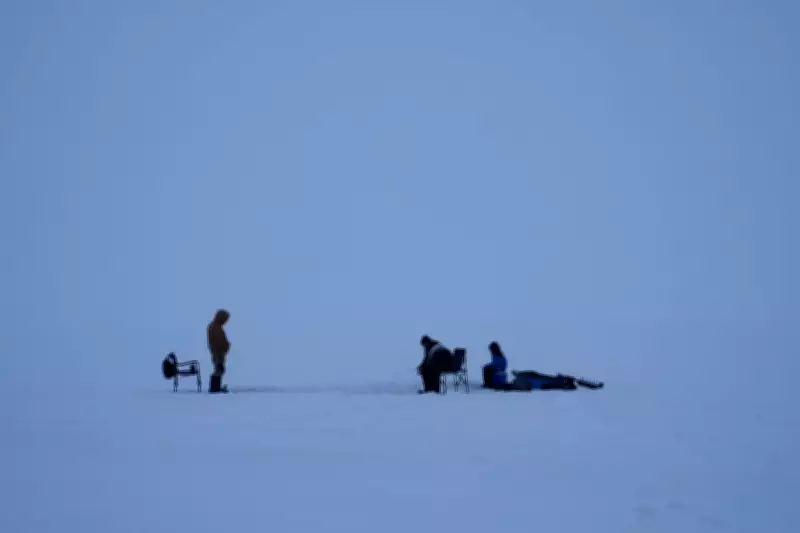
Warming Winters Lead to More Fatal Ice Falls Across Northern Regions
As winters grow warmer due to climate change, falling through thinning ice is becoming increasingly common and deadly. This trend poses significant risks for individuals engaged in fishing, hunting, and recreational activities on frozen lakes, rivers, and coastal waters. The unpredictable nature of ice conditions, exacerbated by rising temperatures, has resulted in a surge of drownings, particularly during transition months like March and April.
Tragic Incidents Highlight Growing Dangers
In November, Elmer Brown, 45, was hunting caribou with two friends on a frozen channel in northern Alaska when the ice gave way. All three plunged into frigid water, leading to one friend drowning and Brown succumbing to hypothermia. He left behind five children. His brother, Jimmy Brown, shared, "He was always helping other people and sharing his catch with the elders. It's been tough, not seeing him. I keep expecting him to walk in and tell me about his day." This tragedy is not isolated; the Brown family previously lost their father to ice drowning in 1999 while seal hunting.
These incidents are part of a broader pattern affecting thousands across the Northern Hemisphere. Warming winters have made ice thinner and less reliable, disrupting traditional practices for Indigenous communities in places like Alaska. Here, shorter and erratic ice seasons force people to take greater risks to secure food and travel, as over 80% of communities lack road connections.

Research Reveals Alarming Trends in Winter Drownings
A 2020 study analyzed more than 4,000 winter drownings across 10 countries, including Canada, the U.S., Russia, and Japan, over a 26-year period. It found that drowning rates increased fivefold when winter temperatures rose to just below freezing. Deaths peaked in March and April, when reduced snow cover allows sunlight to melt ice from within in invisible ways. Sapna Sharma, a biology professor at York University and the study's author, noted, "It’s only a matter of three to five days where you can go from safe ice conditions to totally unsafe."
In Alaska alone, a 2013 study reported approximately 450 ice falls between 1990 and 2010, with at least 112 deaths. Most accidents occurred during transition months like November and March, often involving snowmobiles. Researchers advocate for increased awareness, safety training, and better equipment to mitigate risks.
Global Variations in Ice Safety Approaches
Ice safety strategies vary worldwide. Minnesota and Wisconsin have seen declines in ice-related deaths due to reduced speed limits and expanded safety courses. Germany and Italy maintain low drowning rates through strict regulations. In contrast, Estonia and Latvia experience higher rates, attributed to cultural practices like ice fishing and alcohol consumption during winter activities. Canada faces enforcement challenges due to its vast landscape with millions of lakes.
Climate Impacts on Arctic Communities and Traditions
In Kotzebue, Alaska, a predominantly Inupiaq community of 3,000, average fall temperatures have warmed by 10 degrees Fahrenheit over the last 50 years. The Bering Sea's ice season is now over 40 days shorter than in the 1970s. This unpredictability erodes generations of ice safety knowledge and threatens food security. Roswell Schaeffer, 78, a local hunter, expressed concern: "Each winter, it gets more and more dangerous to be out on the ice." He lost his son to an ice-related incident and worries about passing on hunting traditions to future generations.
Research shows that earlier sea ice breakup has shortened Kotzebue's spring seal-hunting season by 26 days compared to a decade ago. Alex Whiting, environmental program director for the Native Village of Kotzebue, explained, "Every day that people can’t go hunting or fishing is one more day of the year where the community is more food insecure." With freezers empty, people are compelled to risk traveling on thin ice to hunt caribou, which now migrate later in the year.

Broader Ecological Consequences and Future Projections
The changes extend beyond human safety, threatening the Arctic ecosystem. Sea ice fuels spring algal blooms that sustain plankton, fish, and marine mammals. Andy Mahoney, a professor of sea ice geophysics, emphasized, "The ice is part of the annual pulse of the ecosystem." Globally, lakes are losing about 17 days of ice cover per century, with the rate accelerating sixfold over the past 25 years.
If greenhouse gas emissions continue at current rates, Sapna Sharma predicts that by the end of the century, thousands of lakes will no longer freeze, reducing drowning risks but at the cost of ice disappearance. "The Arctic only works when it’s frozen," Whiting added, highlighting how thawing disrupts the region's ecological balance.
Back in Kotzebue, Jimmy Brown continues to grieve his brother's loss, supporting Elmer's daughter through her senior year. "I know I can’t replace her dad," he said. "I’m just thankful I can be there for her." As winters warm, communities face mounting challenges, blending personal tragedy with broader environmental shifts.