
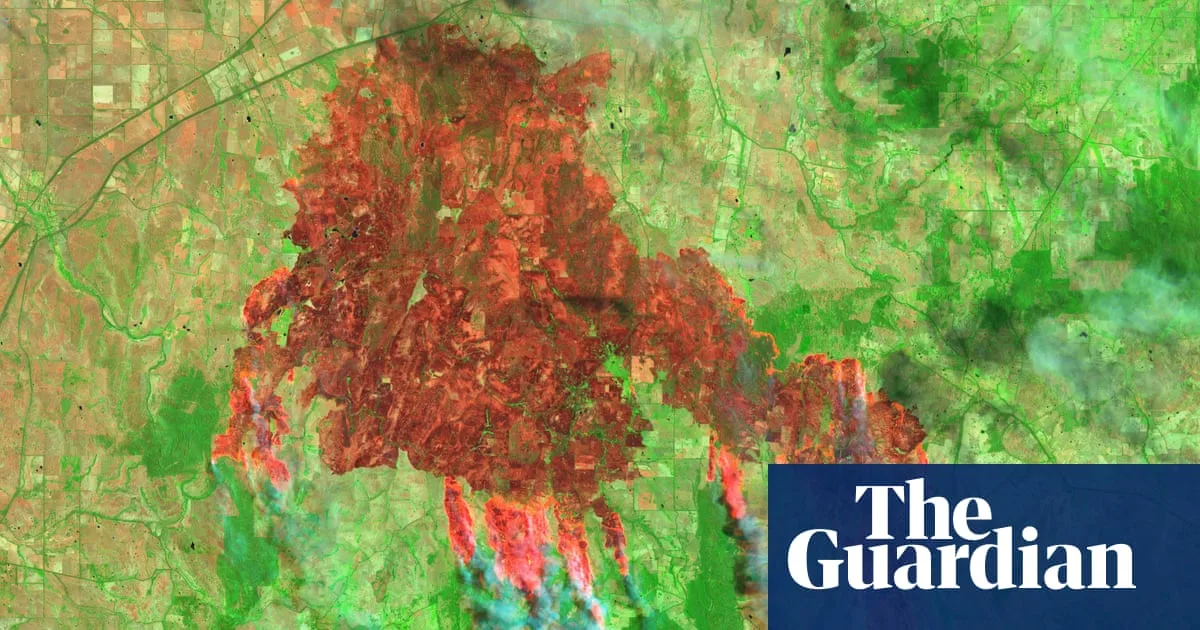
Victoria has been battered by some of the most destructive bushfires in its history, with blazes tearing through 400,000 hectares across the state and claiming the life of a cattle farmer, Maxwell Hobson. Almost 900 buildings have been destroyed, including more than 250 homes, and more than 15,000 livestock have been killed, along with countless wildlife.
Both authorities and firefighters on the ground have reported the fires were unlike anything seen before in their speed, scale and destruction. They also came much earlier than the traditional bushfire season, which typically peaks in February. “We were exceeding, in some parts of the state, the threshold that we saw on Black Saturday,” the chief officer of the Country Fire Authority, Jason Heffernan, said on Thursday. “Knowing what we were up against, I am surprised that we haven’t seen more devastation in communities.”
The fires followed a year of exceptionally dry conditions, with many areas receiving below-average rainfall. Data from the Bureau of Meteorology shows much of southern Australia, and most of Victoria, had rainfall “below average”, with some areas even drier. Then rain in November triggered what Heffernan described as “prolific grass growth”, which, combined with prolonged heat, dried out, leaving areas primed to burn.
On 6 January, Victoria’s commissioner of emergency management, Tim Weibusch, warned a severe heatwave would pass through south-east Australia. “We are likely to see [an] extreme and severe intensity heatwave over the next several days, conditions which we have not seen in Victoria since 2019,” he told reporters. The Bureau of Meteorology’s Michael Efron said storms would bring “gusty and erratic winds” and temperatures up to 46C.
On 7 January, Melbourne reached 41.1C, with several bush and grass fires beginning across the state. The biggest was a blaze at Mt Lawson state park, on the NSW border in Victoria’s north-east, which has since become known as the Walwa fire. Residents in the nearby towns of Bungil, Granya and Thologolong were urged to leave immediately. The chief fire officer of Forest Fire Management Victoria, Chris Hardman, warned the fires would not be able to be suppressed.
On 8 January authorities declared a catastrophic fire danger for the next day, the first time since 2019. A total fire ban was announced and national parks were closed. On 9 January, strong winds and high temperatures supercharged the existing bushfires. The Longwood blaze travelled south-easterly, decimating the town of Ruffy, with the local CFA captain saying “the main street looks like a bomb’s gone off”. Popular holiday spots such as Eildon were among dozens of towns ordered to evacuate.




