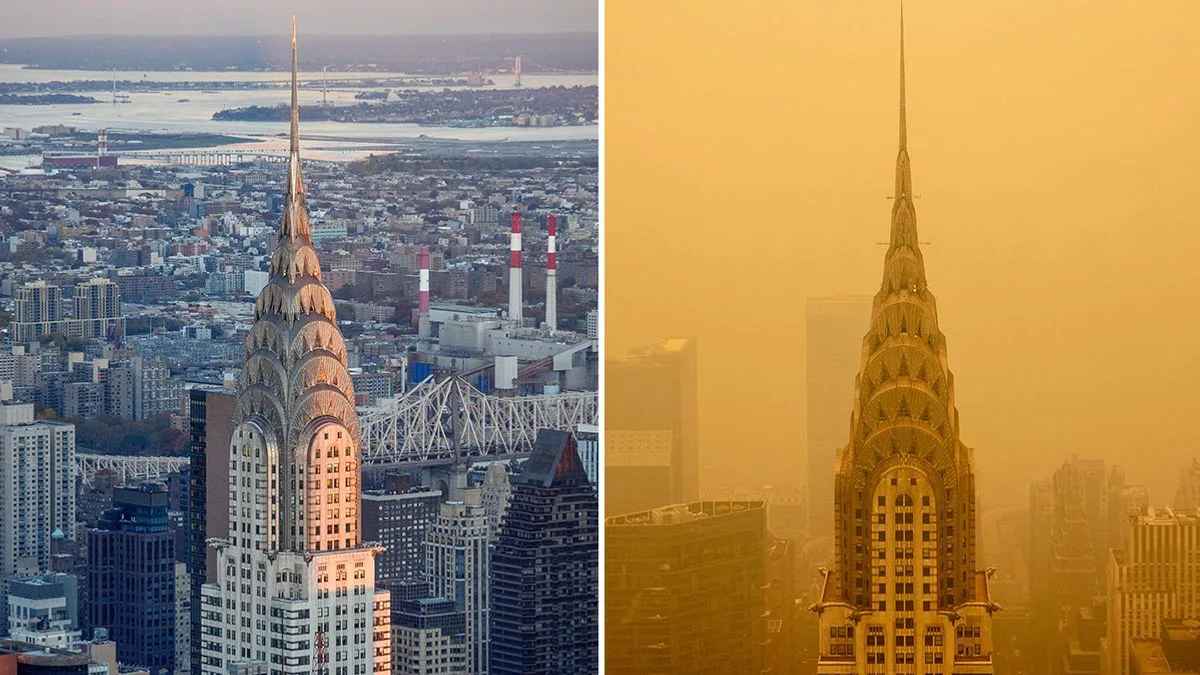
Thousands of Americans across multiple states are facing significant health risks from breathing in dangerous airborne toxins, with environmental officials issuing urgent warnings about deteriorating air quality that could cause serious health effects. The situation has escalated to critical levels along both the East and West Coasts, creating hazardous conditions for millions of residents.
Widespread Air Quality Deterioration
The US Environmental Protection Agency (EPA) revealed on Wednesday that air quality levels had deteriorated to officially 'unhealthy' classifications across substantial portions of California and Oregon. The crisis has particularly impacted the Los Angeles metropolitan area, home to nearly four million residents, where monitoring stations have recorded alarming pollution readings.
California's Pollution Hotspots
In parts of Hollywood and surrounding Los Angeles districts, Air Quality Index (AQI) readings reached 170, a level classified as unhealthy for all residents regardless of health status. Detailed air quality mapping has shown sharply elevated concentrations of PM2.5 - microscopic particles composed of toxic compounds and heavy metals that are small enough to penetrate deep into lung tissue.
These dangerous particles originate from multiple sources including automobile exhaust emissions, industrial factory fumes, and wood burning activities. When inhaled, they can cause significant inflammation of the human respiratory system, creating particular hazards for individuals with pre-existing conditions such as asthma, bronchitis, or cardiovascular issues.
Oregon's Environmental Emergency
A substantial geographical area of Oregon, including the La Pine region and Deschutes National Forest, has experienced AQI levels rising above 160 on Wednesday morning. The Oregon Department of Environmental Quality has extended an air quality advisory for the Lake County and southern Deschutes County regions, explaining that stagnant atmospheric conditions are trapping smoke and other pollutants near ground level.
This meteorological phenomenon occurs during calm, high-pressure weather patterns featuring light winds and temperature inversions, where warmer air sits atop colder surface air, effectively creating a 'lid' that prevents pollution dispersion. The resulting atmospheric stagnation allows smoke, vehicle emissions, and industrial pollutants to accumulate dangerously close to breathing level.
Eastern Seaboard Impacts
The EPA's comprehensive AirNow monitoring system has also highlighted extensive areas of Georgia and South Carolina experiencing compromised air quality. Major population centers including Savannah and Valdosta have recorded air quality readings deemed 'unhealthy for sensitive groups,' indicating increased risks for children, elderly residents, and those with respiratory or cardiac conditions.
Understanding Air Quality Measurements
Air quality levels are scientifically measured on a standardized scale ranging from 0 to 500. The classification system includes: good (0–50) carrying minimal health risk; moderate (51–100) potentially affecting sensitive individuals; unhealthy for sensitive groups (101–150) posing increased health risks; and unhealthy (151–200) impacting all residents and necessitating limited outdoor activity. Readings above 200 enter hazardous and emergency categories requiring immediate protective measures.
Health Implications and Expert Warnings
According to the internationally recognized air quality tracking platform IQAir, Los Angeles currently ranks as the most polluted major city in the United States. The organization's monitoring data revealed that PM2.5 levels in the metropolitan area reached 5.2 times higher than the World Health Organization's recommended safe limits on Wednesday.
Medical professionals and public health experts have issued stark warnings about the consequences of prolonged exposure to such pollution levels. The microscopic particles can trigger immediate respiratory distress, significantly aggravate existing asthma conditions, place additional strain on cardiovascular systems, and contribute to long-term lung damage with repeated exposure.
Official Recommendations and Protective Measures
State authorities across all affected regions have urgently advised residents to minimize strenuous outdoor activities and closely monitor local air quality forecasts, particularly during periods when levels reach 'unhealthy' classifications for the general population. The Oregon Department of Environmental Quality has specifically recommended using certified High Efficiency Particulate Air (HEPA) filters in indoor heating, ventilation, cooling, and air purification systems.
Additionally, officials have advised against using wood-burning stoves and other devices that produce indoor smoke during pollution episodes. The current air quality alert affecting multiple western states is expected to persist through Thursday, with ongoing monitoring of atmospheric conditions.
Meteorological Factors Exacerbating Crisis
The National Weather Service (NWS) has identified significant meteorological patterns contributing to the air quality deterioration. Widespread dense fog alerts have been issued across California and Oregon, with the weather phenomenon spreading pollution risks further along the West Coast.
NWS meteorologists have reported the return of an extensive 'radiation fog' belt stretching over 200 miles across Central California, from the agricultural San Joaquin Valley to the state capital Sacramento. While unrelated to nuclear radiation and generally not directly hazardous to human health, this dense fog formation severely impacts air quality by trapping local pollutants at ground level and creates extreme visibility hazards for transportation.
Transportation Safety Concerns
The National Weather Service has issued a 'very high transportation risk' assessment for drivers navigating through the affected fog belt, assigning the highest Level 5 safety grade indicating visibility reduced to less than 200 feet. Combined dense fog and stagnant air alerts have also been activated in southern Oregon and western Idaho, impacting major population centers including Boise with its 200,000 residents.
Weather officials have specifically advised that 'persons with respiratory illness should follow their physician's advice for dealing with high levels of air pollution during periods of stagnant air.' The compounding effects of meteorological conditions and pollution accumulation create particularly challenging environmental circumstances requiring coordinated public health responses across multiple state jurisdictions.




