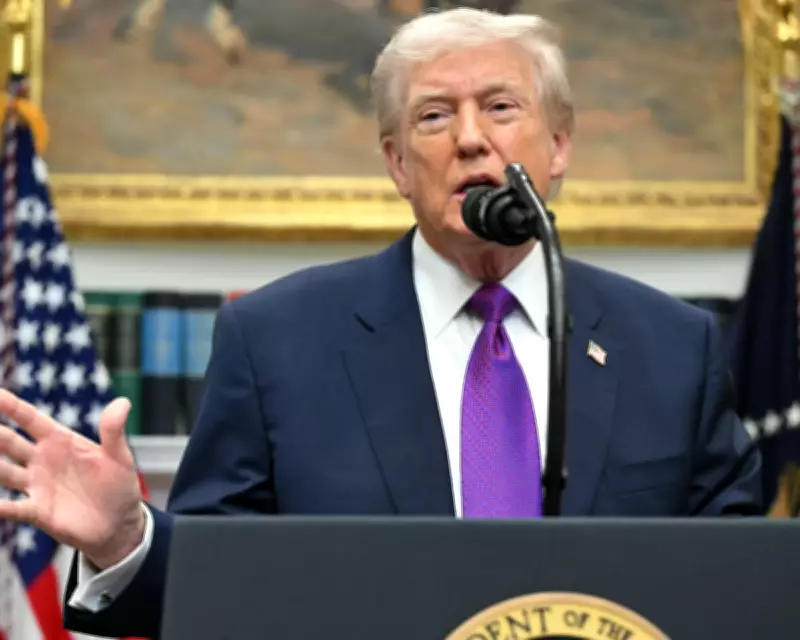
The Trump administration has formally revoked the foundational scientific determination that grants the government authority to regulate climate-heating pollution, a move condemned by former Secretary of State John Kerry as "un-American" and "Orwellian." This action eliminates the 2009 endangerment finding, which established that greenhouse gas accumulation in the atmosphere poses a significant threat to public health and welfare.
Endangerment Finding Repealed
Since its inception, the endangerment finding has empowered the Environmental Protection Agency (EPA) to impose limits on heat-trapping emissions from various sources, including vehicles, power plants, and industrial facilities. Its repeal represents a major deregulatory shift, described by President Donald Trump as "the single largest deregulatory action in American history." Trump emphasized the significance of this decision to reporters, stating, "This is a big one if you're into environment. This is about as big as it gets."
Criticism from Political Figures
The repeal has sparked fierce backlash from prominent Democrats. Former President Barack Obama asserted on social media that the move will leave Americans "less safe, less healthy and less able to fight climate change – all so the fossil fuel industry can make even more money." John Kerry, who also served as Joe Biden's climate envoy, issued a scathing rebuke, arguing that "repealing the Endangerment Finding takes Orwellian governance to new heights and invites enormous damage to people and property around the world."

Kerry further warned, "Ignoring warning signs will not stop the storm. It puts more Americans directly in its path." This criticism aligns with broader concerns that the administration's anti-environment agenda, which includes rolling back pollution rules and promoting oil and gas interests, prioritizes corporate profits over public safety.
Broader Implications and Context
This decision is part of a larger pattern of environmental policy reversals under the Trump administration, aimed at reducing regulatory burdens on industries. Critics argue that it undermines scientific consensus and jeopardizes efforts to combat climate change, potentially exacerbating health risks and environmental degradation.
Additional Developments
In related news, several other incidents have emerged:
- Daniel Rosen, the Trump-appointed US attorney in Minnesota, has recommended dropping charges against an immigrant shot by a federal immigration officer, citing "newly discovered evidence" that contradicts official accounts.
- Sensitive intelligence, reportedly involving an intercepted phone call between foreign intelligence members discussing Jared Kushner and Iran, has been at the center of whistleblower allegations against Tulsi Gabbard, the director of national intelligence.
- President Trump confirmed he has not disciplined a staffer who posted a racist video depicting Barack and Michelle Obama as cartoon apes from his account, excusing the content.
- A federal judge denied a Trump administration request to pause protections for Haitian immigrants, despite facing death threats read aloud in court.
- Homeland Security Secretary Kristi Noem claimed that US Customs and Border Protection in San Diego have saved 1.7 billion lives through drug seizures, a statement met with skepticism.
The repeal of the endangerment finding marks a pivotal moment in US environmental policy, highlighting deep political divisions over climate action and regulatory oversight. As debates intensify, the long-term impacts on public health and global climate efforts remain uncertain.