Climate scientists are sounding the alarm over a potential supercharged El Niño event that could arrive this summer, driving global temperatures to unprecedented highs. The El Niño–Southern Oscillation (ENSO), a natural climate pattern involving warm and cool water phases in the equatorial Pacific, plays a crucial role in shaping worldwide weather systems.
High Probability of El Niño Development
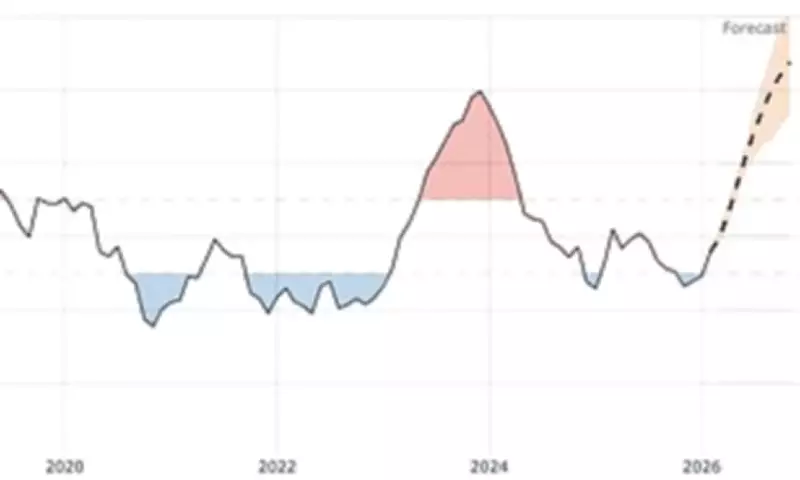
Currently, the world is experiencing a cool La Niña phase, but forecasters have revealed a significant shift on the horizon. There is a 62 per cent chance of a switch to El Niño occurring between June and August this year. Moreover, experts warn there is a 15 per cent chance it could intensify into a 'super El Niño' by November, bringing with it extreme heat and heavy rainfall.
If this super event materialises, it would mark only the third occurrence in the past three decades. Climate scientist Zeke Hausfather emphasised the severity on social media, stating, 'El Niño is coming, and it is shaping up to be a big one.' He further explained that a strong El Niño could elevate global temperatures in 2026 and particularly in 2027, making the latter year increasingly likely to set a new record for warmth.

Understanding El Niño and Its Impacts
During a typical El Niño, ocean water temperatures rise at least 0.5°C (0.9°F) above the long-term average. In contrast, a 'super El Niño' is defined by sea surface temperatures reaching at least 2°C (3.6°F) above normal. The most recent super event occurred in 2015–2016, ranking among the strongest on record.
This phenomenon releases vast amounts of heat from the tropical Pacific Ocean into the atmosphere, thereby raising global air temperatures. Hausfather noted in a blog post, 'The lag between peak El Niño conditions and the global surface temperature response would result in the largest impacts on 2027 temperatures.' He added that 2027 could set a new record by a considerable margin if forecasts align with higher-end predictions.
Historical Context and Recent Trends
The hottest year on record so far was 2024, which coincided with an El Niño event and saw global average temperatures exceed 1.5°C above pre-industrial levels for the first time. In 2025, temperatures tied with 2023 as the second-warmest year on record. In the UK, the top five warmest years have all occurred recently, with 2025 leading at 10.09°C.
El Niño years often trigger severe weather patterns worldwide, including heavier winter rains in California, deeper droughts in Australia, and increased wildfire risks in Southeast Asia. These effects are counterbalanced by La Niña, which brings cooler ocean temperatures and can spur hurricanes over the Atlantic.
Climate Whiplash and Future Projections
The ENSO cycle typically alternates between warm El Niño and cold La Niña phases every two to seven years. However, experts recently warned that by the mid-century, El Niño could become more regular, occurring every two to five years. This shift could lead to 'climate whiplash,' where regions face consecutive years of flooding and drought.
Climate whiplash involves alternating periods of intense drought and heat followed by heavy rain and flooding. Droughts harden the ground and reduce vegetation, increasing flood risks in subsequent years. According to a Water Aid report, cities like Hangzhou in China, Jakarta in Indonesia, and Dallas in the US are already experiencing severe climate whiplash, and these trends may worsen with more frequent and intense El Niño events.
Accelerating Ocean Warming
A separate study published earlier this year highlighted that ocean warming has more than quadrupled over the past four decades. In the late 1980s, ocean temperatures were rising at about 0.06°C per decade, but this rate has surged to 0.27°C per decade today. Professor Chris Merchant, lead author of the study, analogised, 'If the oceans were a bathtub of water, then in the 1980s, the hot tap was running slowly... But now the hot tap is running much faster, and the warming has picked up speed.'
As the world braces for a potential super El Niño, the implications for global climate patterns, temperature records, and extreme weather events remain a pressing concern for scientists and policymakers alike.