Climate-Driven Snow Drought Set Stage for Deadly California Avalanche, Experts Say
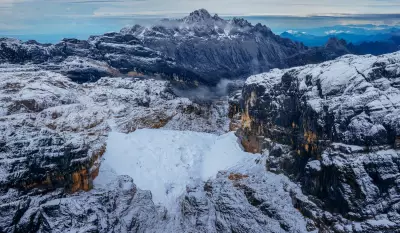
Eight backcountry skiers were found dead, six were rescued, and one remains missing after a devastating avalanche struck the Sierra Nevada mountains in northern California this week. Experts now warn that a prolonged, climate-driven snow drought in the western United States helped create the perilous conditions that led to this tragedy.
Record-Breaking Avalanche Toll
The death toll of eight skiers makes this avalanche among the deadliest in U.S. history, ranking as the deadliest single such event in 45 years. Authorities reported that the group had embarked on their trip on Sunday, just as several feet of new snow began falling onto an older, hardened layer that had become unstable over time.
Craig Clements, a meteorology professor at San Jose State University, explained that the new snow did not have time to bond with the earlier layer before the avalanche occurred. "When weather is dry and clear, as it had been in the Sierra Nevada since January, snow crystals change and can become angular or round over time," Clements said. "Heavy new snow is different and doesn't bond to that below, forming something known as a 'storm slab' over the weaker layer of snow below."

Unstable Snow Layers and Trigger Points
The avalanche risk had escalated dramatically after the recent snowfall, which settled on top of the hardened base layer. Clements noted that such storm slabs are prone to sliding when triggered by any change in tension, whether naturally or from human activity like skiers traversing the area. "Because it's on a mountain, it will slide," he emphasized.
If there had been more consistent snowfall throughout the winter, different layers could have bonded more easily, potentially preventing such a disaster. However, Clements pointed out that even when a snow slab forms, the danger typically lasts only a couple of days until the new snow stabilizes.
Climate Crisis and Snow Drought Connections
While Clements cautioned against directly linking this individual avalanche to the climate crisis, calling it "a meteorological phenomenon, not a climate phenomenon," several scientists highlighted the broader context. The record-low snowpack in the western U.S. this season is largely attributed to unusually warm temperatures, which are connected to climate change from burning fossil fuels like coal, oil, and natural gas.
Daniel Swain, a climate scientist at the University of California's Water Resources Institute, explained that much of the precipitation that would normally fall as snow and remain in the mountains for months is instead falling as rain, which runs off more quickly. "It's a problem scientists have warned about with the climate crisis," he said.
Temperature Records and Regional Impacts
Since December 1, more than 8,500 daily high temperature records have been broken or tied in the U.S. west, according to National Oceanic and Atmospheric Administration (NOAA) data. Daniel McEvoy, a researcher with the Western Regional Climate Center, described the conditions: "It was so warm, especially in December, that the snow was only falling at the highest parts of the mountains. And then we moved into January and it got really dry almost everywhere for the last three to four weeks and stayed warm."
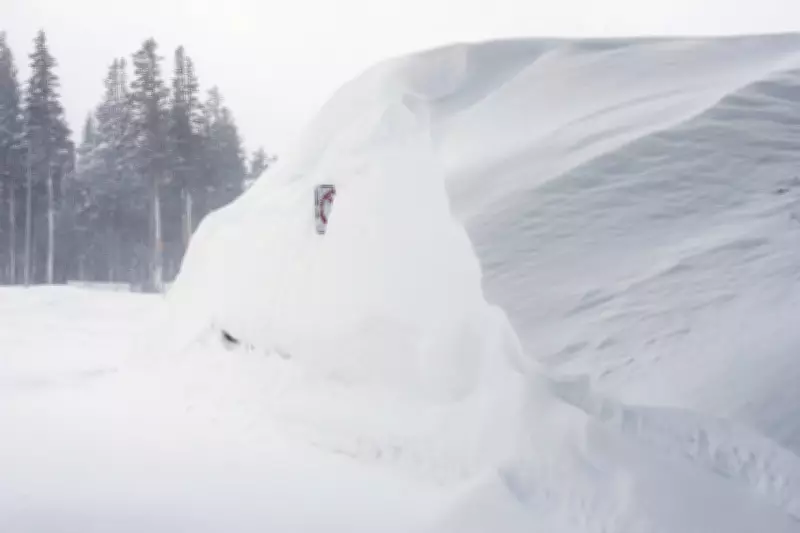
The National Avalanche Center maintains a map highlighting areas with the highest avalanche danger, and risk is currently particularly elevated in the Lake Tahoe region. Perilous avalanches are not uncommon in this area, but the combination of climate-driven snow drought and recent heavy snowfall has created an exceptionally hazardous environment.
Authorities have not yet determined what specifically triggered Tuesday's avalanche, but the investigation continues as rescue efforts persist for the missing skier. This tragic event underscores the complex interplay between climate patterns, weather extremes, and mountain safety in an era of environmental change.