The Start of the Healing Process: Restoring Britain's Peatlands
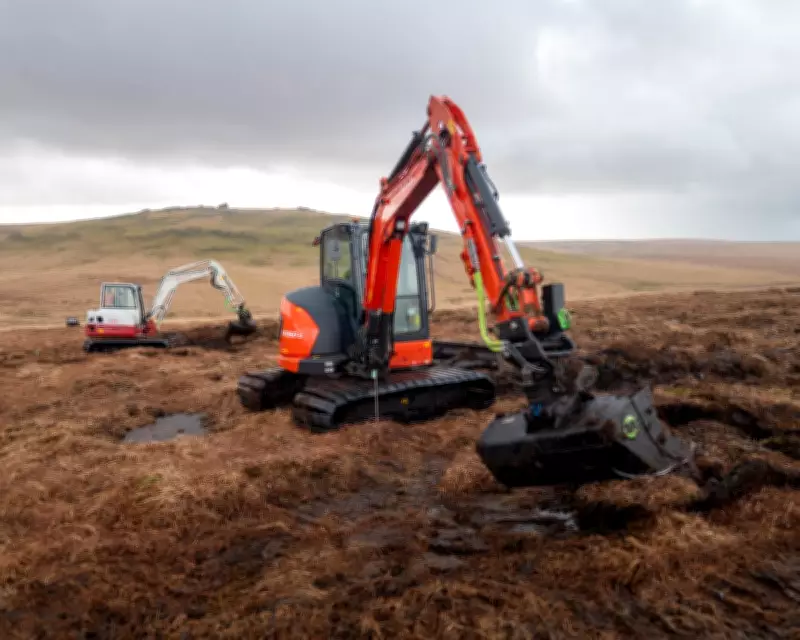
In one of the most remote areas of southern England, Al West expertly maneuvers the bucket of a small digger, lifting turf and gently placing it onto the dark brown peat below. The granite stack of Fur Tor towers above the vast, boggy expanse of northern Dartmoor, where West is part of a critical project to reprofile the land.
This repetitive, delicate work involves creating peat embankments across ditches and depressions, aiming to restore the landscape to its natural smoothness and prevent rainwater runoff. For West, the effort is deeply personal; his family has held common grazing rights on Dartmoor since 1904, and his great-grandfather once cut peat here for domestic heating.
Human Impact and Peat Degradation
Over centuries, human activities such as tin mining, drainage for agriculture, deforestation, burning, and military testing have severely degraded Dartmoor's 8,500 hectares of blanket bog. These interventions have left deep gullies and ditches, causing water runoff that dries out the peat, leading to cracking and collapse.

Peat, formed by decomposing plant matter in waterlogged conditions, is a vital wetland ecosystem found globally. Healthy peat bogs store twice as much carbon as all the world's forests, reducing emissions, providing clean water, alleviating flooding, and supporting biodiversity.
Restoration Efforts and Climate Goals
West's work is part of a broader initiative to reprofile the landscape, building structures to capture rainwater, raise the water table, and restore wetness. Over time, pools will fill with sphagnum moss and other plants, restarting peat formation.
Across Dartmoor, Exmoor, Bodmin Moor, and West Penwith, more than 5,000 hectares of peat bog have been restored over 17 years. In a recent £13 million project, the South West Peatland Partnership has restored 1,700 hectares, targeting over 2,600 hectares. Funded by organisations like Natural England and the National Trust, this effort addresses the urgent need to combat climate change.
The Scale of the Problem
Globally, about 15% of peatlands are drained, releasing greenhouse gases equivalent to 10% of annual fossil fuel emissions. In the UK, 80% of peatland is degraded, turning what should be a carbon store into a net emitter responsible for at least 3.5% of UK greenhouse gas emissions. The Committee on Climate Change advises restoring 50% of upland and 25% of lowland peatlands by 2050 to meet climate targets.
Morag Angus, manager of the partnership, notes that degradation has occurred over huge timeframes, and without restoration, peatlands will continue to decline. In the south-west, warmer, drier conditions threaten their existence, making this region a canary in the coalmine for UK peatlands.
Positive Impacts and Future Challenges
Restoration yields rapid benefits, such as increased dragonfly populations, which support higher food chain species like wading birds. Edward Adam, a monitoring officer, calls this the start of the healing process. However, research from Exeter University highlights the need to accelerate restoration, with areas like Dartmoor, the Flow Country in Scotland, and the Peak District at particular risk.
Peat bogs form at just 1mm per year, with Dartmoor's deepest peat representing 9,000 years of natural archaeology, including rare tin streaming remains from the bronze age. Protecting this history is crucial during restoration work.
A Personal Commitment to the Environment
Al West, with decades of experience operating diggers and farming, views his role as making history by helping the environment. Despite the vast scale of the task, he remains undaunted, emphasizing that every little bit helps. His dedication symbolizes the broader effort to ensure peatlands survive beyond 2060, building resilience against climate change.
As West continues his work, bit by bit, the project expands across valleys, demonstrating the remarkable progress possible through sustained effort. This restoration not only heals the land but also plays a vital role in global climate mitigation.