North Sea Sandstone Could Unlock UK's Carbon Storage Ambitions, Report Reveals
Geologists at the British Geological Survey are investigating the potential of North Sea sandstone formations to store carbon dioxide, according to a new report published this week. The study highlights how these geological structures could play a crucial role in the UK's carbon capture and storage strategy.
Understanding Carbon Capture and Storage Technology
Carbon capture and storage encompasses a range of technologies designed to significantly reduce emissions from major industrial sources including steelworks, cement plants and thermal power stations. The process works by capturing carbon dioxide at its source, transporting it safely, and then injecting it deep into suitable rock formations typically at depths exceeding 800 metres beneath the surface.
Central North Sea's Untapped Potential
Despite accounting for approximately 60% of the UK's total estimated carbon dioxide storage capacity, the central North Sea remains significantly under-represented for long-term carbon storage applications. BGS geologists are now working to better understand the subsurface geology of this region and its suitability for storing emissions captured from major industrial sources across the country.

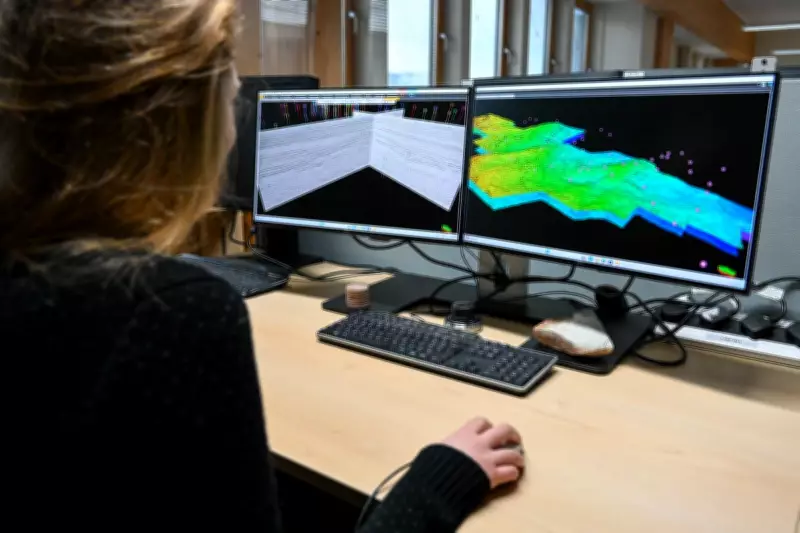
John Williams, senior geoscientist at BGS, explained: "With relatively few licences currently issued in the central North Sea, robust pre-competitive geological understanding is essential to realise the region's storage potential. BGS geologists have therefore begun a comprehensive programme to better understand the palaeogene storage system."
Technical Challenges and Geological Considerations
The research addresses several critical technical considerations including examining connectivity between sandstone units, which directly impacts pressure management during CO2 injection operations. Scientists must also balance pressure dissipation against potential interference between neighbouring storage sites, factors that significantly affect overall storage capacity.
Another crucial aspect involves assessing the effectiveness of vital sealing layers above and between sandstone formations. These barriers might be vulnerable to disruption from various geological phenomena and legacy oil and gas wells, which could potentially create pathways for CO2 escape if not properly evaluated and managed.
Historical Context and Future Ambitions
Michelle Bentham, chief scientist for decarbonisation and resource management at BGS, noted: "From the late 1990s to the early 2000s, BGS undertook pioneering work to evaluate the potential to reduce greenhouse gas emissions by storing CO2 in rocks offshore UK. This early work focused on the geological storage opportunities in the southern North Sea and east Irish Sea regions."
Potential storage sites initially identified by BGS in these regions are now among the first to be licensed and permitted by the North Sea Transition Authority for CO2 storage operations. However, to achieve the UK's ambitious target of storing 170 million tonnes of CO2 annually by 2050, the nation must look beyond currently well-appraised geographical areas.
"The stacked sandstones of the central North Sea are relatively under-studied, with huge CO2 storage potential," Bentham continued. "Our ambition is to assess and characterise the potential geological storage system in this region to enable future CO2 storage in the UK, fast-tracking the nation's CCS industry."
Supporting National Climate Goals
This geological research could unlock one of the UK's largest carbon storage resources, potentially underpinning the Government's substantial £21.7 billion investment in carbon capture and storage projects. The work represents a significant step toward meeting national climate commitments while supporting industrial decarbonisation efforts across multiple sectors of the economy.