In Newport, Rhode Island, the magic of trees is being harnessed by volunteers working to expand their healthy reach across the city. On the affluent south side, historic mansions are shaded by mature trees that cool neighborhoods, clean the air, and support wildlife. However, in the poorer North End, where subsidized housing dominates, large trees are scarce.
Addressing Tree Inequity
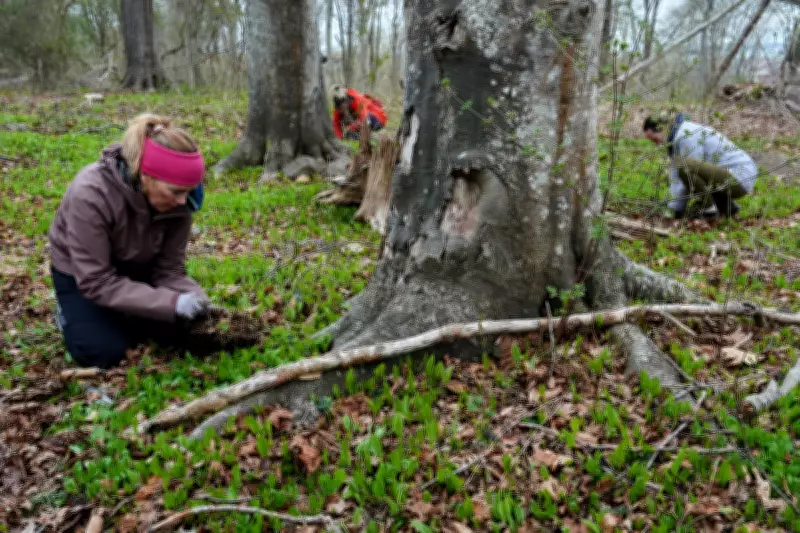
“People in this neighborhood aren’t receiving the benefits of trees,” said Natasha Harrison, executive director of the Newport Tree Conservancy. “They need more.” The conservancy has planted hundreds of native trees to create a healthier forest in Miantonomi Memorial Park, a 30-acre city-owned park in the northern part of the city. On Earth Day, 15 volunteers joined conservancy staff at the park.
Many native trees in the park’s forest have been crowded out by invasive plants, killed by disease, or eaten by deer, rabbits, and squirrels. This year, for the first time, the conservancy began digging up native seedlings to nurture them in their nursery and replant them in the forest, improving their survival chances. The goal is to grow the tree canopy and raise the area’s low “tree equity score,” which measures whether a neighborhood has enough trees for health, economic, and climate benefits.

Overcoming Funding Challenges
The conservancy’s work was to be supported by federal funding from the U.S. Forest Service, awarded to the Arbor Day Foundation, a global nonprofit focused on tree planting and conservation. However, as the Trump administration ended environmental justice initiatives, the Forest Service terminated a $75 million grant to the foundation last year. Harrison noted the conservancy expected $150,000 from the foundation, but donors made up the difference after the cancellation. “It was stressful, but I didn't want to let it derail us,” she said.
For nearly 40 years, the conservancy has partnered with the city to plant trees throughout Newport and improve the tree canopy. At Miantonomi Park, Joe Verstandig, the conservancy’s living collections manager, led the group into the forest. He pointed out invasive species like devil’s walking stick, Norway maples, and Japanese knotweed, and showed volunteers how to dig up desirable plants such as arrowwood, elderberry, and American holly.
Among the volunteers were friends Allie Bujakowski and Mara Swist. Bujakowski, who lives a mile from the park, walks her dog there. Swist lives nearby in Portsmouth, Rhode Island. Both wanted to get their hands dirty for Earth Day and help the conservancy, which planted a tree in Bujakowski’s front yard. “They are getting trees in spaces in the community where we really need them,” said Bujakowski, wearing a Newport mansions hat. “It makes a big difference visually. I see the trees they planted two years ago and they're bringing the birds back.”
The Associated Press’ climate and environmental coverage receives financial support from multiple private foundations. AP is solely responsible for all content. Find AP’s standards for working with philanthropies, a list of supporters, and funded coverage areas at AP.org.