Major Landslip Strikes Dorset's Jurassic Coast, Forcing Path Closure
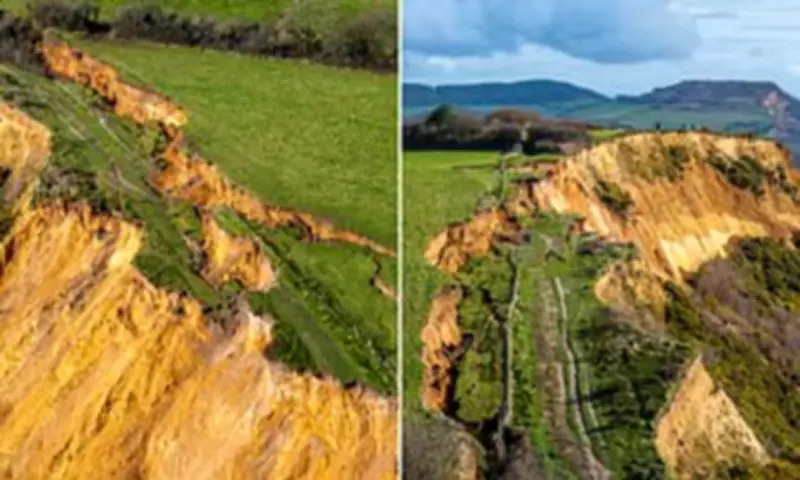
A significant landslip has occurred along Britain's eroding Jurassic Coast, just weeks after a 300-foot-long crack emerged at the cliff top. Thousands of tonnes of rock and mud have slumped onto the beach in Charmouth, Dorset, taking with it a section of the popular South West Coastal Path.
Cliff Collapse Details and Immediate Impacts
The 30-foot-wide section of the 450-foot-tall cliff has detached from the mainland and now sits approximately 20 feet lower. Enormous piles of mudflow crashed down to the beach below, rendering it impassable. This event marks the latest in a series of large rockfalls along this rapidly eroding stretch of coastline in recent weeks.
Experts attribute the dramatic movement in these 175-million-year-old cliffs to weeks of relentless rainfall. Coastguards are urgently advising the public, particularly fossil hunters, to avoid the base of the cliffs, as another landslip could occur at any moment. Authorities have closed the coastal path at Stonebarrow and the beach below to prevent potential tragedies.

Eyewitness Accounts and Expert Warnings
Fossil hunter Chris Moore described the scene as "very impressive." He noted, "If you go down to the beach in Charmouth there's now a pile of mud and trees which stretch out to sea. I looked from the top and about 30ft of coastal path has gone, as the front of the cliff has dropped by anything between 5ft and 50ft down the cliff face."
Moore compared the process to an arcade game, where the top layer slips and pushes every layer below, eventually depositing fossils on the beach. He warned, "The next bout of rain we get, they are going to slip further down the cliff, so people should never stand on the cliff edge and also should look out for any lines or tears in the grass which means that a section is about to go."
Council Response and Historical Context
Dorset Council had been monitoring the area for movement for some time, following the appearance of a large crevice at the cliff top several years ago. A council spokesperson stated, "There's been a large cliff fall and mudflow at Stonebarrow, Charmouth. The coastal path is currently closed and we are working on a diversion. Rockfalls and landslips can happen at any time."
The Jurassic Coast is a UNESCO World Heritage Site, renowned for its exceptional rocks, fossils, and landforms. Spanning 95 miles across Dorset and Devon, its distinctive appearance results from ongoing erosion by weather and sea. Rockfalls and landslips are integral to the dynamic processes that shape this unique coastline.
Recent Incidents and Safety Concerns
Earlier this year, a substantial section of a 150-foot cliff at West Bay in Dorset collapsed unexpectedly while people walked nearby. Witnesses reported hearing loud cracks before the cliff gave way, allowing them to escape safely. Approximately 500 tonnes of rock, with boulders the size of small cars, fell onto the beach, creating a massive dust cloud and leaving a 30-foot pile of sandstone that blocked access.
Additionally, coastguards are monitoring an "active and ongoing" landslip on 150-foot cliffs above Monmouth Beach in Lyme Regis. A spokesperson for Lyme Regis coastguard emphasized, "We strongly advise all members of the public to stay well clear of this area. Do not attempt to climb the slip or walk near the base of the affected cliffs. The cliffs along the Jurassic Coast are naturally unstable and can crumble without warning."
In a tragic reminder of the dangers, holidaymaker Charlotte Blackman, aged 22, was killed by a rockfall in 2012 while walking under cliffs at Burton Bradstock further along the beach.