Federal Judge Upholds Salmon Protections Against Trump Administration Challenge
A federal judge in Oregon has delivered a significant ruling in favour of endangered salmon populations, rejecting an attempt by the Trump administration to overturn a Biden-era agreement designed to protect these vital fish. The decision, issued late on Wednesday, orders the federal government to modify hydropower system operations that have long been identified as a primary cause of the sharp decline in native fish numbers.
The Core of the Conflict: Dams and Reservoirs
At the heart of this protracted legal dispute are eight dams and reservoirs located on the Columbia and Snake Rivers in the Pacific Northwest. These structures have created devastating obstacles for salmon and steelhead, which struggle to navigate through deadly turbines or the large, warm, artificial pools they create. Federal agencies, alongside a coalition of utilities, water managers, and farming organizations, had argued that altering reservoir levels would jeopardise power reliability across the region.
Legal battles over the environmental harm caused by these dams have raged for decades. They were temporarily paused in 2021 as stakeholders—including the states of Oregon and Washington, four Native American tribes, and a coalition of conservation and fishing groups—began collaborating with the Biden administration to find a sustainable solution.

The Resilient Columbia Basin Agreement
This collaboration culminated in the Resilient Columbia Basin Agreement, a landmark salmon recovery plan brokered in late 2023. The agreement committed the federal government to providing more than $1 billion over ten years to support depleted salmon runs and invest in new clean energy projects intended to replace the hydropower generated by the controversial dams.
However, this plan proved short-lived. Months after returning to office, former President Donald Trump withdrew the United States from the agreement, labelling it "radical environmentalism." This action prompted the involved parties to swiftly return to the courtroom to seek judicial intervention.
A Strongly Worded Judicial Rebuke
In his ruling, Oregon US District Court Judge Michael Simon delivered a strongly worded rebuke of the Trump administration's position. He criticised what he described as a "disappointing history of government avoidance and manipulation instead of sincere efforts at solving the problem." Judge Simon also dismissed evidence presented by the administration, stating it appeared to have been created specifically for the lawsuit and contradicted the established scientific record.
The judge referenced a 2024 report issued under the Biden administration, which was subsequently removed from public access by the Trump team. This Department of the Interior report acknowledged that the dams have inflicted significant harm on the river system and the Native American Tribes that depend upon it. The construction of these dams at the turn of the 20th century transformed riparian ecosystems, devastated salmon runs, flooded villages and burial grounds, and displaced tribal members from their lands, traditions, culture, and primary food sources.
The Ecological and Cultural Stakes
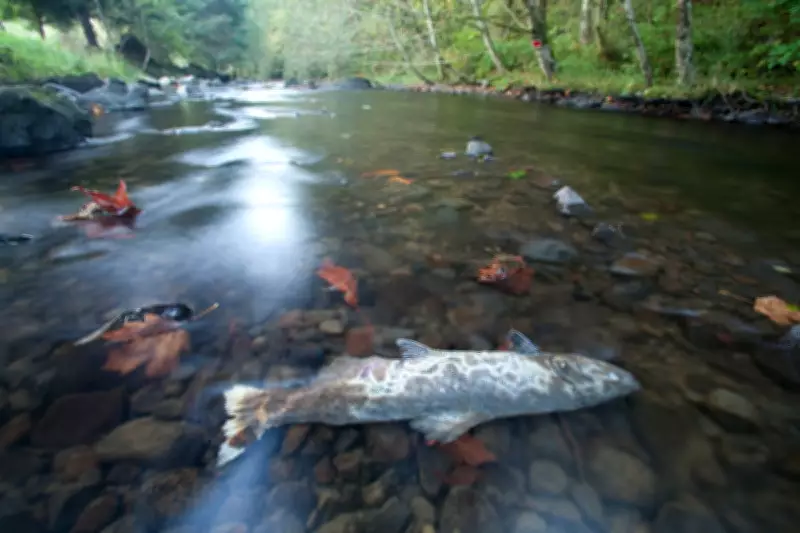
The Columbia River basin, which spans an area comparable in size to Texas, was once the most prolific salmon-producing system in the world. Today, out of the 16 original stocks of salmon and steelhead that thrived there, seven are listed under the Endangered Species Act, and four have already been driven to extinction.
Judge Simon poignantly noted the gravity of the loss, writing that "one of the foundational symbols of the West, a critical recreational, cultural, and economic driver for Western states, and the beating heart and guaranteed resource protected by treaties with several Native American tribes is disappearing from the landscape." He lamented that the battle for the survival of these species has been fought not with fishing hooks or nets, nor against natural predators, but persistently within the court system.

The Court's Order and Reaction
The judge's order generally maintains the status quo, returning reservoir and river flow levels to those established last year, with some minor increases. The coalition of environmental groups, tribes, and states that sued for the injunction celebrated the decision, stating it was necessary to prevent the extinction of salmon within the basin.
"Salmon need help now, and we're encouraged the court has granted immediate, commonsense relief that will help protect imperiled north-west salmon and steelhead," said attorney Amanda Goodin of Earthjustice, the environmental law organization representing the plaintiffs.
Advocates were quick to clarify that this ruling, while a victory, does not represent a final resolution to the complex issues in the region. Mike Leahy, senior director of wildlife, hunting and fishing policy for the National Wildlife Federation, stated, "While these emergency measures are implemented, we'll keep our eye on our long-term goal of helping the Tribes and the states restore Snake River salmon for the generations to come."
The ruling underscores the ongoing tension between energy infrastructure, environmental conservation, and tribal rights, setting a significant precedent for future management of the Pacific Northwest's critical river systems.