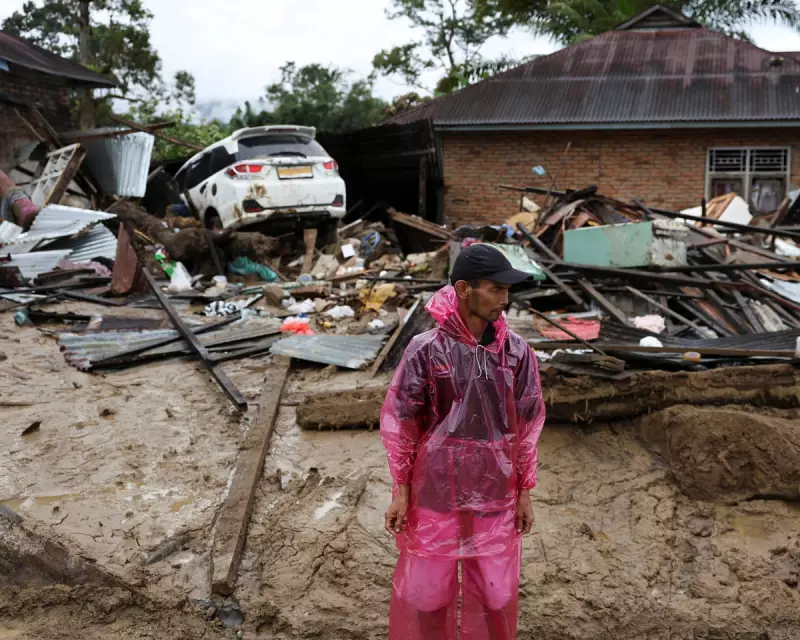
A catastrophic series of flash floods and landslides triggered by relentless monsoon rains has left a trail of devastation across Asia, with Indonesia's West Sumatra province among the hardest hit. The death toll from the disaster in Indonesia alone has now surpassed 700, while across the region more than 1,200 people have lost their lives and a staggering one million have been forced to evacuate.
The Human and Environmental Toll
The scenes from the affected areas are harrowing. Families have been stranded on rooftops, homes have been buried under fast-flowing mud, and the once-lush green hillsides are now scarred with jagged brown craters. The violent weather, fuelled by a heavy monsoon season and a series of powerful cyclones, has gutted essential infrastructure and reshaped entire landscapes.
Rescue efforts have been severely hampered as the floods have disrupted electricity supplies and phone networks. The rains have loosened soils and levelled slopes in hilly regions, wiping out villages and rendering roads and railways unusable. For the million displaced, there is no certainty their homes will remain standing upon their return.

Climate Change: Loading the Dice for Disaster
Scientists are clear that the blanket of carbon pollution heating the planet is aggravating deadly weather across the region. Roxy Koll, a climate scientist at the Indian Institute of Tropical Meteorology and co-author of the latest IPCC report, states that while the number of cyclones may not have increased dramatically this season, their behaviour has changed. "They are wetter and more destructive because the background climate has shifted," Koll explained. "Water, not wind, is now the main driver of disaster."
The science is well-established: warmer air holds more moisture—approximately 7% more for every degree Celsius of warming. This extra water, combined with increased energy from hotter oceans, creates storms of far greater destructive potential. Sonia Seneviratne, a climate scientist at ETH Zurich, confirmed, "We have a very clear signal of increases in heavy precipitation with increasing warming, both on a global scale and in Asia."
Compounding Factors and the Path to Resilience
In Indonesia, the damage is thought to have been worsened by deforestation, with freshly cut logs washing up in flooded areas. Trees that could have soaked up water and stabilised the soil have been felled. The Indonesian attorney general's office is leading a task force to investigate whether illegal logging, mining, or palm plantation activities contributed to the scale of the disaster.
Despite the grim escalation, there is a sliver of good news: globally, the human cost of floods and storms has dropped sharply due to improved early warning systems. However, Alexander Matheou of the International Federation of Red Cross and Red Crescent Societies warns that response systems in middle-income countries remain patchy. He advocates for even better warning systems, more nature-based solutions like planting trees and mangroves, and stronger social protection to provide immediate cash and aid when disaster strikes.
The fallout from these storms serves as a stark reminder of the escalating climate crisis. As the IPCC projects a "large increase" in flood frequency for monsoon regions, the urgent need for both global emissions cuts and localised adaptation strategies has never been clearer.