Geologists have secured a priceless scientific treasure: a colossal cylinder of rock, drilled from the heart of one of the UK's most dramatic geological features, which could reshape our understanding of the planet's history.
A 'Once in a Lifetime' Geological Treasure
Experts from the British Geological Survey (BGS) have revealed the extraction of an extraordinary core sample, measuring about 5,000 feet in total length, from the legendary Great Glen Fault in the Scottish Highlands. This 'once in a lifetime' specimen was taken from more than 2,000 feet below ground level at Coire Glas, on the shore of Loch Lochy, back in 2023.
The core acts as a pristine cross-section through this immense fault zone, offering an unprecedented glimpse into events that shaped the landscape hundreds of millions of years ago. "These cylinders of rock truly are one-of-a-kind windows back into our distant geological past," the BGS stated.

Unlocking the Secrets of a Continental Scar
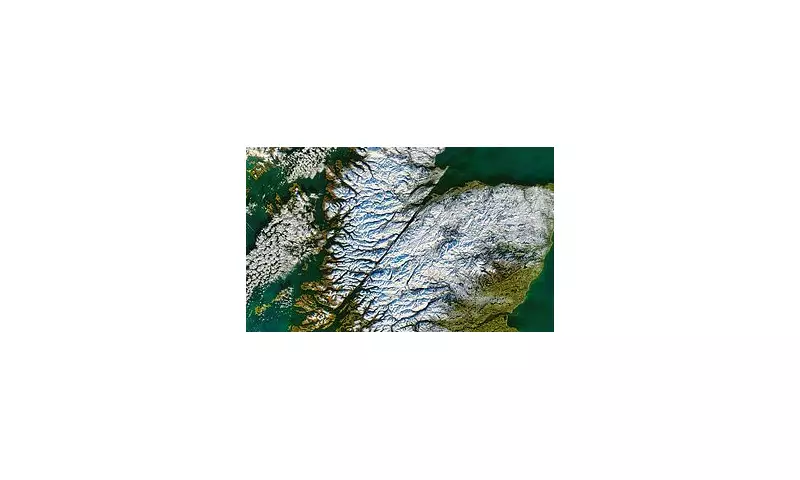
The Great Glen Fault is the UK's largest geological fault structure, stretching approximately 620 miles long and 25 miles deep. From space, it appears as a giant diagonal scar across Scotland, running from northeast to southwest through famous landmarks including Loch Ness, before continuing into northwestern Ireland.
It formed around 400 million years ago during a colossal mountain-building event, when the ancient continental plates of Laurentia (carrying North America and Scotland) and Baltica (carrying Scandinavia and England) collided. The newly acquired core contains fascinating rock formations, including pale green fault gouge—where parent rock was ground to a fine paste—intersected by veins of white calcium-magnesium carbonate.
Drilling to such depths is prohibitively expensive and was only possible as part of site investigations for a proposed major hydropower scheme at Coire Glas. Following its extraction, the precious core was delivered to BGS facilities in Edinburgh at the end of 2024 for detailed microscopic analysis.
Answering Fundamental Questions About Our Planet
Scientists believe the sample holds answers to profound questions about processes deep within the Earth's crust. BGS geologist Romesh Palamakumbura called the opportunity "incredible", stating: "Newly drilled core from the Coire Glas site has provided a unique opportunity to study fundamental geological processes occurring in the UK's biggest fault zone."
The research aims to uncover:
- The source and behaviour of hot fluids within fault zones and how they alter rock properties.
- How many times the fault has moved over its vast history.
- How the properties of the rock were changed by the hundreds of earthquakes that likely shaped the zone.
- A key mystery: whether the fault connects all the way down to the Earth's mantle, more than 18 miles below the surface.
This knowledge could prove vital for understanding other major seismic faults worldwide, such as the San Andreas Fault in California or the Anatolian Fault in Turkey. Professor Bob Holdsworth of Durham University said the cores "have the potential to elevate the Great Glen Fault to one of the great natural laboratories for fault zone studies worldwide."
After analysis, the core will be permanently stored and made available for future research at the publicly funded BGS National Geological Repository in Nottinghamshire, preserving this unique resource for generations of scientists to come.