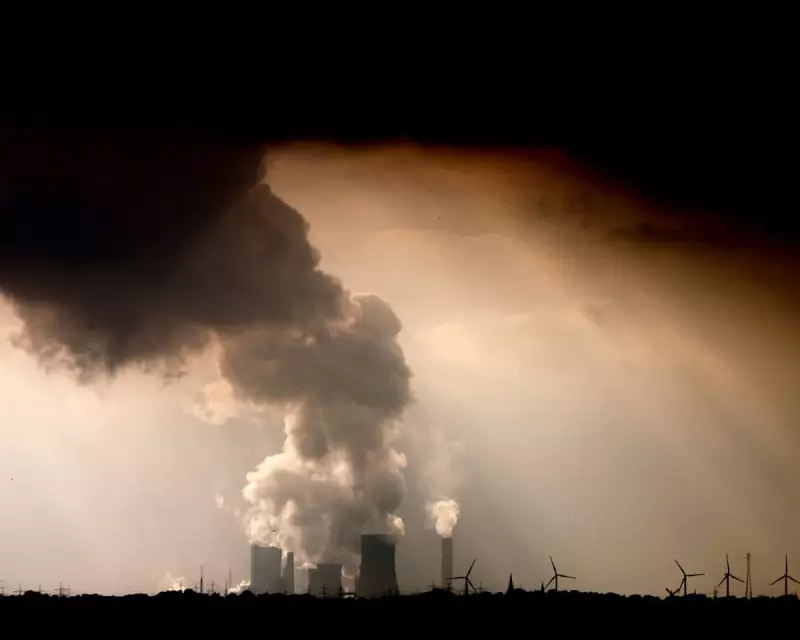
The recent COP30 climate talks in Brazil concluded with disappointing results as fossil fuel industry interests once again demonstrated their overwhelming influence on global climate policy. Despite urgent pleas from Pacific Island nations facing existential threats from rising sea levels, the conference failed to deliver meaningful commitments to phase out fossil fuels.
The Corporate Takeover of Climate Policy
More than 1,600 industry lobbyists attended the talks, joining forces with representatives from Saudi Arabia and Russia to block progressive climate action. UN General Secretary António Guterres acknowledged the widening gap between scientific recommendations and political action, highlighting governments' limited capacity to control carbon emissions effectively.
According to the latest Guardian Essential report, this outcome comes as little surprise to most voters. Only a quarter of older Australians believe climate change can be prevented, reflecting growing public scepticism about international climate negotiations.

The Rise of Stateless Goliaths
Australian academic Luke Kemp from Cambridge University's Centre for the Study of Existential Risk analyses civilisational patterns through the lens of "Goliaths" - hierarchical structures that dominate labour and energy through coercion. While historical empires like Rome operated from geographical bases, today's global Goliath comprises stateless corporations and algorithms that operate beyond national boundaries.
"Today's global Goliath is a network of stateless corporations and algorithms, rampaging the Earth as trade deals and treaties bend to their will," writes Peter Lewis, capturing the essence of this new threat to global climate stability.
Australia's Contradictory Climate Position
Australia finds itself in a paradoxical position regarding climate action. While the country narrowly avoided hosting next year's COP31 talks in Adelaide - with public support for the bid being tepid at best - it remains one of the world's top three fossil fuel exporters. If measured by net carbon contribution rather than domestic consumption, Australia would rank among the top ten global emitters.
This reality creates significant challenges for Climate Change and Energy Minister Chris Bowen, who will serve as lead negotiator in upcoming climate talks. Despite Australia's substantial global carbon footprint, many voters perceive domestic climate efforts as insignificant compared to larger international polluters.
Multiple Existential Threats Converge
The climate crisis increasingly competes with other existential risks for public attention and political priority. Surveys indicate high concern levels about multiple threats including:
- Pandemic risks
- Nuclear warfare
- Artificial intelligence
- Unprecedented inequality
Kemp argues these challenges interconnect to form a "poly-crisis" where each threat amplifies the others. Climate collapse drives displacement, AI systems consume massive energy while potentially worsening inequality, and nuclear arsenals remain stockpiled as global temperatures rise.
"These threats are not unavoidable," Kemp writes. "They are consciously created by powerful groups who profit handsomely from the endeavour. Global catastrophic risk is the product of the worldwide system of extraction: the Global Goliath."
The Path Forward: An Army of Davids
Despite the grim outlook, Kemp's research offers hope by noting that historical Goliaths typically contain the seeds of their own destruction. Their unsustainable domination patterns and resource plundering inevitably lead to collapse.
Looking ahead 100 years, humanity faces two potential outcomes: either the Goliaths self-terminate or citizens organise to "slay the giant." Kemp advocates for recognising governmental capture by corporate interests and building "an army of Davids" through open democracy and citizen juries.

Emerging initiatives demonstrate this approach in action. The Australian Resilience Democracy Network recently published research exploring how technology can enhance citizen participation in critical decisions affecting our collective future. These efforts aim to restructure democratic processes, flatten hierarchies, and create more dynamic feedback mechanisms with tangible consequences.
Whether addressing renewable energy deployment, AI governance, public service provision, or planetary survival, reclaiming democratic control represents our best hope against climate despair. As Lewis concludes, "When there are no more Davids, then Goliath has really won."