
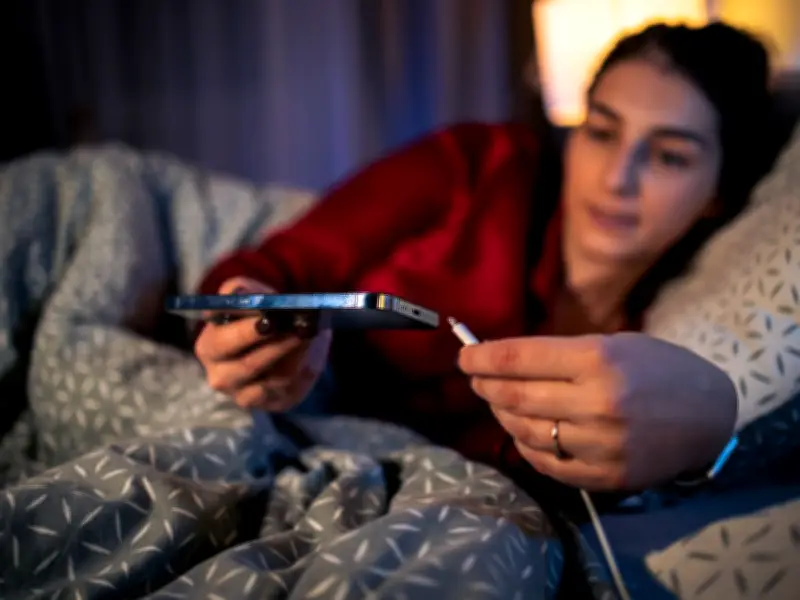
Fire safety experts are urging households to avoid charging mobile phones on beds or under pillows, particularly during heatwaves, as the practice can trap heat and create a serious fire risk. The warning comes as the UK experiences another period of hot weather, with bedroom temperatures often exceeding 25°C well into the evening.
Why Charging on Soft Furnishings Is Dangerous
Most modern smartphones contain lithium-ion batteries, which naturally warm up while charging. Although these batteries are designed with multiple safety features, damaged batteries, counterfeit chargers, or poor ventilation can increase the likelihood of overheating. When a phone is placed on a bed or under a pillow, heat cannot dissipate properly, raising the risk of fire.
According to Electrical Safety First, phones, tablets, and laptops should always be charged on a hard, flat surface where heat can escape. The charity warns against charging devices on beds, sofas, or other soft furnishings because they restrict airflow and are combustible. During hot weather, the risk is even greater as the ambient temperature reduces the battery's ability to cool down naturally.
Official Warnings from Fire Services
The London Fire Brigade has repeatedly warned about the dangers of charging phones under pillows or duvets. Bedding can trap heat around lithium-ion batteries and chargers, increasing the risk of overheating if a battery or charging cable develops a fault. While battery fires remain uncommon, experts say that avoiding simple habits like charging under bedding can significantly reduce the risk, especially during prolonged hot spells.
Safe Charging Practices
Instead of charging a phone on the bed, experts recommend placing it on a bedside cabinet, desk, or another hard, non-flammable surface with plenty of ventilation. They also advise using the manufacturer's charger where possible and unplugging devices once charging is complete rather than leaving them connected overnight.
If a phone becomes unusually hot, starts swelling, or gives off an unusual smell while charging, it should be disconnected safely and not used again until it has been checked by a professional. By following these simple precautions, households can significantly reduce the risk of battery-related fires during heatwaves and beyond.




