
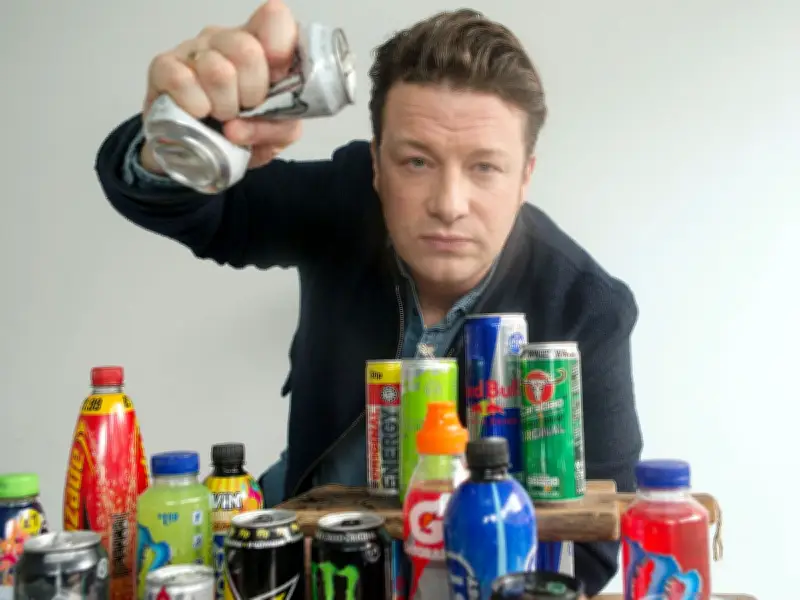
The UK government has confirmed a ban on the sale of high-caffeine energy drinks to under-16s in England, set to take effect from April 2027. The ban, which covers drinks containing more than 150mg of caffeine per litre, applies to shops, vending machines, and online sales. It follows a public consultation that received nearly 1,100 responses and is a key Labour manifesto pledge.
Campaign Victory
Celebrity chef Jamie Oliver hailed the announcement as a "pretty special moment." Oliver, who campaigned alongside the Daily Mirror, said: "Eight years ago, we came together to protect British kids’ brains and bodies from being flooded with high-caffeine energy drinks and to see this ban finally announced is a pretty special moment." He added: "It may not sound like a big deal – it’s just this one product right? But when you see first hand, as I’ve seen, how many kids are spending their days fuelled on this stuff that’s not only bad for their health but also makes it challenging to learn, you realise quite how big this is."
Health and Education Impact
Around 100,000 children in England consume high-caffeine energy drinks daily, according to government figures. Health experts link these drinks to disrupted sleep, increased anxiety, poor concentration, and reduced educational outcomes. Public Health Minister Sharon Hodgson stated: "High-caffeine energy drinks have no place in children’s hands. We know thousands of kids in England consume them daily but the evidence is clear that this can cause anxiety, affect their sleep and concentration and can have a detrimental impact on their education."
The ban is expected to prevent obesity in up to 40,000 children. Eddie Crouch, chair of the British Dental Association, commented: "Packed with sugar and highly acidic, dentists have seen the damage energy drinks do every day. The result is children struggling to eat, to sleep and to learn. Taking them off the menu for under 16s is a victory for common sense."
Enforcement and Penalties
Shops will be responsible for ensuring these drinks are not sold to under-16s, with local authorities enforcing the ban. Businesses that break the law face fines of up to £2,500. The ban will become law using powers contained in the Food Safety Act 1990, subject to Parliamentary approval.
Caffeine Content Comparison
- Can of cola: 40mg caffeine
- Mug of tea: around 75mg caffeine
- Coffee: 80mg (espresso) to 100mg (instant mug)
- Red Bull (250ml): 80mg caffeine (320mg per litre)
- Monster or Relentless (500ml): 160mg caffeine (320mg per litre)
- Prime Energy (330ml): 140mg caffeine (420mg per litre)
The ban applies to drinks other than tea or coffee containing more than 150mg of caffeine per litre.




