
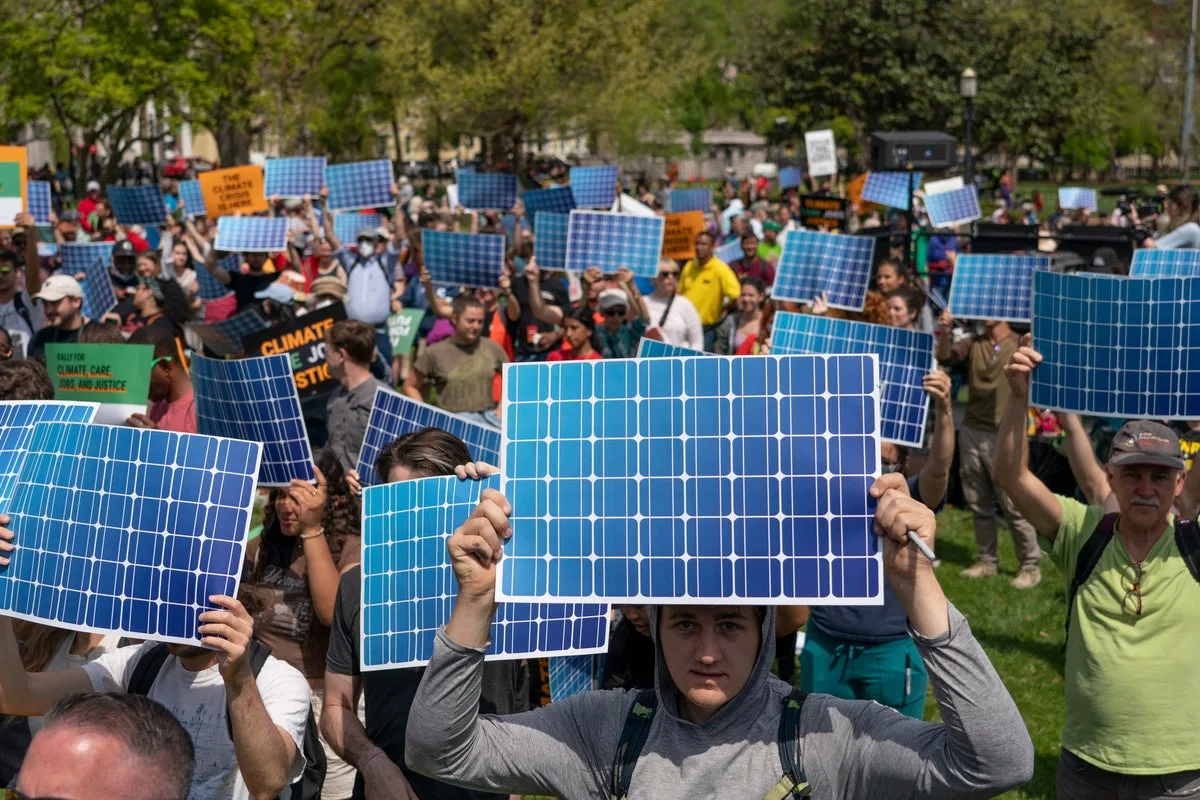
Millions around the world will observe Earth Day on Wednesday, an annual event designed to spur action for the protection of a planet now home to roughly eight billion people. This year's campaign carries the slogan 'Our Power, Our Planet,' calling for collective efforts to combat environmental degradation.
The roots of Earth Day lie in the growing environmental awareness of the 1960s. Rachel Carson's 1962 book Silent Spring, which highlighted the dangers of the pesticide DDT to the food chain, became a bestseller and boosted public consciousness about ecological fragility. But the concept for a dedicated day emerged from US Senator Gaylord Nelson, a Democrat from Wisconsin, who was galvanised by a major oil spill off the coast of Southern California in 1969.
Nelson, alongside activist Denis Hayes, proposed a national 'teach-in' on environmental issues, inspired by campus protests against the Vietnam War. They broadened the idea beyond universities and coined the name Earth Day. The first event took place on 22 April 1970, a date chosen to fall between spring break and final exams to maximise student participation, according to EarthDay.org.
While not a federal holiday, Earth Day has become a focal point for volunteer initiatives such as clean-ups. The overwhelming public response to the inaugural event is credited with pressuring the US Congress to pass landmark environmental laws, including the Clean Air Act and Clean Water Act. The day is now recognised as the birth of the modern environmental movement.
Since 2000, Earth Day has increasingly centred on climate change, and it now claims to have inspired action in more than 192 countries. A list of global events is available on EarthDay.org, where new ones can also be registered.




