Bosnian River Chokes on Winter Waste as Regional Cooperation Fails
As winter tightens its grip across the Balkans, a familiar and distressing spectacle unfolds along the banks of the Drina River in eastern Bosnia. The waterway, once celebrated for its emerald beauty, is once again suffocating under a deluge of waste, a grim annual event that underscores profound regional environmental failures.
A Scene of Despair and Inaction
Dejan Furtula, an environmental activist from Visegrad, watches with weary resignation as construction machinery labours day and night. Their task: to clear the immense accumulation of trash that has become clogged against barriers near the town's hydroelectric plant. Furtula, who leads the Eko Centar environmental group, voices a frustration born of painful repetition.
"This is a clear example of the lack of political will and inactivity of all relevant institutions," he states. "They meet year after year and make promises, but as we can see, these scenes repeat themselves." His words paint a picture of bureaucratic stagnation amidst an escalating ecological crisis.

The Composition of a Catastrophe
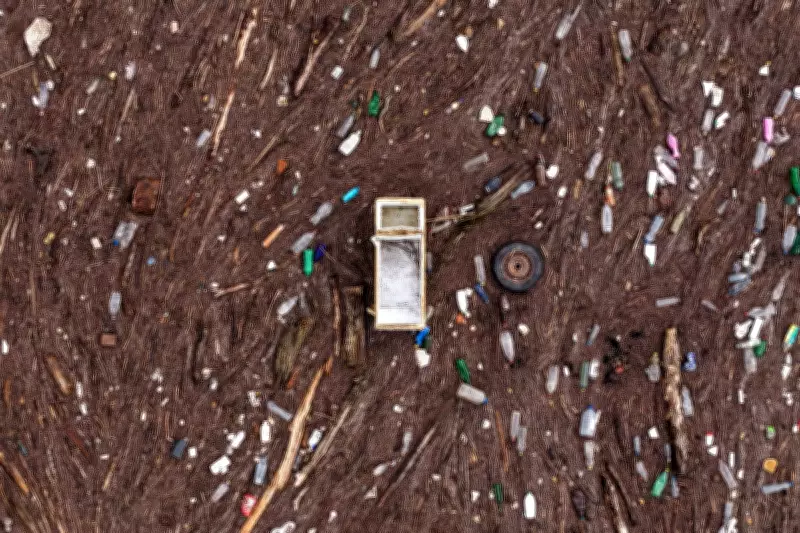
The sight confronting locals and activists is one of surreal horror, reminiscent of dystopian cinema. The river's surface is thickly carpeted with a toxic mosaic:
- Countless plastic bottles and bags
- Shattered furniture and timber debris
- Corroding metal barrels and discarded home appliances
- Even the tragic remains of dead animals
Furtula confirms the presence of hazardous medical waste within this floating landfill. "This is an ecological disaster," he emphasises. "The Drina is rich with fish, and you can imagine the toxins being released here. There is virtually everything; it is a big catastrophe." The pollution threatens aquatic life and the broader ecosystem with a cocktail of dangerous chemicals.
Roots of the Problem: Transboundary Neglect
The origin of this waste is not confined to Bosnia. Illegal dump sites upstream, within Bosnia itself and across the borders in neighbouring Serbia and Montenegro, are the primary sources. Several smaller tributaries converge into the Drina, each carrying its own burden of garbage into the main flow.
While these rivers are popular summer destinations for rafters and nature enthusiasts, the crisis peaks during the winter months. Seasonal rains and snowmelt swell the waterways, which then scour the banks, sweeping away the contents of illicit dumps and carrying everything downstream to choke at Visegrad.
Political Promises and Persistent Paralysis
Officials from Bosnia, Serbia, and Montenegro have repeatedly pledged cross-border cooperation to resolve the issue. A high-profile meeting of environment ministers was even held at the site in 2019. Yet, years later, no tangible, lasting solution has materialised.
This impasse starkly illustrates a broader regional challenge. Decades after the wars of the 1990s, the Western Balkans continue to lag behind much of Europe, not only economically but critically in environmental stewardship. The Drina's plight is part of a wider pattern of neglect; many cities in the region also grapple with dangerously high levels of air pollution.
The EU Membership Imperative
The environmental failures carry significant political weight. Bosnia, Serbia, and Montenegro are all official candidates for membership in the European Union. Robust environmental protection is a non-negotiable key condition for joining the 27-nation bloc. The ongoing disaster on the Drina represents a major obstacle on their path to accession, highlighting systemic governance issues.
A Vicious Circle of Pollution
For Dejan Furtula, the problem is compounded by a flawed disposal process. Once extracted from the river, the collected waste is transported to a local landfill. There, it often burns slowly, releasing a new wave of toxic particles into Visegrad's air.
"It is a vicious circle," Furtula describes, polluting both water and air in his community. He suggests practical solutions being ignored, such as mapping illegal dumps and installing preventative cameras and barriers upstream in multiple municipalities, rather than allowing all waste to converge at a single choke point.

The activist captures the core of the political deadlock with a poignant observation: "It is coming from three countries—Montenegro, Serbia, and Bosnia. But no one would admit it's theirs." This cycle of blame and inaction ensures that each winter, the Drina River will again drown in the region's discarded refuse.